All species › Passerines › Gnatwrens and gnatcatchers › White-lored Gnatcatcher
Position in the tree Birds Aves › Birds with a flexible palate Neognathae › All other modern birds Neoaves › Landbirds Telluraves › Falcons, parrots and passerines Australaves › Falcons and passerines Eufalconimorphae › Parrots and passerines Psittacopasserae
White-lored Gnatcatcher | Polioptila albiloris
Witteugelmuggenvanger | Perlita pispirria
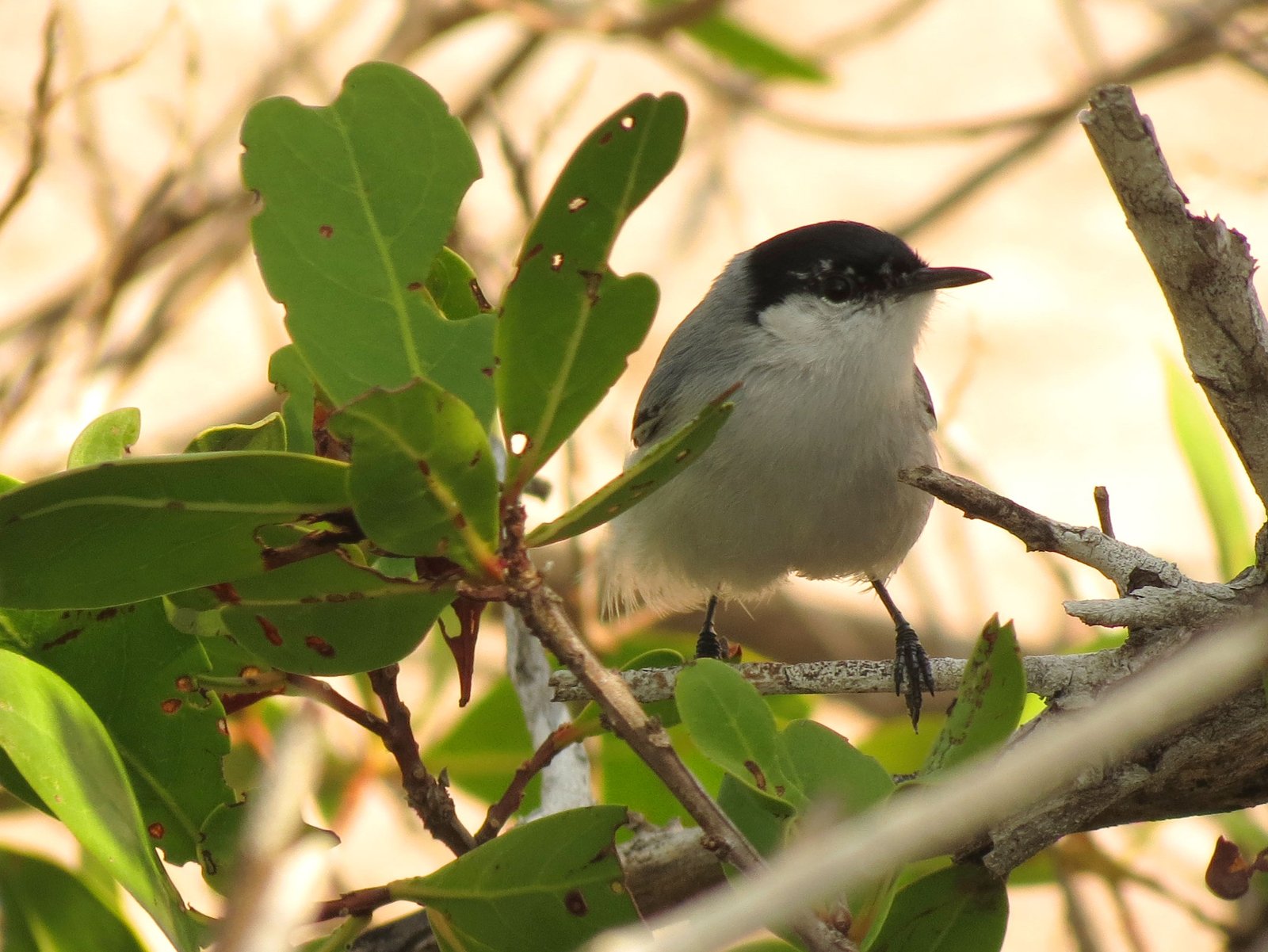
The White-lored Gnatcatcher is a blue-grey gnatcatcher of dry forest and scrub on the Pacific slope of Mexico and Central America. The breeding male has a black cap reaching below the eye; outside the breeding season the white lores stand out. The species occurs only in the guide area.
Voice
Nasal, mewing calls and a short, chattering series of chipping notes.
Recording: Max Noack — CC BY-NC-SA 4.0 · converted to mono · xeno-canto
Identification
10–11 cm, with a long tail. Upperparts blue-grey, underparts white. In the breeding season the male has a glossy black cap enclosing the eye, without a white supercilium. Outside the breeding season, and in the female, the crown is grey, with white lores and a narrow black line above the eye. Tail long, black with white along the outer feathers. Bill short and thin.
Confusion species
White-browed Gnatcatcher Polioptila bilineata has, in the male, a black crown bordered below by a white supercilium and lives more in humid forest. Blue-grey Gnatcatcher Polioptila caerulea, present in winter in the north of the range, has a complete white eye-ring and no black cap. Black-capped Gnatcatcher Polioptila nigriceps lives further north.
Habitat
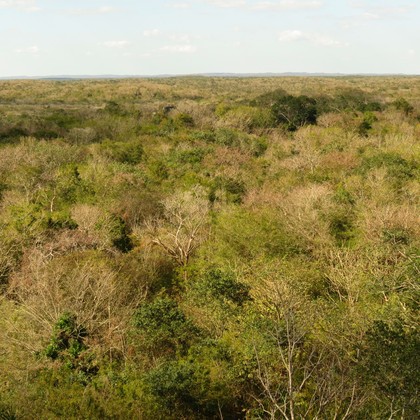
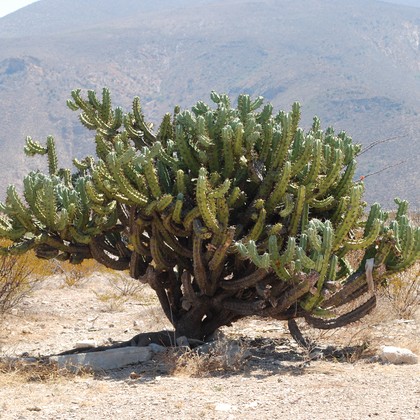
Dry deciduous forest, thorn scrub, dry scrubland and riparian woodland in the lowlands, also in arid interior valleys. It gleans small insects and spiders from foliage, often in pairs and in mixed flocks.
Where the bird is most at home, classified by the vegetation units of Mexico and Central America.


Range and movements
Pacific slope from south-western Mexico through Chiapas, Guatemala, El Salvador, Honduras and Nicaragua to north-western Costa Rica; also in arid interior valleys of Guatemala and Honduras. Does not occur outside the guide area. The birds of the northern Yucatán Peninsula are now treated as a separate species, Yucatan Gnatcatcher.
- Resident
- dark = core range, pale = thinly spread
How and when to look
Common in the dry forest of Guanacaste in Costa Rica and along the Pacific coast of Nicaragua and El Salvador; listen for the nasal calls in the shrubs.
Conservation status
Not assessed separately by the IUCN since the split of Yucatan Gnatcatcher; as part of the former, broader species it is listed as not threatened. Fairly common in dry forest and scrub, but dry forest on the Pacific slope has been greatly reduced in many places.
Scientific name
Polioptila albiloris | Sclater & Salvin, 1860
Sclater & Salvin described the species in 1860 and placed it straight away in the genus where it still stands. The genus Polioptila was introduced in 1855 by Sclater. Polioptila is Greek, from polios 'grey' and ptilon 'feather': 'grey-feathered'. albiloris is Latin, from albus 'white' and lorum 'lore', after the white lores. The specimen the first description was based on came from the Motagua valley, Zacapa, Guatemala.