All species › Waders, gulls and terns › Skimmers, noddies, terns and gulls › Roseate Tern
Position in the tree Birds Aves › Birds with a flexible palate Neognathae › All other modern birds Neoaves › Birds of the elements Elementaves › Cranes and waders Gruimorphae
Roseate Tern | Sterna dougallii
Dougalls stern | Charrán rosado
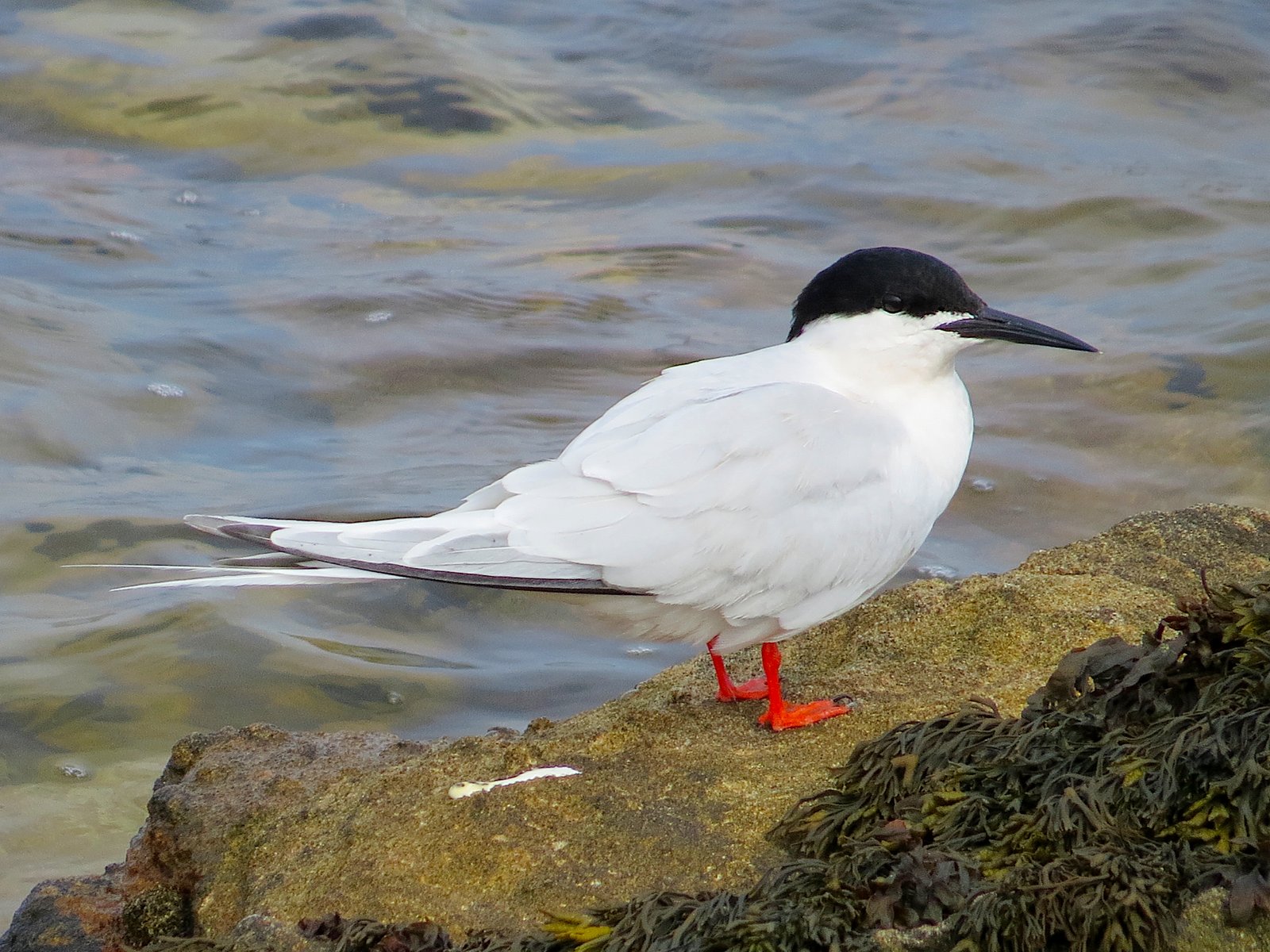
The Roseate Tern is a pale, graceful tern of warm coastal waters, with very long white tail streamers. In the guide area it breeds in small colonies on cays and islets off the Caribbean coast, mainly off the Yucatán Peninsula and Belize. On the Pacific side the species is very rare.
Voice
A distinctive two-syllable chu-weet or chee-vik, unlike the calls of other terns, and a harsh, rasping aaach in alarm.
Recording: Ricardo Hevia — CC BY-NC-SA 4.0 · converted to mono · xeno-canto
Identification
29–33 cm without the tail streamers; with the streamers of breeding adults up to about 43 cm. Strikingly pale: the upperparts are very pale grey and the underparts white, in breeding plumage with a pink flush visible only in good light. The cap is black, the bill long and thin, mostly black early in the breeding season and later with a red base; the legs are red. At rest the white streamers project far beyond the wingtips. In flight the wings are fairly short and the wingbeats fast and stiff; only the outer primaries are darker, forming a narrow dark leading edge. Outside the breeding season the forehead is white. Juveniles have a dark cap and forehead, a scaly back and black legs.
Confusion species
Common Tern Sterna hirundo is greyer, with grey-washed underparts in breeding plumage, a dark wedge in the primaries, shorter streamers and a red bill with a black tip. Arctic Tern Sterna paradisaea has grey underparts and very short legs. Forster's Tern Sterna forsteri has silvery-white primaries and an orange bill. Sandwich Tern Thalasseus sandvicensis is larger, with a yellow-tipped black bill and a shorter tail.
Habitat
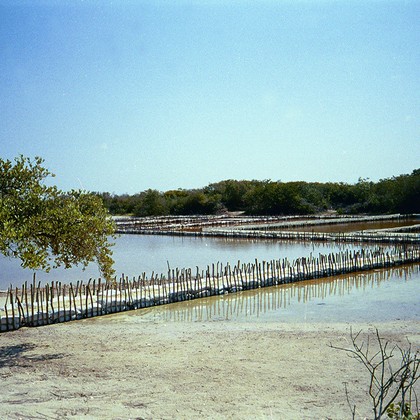
Clear coastal waters over reefs, around cays and in shallow bays, where the birds fish by diving steeply from a height. It breeds in colonies on small rocky or sandy islets and cays, often among rocks or low vegetation, sometimes with other terns.
Where the bird is most at home, classified by the vegetation units of Mexico and Central America.




Range and movements
Breeds on cays and islets off the coast of Quintana Roo and Belize; further south along the Caribbean coast, including off Honduras, scarce and mainly seen during migration. On the Pacific coast only a few records. After breeding the birds leave, probably for the coasts of South America. Outside the guide area the species breeds in the Caribbean, the north-eastern United States, western Europe and the tropics of the Indian and Pacific Oceans.
- Summer visitor (c. Apr–Sep)
- dark = core range, pale = thinly spread
How and when to look
Boat trips along the cays of Quintana Roo and Belize from May to August offer the best chance. Among Common Terns and other terns, the Roseate Tern stands out by its white, pale tone, its long streamers and its fast, stiff wingbeats.
Conservation status
Not threatened globally. Colonies on small islets are vulnerable to disturbance by visitors, predation by rats and other animals, and egg collecting; in the Caribbean numbers are declining.
Scientific name
Sterna dougallii | Montagu, 1813
Montagu described the species in 1813 and placed it straight away in the genus where it still stands. The genus Sterna was introduced in 1758 by Linnaeus. Sterna goes back to Old English stearn, which appears in the poem The Seafarer; the Frisians used a related word for terns. dougallii honours the Scottish physician and collector Peter McDougall (1777–1814), who supplied the first specimen. The specimen the first description was based on came from the Cumbraes, Scotland.