All species › Passerines › Kinglets › Ruby-crowned Kinglet
Position in the tree Birds Aves › Birds with a flexible palate Neognathae › All other modern birds Neoaves › Landbirds Telluraves › Falcons, parrots and passerines Australaves › Falcons and passerines Eufalconimorphae › Parrots and passerines Psittacopasserae
Ruby-crowned Kinglet | Corthylio calendula
Roodkroonhaan | Reyezuelo matraquita
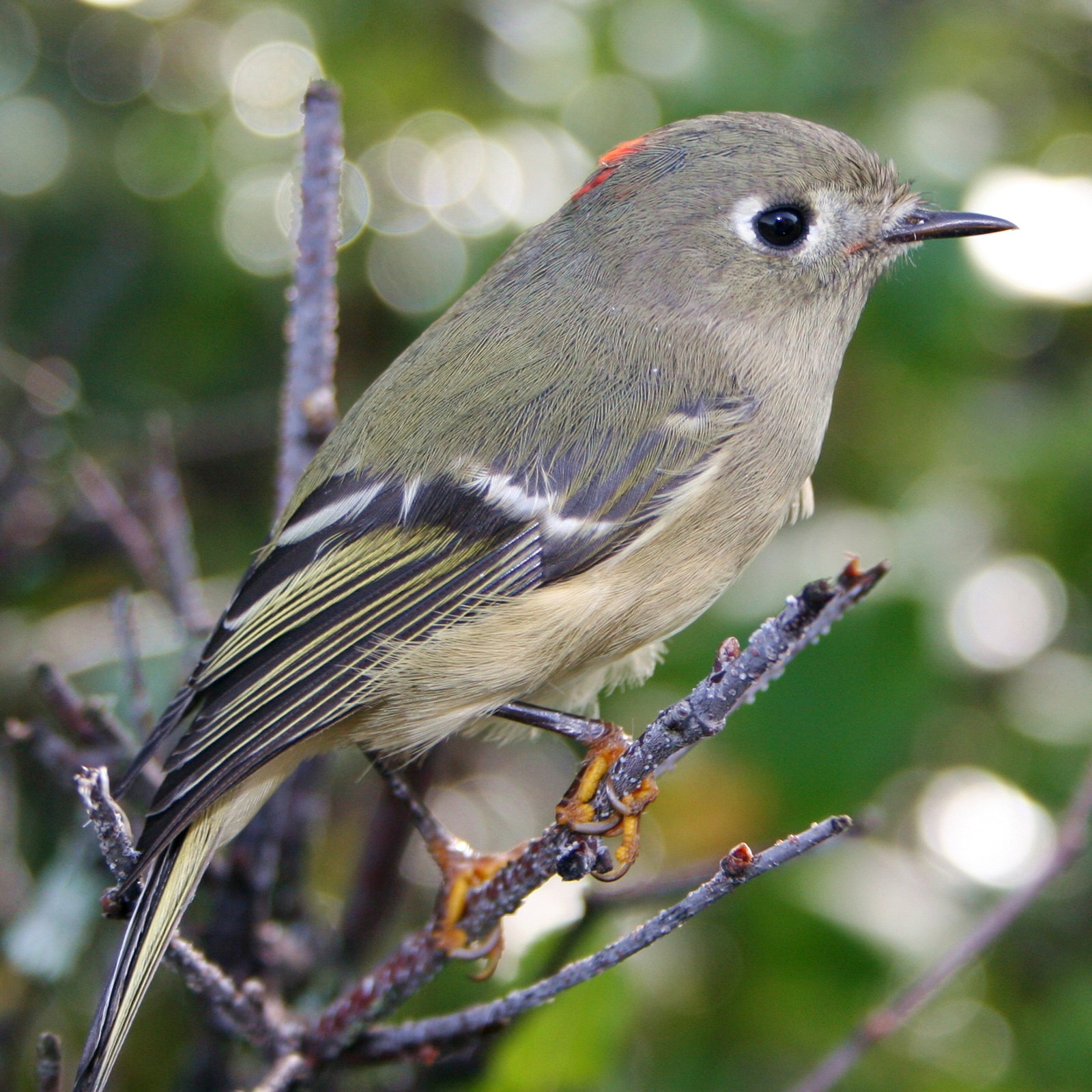
The Ruby-crowned Kinglet is a tiny, olive-grey songbird with a broken white eye-ring and a white wing bar. It moves restlessly through shrubs and trees, constantly flicking its wings. In the guide area it is mainly a common winter visitor to Mexico.
Voice
The call, heard most in winter, is a dry, short jidit, often given twice. The song, sometimes heard in the guide area in spring, is loud for such a small bird: a series of high notes followed by a rolling, repeated phrase.
Recording: Richard E. Webster — CC BY-NC-SA 4.0 · shortened to the first 60 s, mono · xeno-canto
Identification
10–11 cm. Upperparts olive-grey, underparts dull greyish yellow. Conspicuous white eye-ring broken above and below the eye, which makes the eye look large. A white wing bar with a dark band behind it across the wing; flight feathers edged yellow. The male has a red crown patch that is usually hidden and shown only when excited. Bill short and thin, legs dark with yellowish feet.
Confusion species
Hutton's Vireo Vireo huttoni is very similar but slightly larger and stockier, with a thicker, slightly hooked bill and bluish-grey legs, and it moves more slowly; its eye-ring merges into pale lores. Golden-crowned Kinglet Regulus satrapa has a striped head with a yellow crown. Empidonax flycatchers sit upright and sally out from a perch.
Habitat
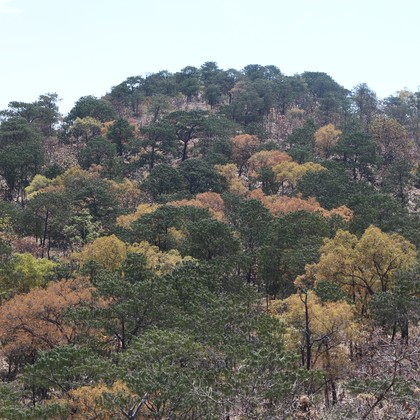
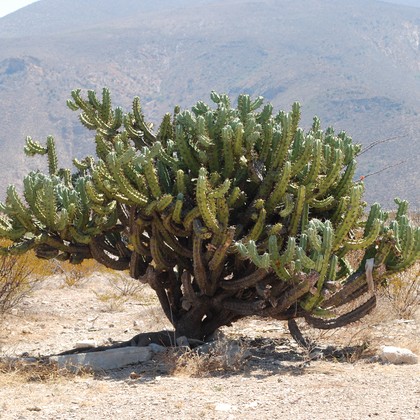
In winter in all kinds of woodland and scrub: pine-oak forest, conifer forest, riparian woodland, dry scrub, parks and gardens, from the lowlands high into the mountains. It gleans small insects and spiders from foliage and often joins mixed flocks of songbirds.
Where the bird is most at home, classified by the vegetation units of Mexico and Central America.




Range and movements
Breeds in Canada, Alaska and the mountains of the western United States. Winters over much of Mexico, mainly in the north, the west and the highlands, south to Chiapas; rare in Guatemala and Belize. A small resident population lives on Guadalupe Island off the west coast of Baja California.
- Winter visitor (c. Oct–Mar)
- dark = core range, pale = thinly spread
How and when to look
In the Mexican winter one of the commonest small songbirds in woodland and gardens. The constant wing-flicking and dry call help to pick it out among other small birds.
Conservation status
Not threatened. Common and widespread. The small population on Isla Guadalupe has declined sharply following the destruction of the island's forest.
Scientific name
Corthylio calendula | (Linnaeus, 1766) (GBIF: Regulus calendula)
Linnaeus described the species in 1766 as Motacilla Calendula; because it was later moved to another genus, the author and year stand in brackets. The genus Corthylio was introduced in 1853 by Cabanis. Corthylio comes from Greek korthulos, a small wren-like bird mentioned by the lexicographer Hesychius of Alexandria. calendula is of uncertain origin: perhaps a diminutive of Greek kalandros 'lark', or, according to Coues, from Latin caleo 'to be warm', after the fiery crown patch. The specimen the first description was based on came from Philadelphia, Pennsylvania, USA.