All species › Waders, gulls and terns › Plovers and lapwings › Semipalmated Plover
Position in the tree Birds Aves › Birds with a flexible palate Neognathae › All other modern birds Neoaves › Birds of the elements Elementaves › Cranes and waders Gruimorphae
Semipalmated Plover | Charadrius semipalmatus
Amerikaanse bontbekplevier | Chorlo semipalmeado
The Semipalmated Plover is a small, dark brown plover with a single breast band that breeds in Alaska and Arctic Canada. Along both coasts of Mexico and Central America it is a common winter visitor and passage migrant on mudflats, beaches and lagoons, often in flocks among sandpipers. It takes its name from the small webs between its toes.

Voice
A hoarse, rising chu-weet, the best feature of the species and often the first thing heard from a flock on the mud. When disturbed also a short chip.
Recording: Don Profota — CC BY-NC-SA 4.0 · converted to mono · xeno-canto
Identification
17–19 cm. A compact plover with a round head and a short bill. Upperparts plain dark grey-brown, underparts white, with a single breast band, black or in non-breeding plumage brown, a dark mask through the eye and a white forehead patch. The bill is orange with a black tip, in non-breeding plumage mostly dark with some orange at the base; the legs are orange-yellow. A narrow yellow ring around the eye. Juveniles are browner, with a dark bill and pale feather fringes on the back. In flight a narrow white wing bar. It runs in short dashes, stops and then pecks quickly forward.
Confusion species
Wilson's Plover Anarhynchus wilsonia is slightly larger, with a much heavier, all-black bill and flesh-coloured legs. Collared Plover Anarhynchus collaris is smaller and slimmer, with a thin black bill, a narrow breast band, rufous on the crown and no white collar. Piping Plover Charadrius melodus is much paler, sand-coloured, and Snowy Plover Anarhynchus nivosus is pale with only dark patches on the sides of the breast. Killdeer Charadrius vociferus is larger, with two breast bands and an orange-rufous rump.
Habitat
Tidal flats, mudflats and sandbars, beaches, lagoons and salt pans, shrimp farms and the edges of mangroves; on migration also on the shores of lakes, rivers and reservoirs inland and in rice fields. At high tide it rests in flocks on sandbars and beaches, often together with sandpipers.
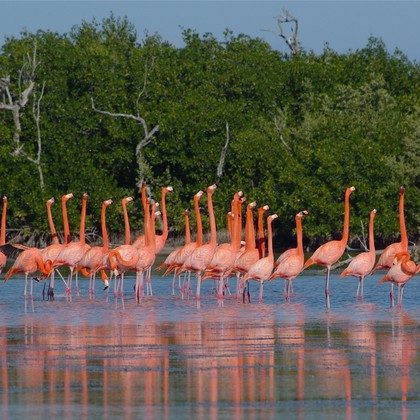
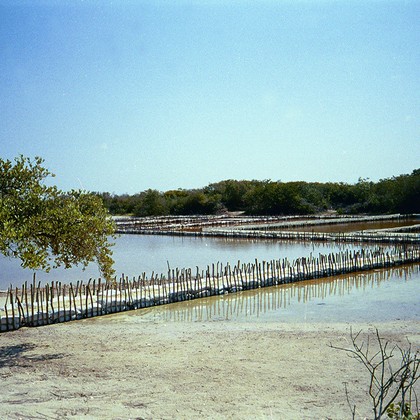
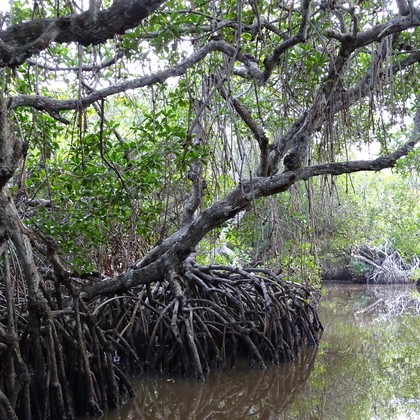
Where the bird is most at home, classified by the vegetation units of Mexico and Central America.


Range and movements
Along the whole Pacific coast from Baja California and the Gulf of California to Panama, and along the Atlantic coast from Tamaulipas through Veracruz and the Yucatán Peninsula to the Caribbean coast of Panama. Most numerous on the large mudflats of the Pacific side, such as the lagoons of Sinaloa and Nayarit, the Gulf of Fonseca, the Gulf of Nicoya and the Bay of Panama; inland mainly on passage. Beyond the guide area it breeds from Alaska to Labrador and winters along the coasts from the southern United States to southern South America.
- Winter visitor (c. Oct–Mar)
- dark = core range, pale = thinly spread
How and when to look
Mudflats and sandbars on a falling tide, such as at Chomes and Puntarenas on the Gulf of Nicoya, in the Bay of Panama and in the lagoons of Nayarit and Sinaloa. At high-tide roosts the birds stand close together and are easy to compare with other small plovers. The hoarse call helps to pick them out among sandpipers.
Conservation status
Not threatened globally. In the guide area common along the coast; mudflats and salt marsh are, however, lost to shrimp farms, ports and coastal development, and roosts on beaches are disturbed.
Scientific name
Charadrius semipalmatus | Bonaparte, 1825
Bonaparte described the species in 1825 and placed it straight away in the genus where it still stands. The genus Charadrius was introduced in 1758 by Linnaeus. Charadrius is Late Latin, from Ancient Greek kharadrios, a plain-coloured nocturnal bird of ravines and river valleys, from kharadra 'ravine'. semipalmatus is Latin for 'half-webbed', from semi 'half' and palma 'palm', after the small webs between the toes. The specimen the first description was based on came from coast of New Jersey.