All species › Gamebirds › New World quail › Singing Quail
Position in the tree Birds Aves › Birds with a flexible palate Neognathae › Fowl Galloanserae
Singing Quail | Dactylortyx thoracicus
Zangkwartel | Codorniz silbadora
The Singing Quail is a small, stocky forest-floor quail of Mexico and northern Central America. It lives hidden in the leaf litter and is noticed mainly by its loud, whistled song at dawn and dusk. The species does not occur outside the guide area; many subspecies have been described, differing in the colour of the head and underparts.

Voice
A loud, clear song that starts with a few slow, rising whistles and runs into a fast series of repeated, rolling three-note phrases, something like wee-wee-wee chee-wee-ree chee-wee-ree. Two birds often sing together, especially at dawn and dusk. Also soft squeaky contact calls.
Recording: Zsombor Károlyi — CC BY-NC-SA 4.0 · converted to mono · xeno-canto
Identification
20–23 cm; a rounded quail with a short tail, a short crest that is usually held flat and strikingly long claws on the feet. The upperparts are brown with black spots, grey vermiculation and pale shaft streaks. The male has a warm orange-cinnamon supercilium, cheek and throat; in the female the supercilium and throat are grey to greyish-white and the breast is browner. The underparts are grey-brown to ochre-brown with fine pale streaks. The bill is dark, the legs grey.
Confusion species
Spotted Wood Quail Odontophorus guttatus is larger, has a distinct crest and white, black-edged teardrop spots on the underparts, and a black throat with white streaks. Montezuma Quail Cyrtonyx montezumae and Ocellated Quail Cyrtonyx ocellatus have a black-and-white striped head and live in more open pine-oak woodland and grassland. Bearded Wood Partridge Dendrortyx barbatus and Buffy-crowned Wood Partridge Dendrortyx leucophrys are much larger, with a long tail and a red bill and eye-ring.
Habitat
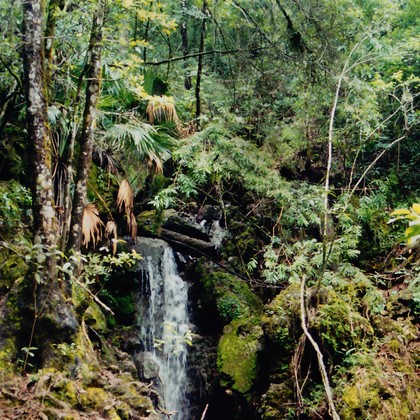
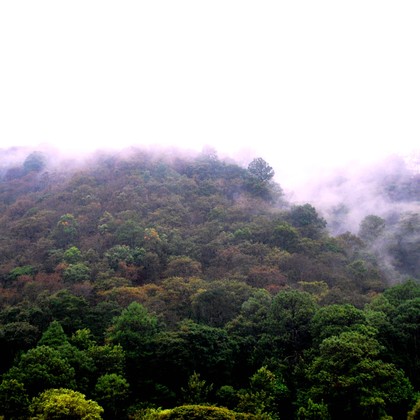
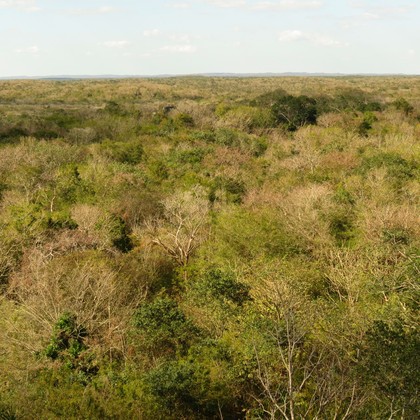
The floor of humid and semi-humid evergreen forest, cloud forest and pine-oak forest, and on the Yucatán Peninsula semi-evergreen seasonal forest; from near sea level to about 3000 m. It lives in pairs or small groups and scratches in the leaf litter for seeds, tubers and invertebrates. It rarely flies and walks away when disturbed.
Where the bird is most at home, classified by the vegetation units of Mexico and Central America.


Range and movements
In Mexico in the Sierra Madre Oriental from Tamaulipas and San Luis Potosí through Hidalgo, Puebla and Veracruz to Oaxaca, on the Pacific side in Jalisco, Michoacán and Guerrero, and further in Chiapas, Tabasco and on the Yucatán Peninsula (Campeche, Yucatán and Quintana Roo). Further south in Belize, Guatemala, El Salvador and Honduras. The populations are fragmented and closely tied to forest. The species does not occur outside the guide area.
- Resident
- dark = core range, pale = thinly spread
How and when to look
Almost only heard, at first light and at dusk, for example in the cloud forest of El Triunfo in Chiapas, in the mountains of Guatemala and in the seasonal forest of Calakmul. Waiting quietly near a spot where a pair is singing sometimes gives a view of a bird walking across the forest floor.
Conservation status
Not threatened. Locally fairly common in large forests; elsewhere vulnerable to deforestation, and on the Yucatán also to the conversion of seasonal forest to farmland.
Scientific name
Dactylortyx thoracicus | (Gambel, 1848)
Gambel described the species in 1848 as Ortyx thoracicus; because it was later moved to another genus, the author and year stand in brackets. The genus Dactylortyx was introduced in 1893 by Ogilvie-Grant. Dactylortyx is Greek, from daktulos 'toe' and ortux 'quail', after the long toes and claws. thoracicus is Medieval Latin for 'of the chest', from Greek thōrax 'chest', after the coloured breast. The specimen the first description was based on came from Xalapa, Veracruz, Mexico.