All species › Gamebirds › New World quail › Montezuma Quail
Position in the tree Birds Aves › Birds with a flexible palate Neognathae › Fowl Galloanserae
Montezuma Quail | Cyrtonyx montezumae
Montezumakwartel | Codorniz Moctezuma
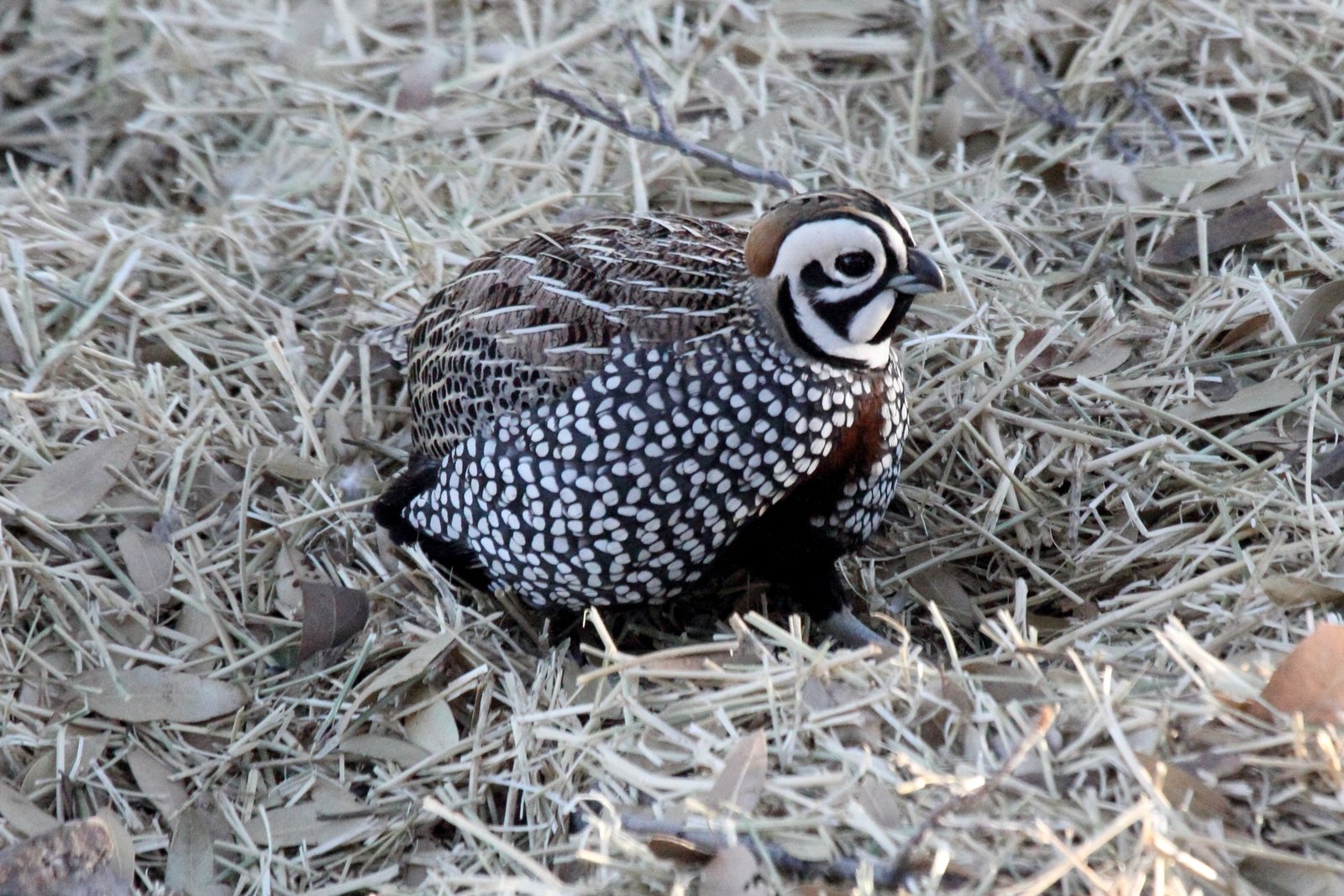
Montezuma Quail is a compact quail of grassy oak and pine-oak woodland in the mountains of Mexico. The male wears a black-and-white harlequin mask and has grey flanks full of white spots. It lives hidden in tall grass, presses itself to the ground when threatened and flushes only when someone almost treads on it.
Voice
The male gives a descending, quavering, buzzy whistle that fades slowly and is hard to locate. The female gives a descending series of short notes. Covey members keep in contact with soft, short peeps.
Recording: David Tattersley — CC BY-NC-SA 4.0 · converted to mono · xeno-canto
Identification
20–23 cm; round, with a very short tail, a short neck and long, curved claws for digging. The male has a black-and-white striped face with a black throat, a rounded brown crest hanging backwards, a dark chestnut to blackish centre of the breast and belly, and slate-grey flanks with round white spots. The upperparts are brown, with black barring and pale streaks. The female is plain sandy to pinkish-brown, finely spotted and streaked black, with a faint face pattern and no bright colours. Birds in the south, in Guerrero and Oaxaca (the sallei group), have more chestnut flanks in the male and are sometimes considered a separate species.
Confusion species
In the guide area the male can only be confused with Ocellated Quail Cyrtonyx ocellatus, which lives further south-east, from Chiapas, and has cinnamon rather than white flank spots. At a distance the female resembles a female Northern Bobwhite Colinus virginianus or Scaled Quail Callipepla squamata, but is rounder, shorter-tailed and more inclined to freeze.
Habitat
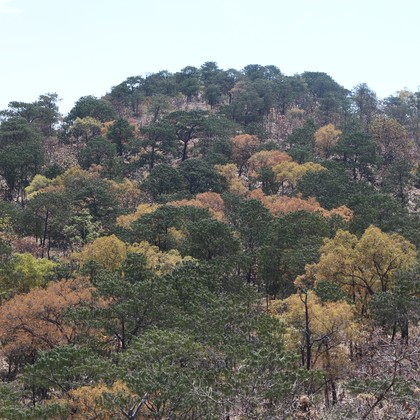
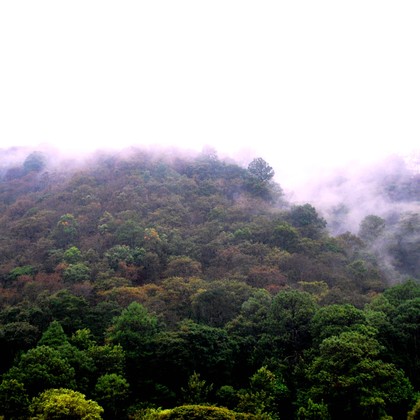
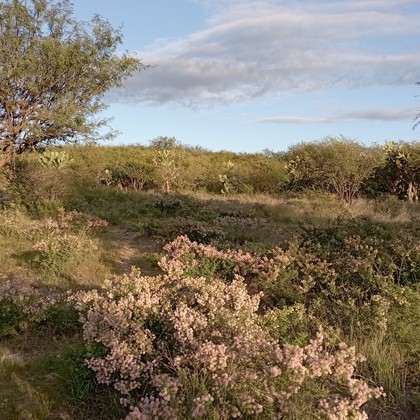
Open oak woodland, pine-oak woodland and juniper grassland with dense, tall grass undergrowth on mountain slopes, from about 1000 to 3000 m, also grassland with scattered oaks. It digs with its long claws for tubers and bulbs, especially of sedges and wood sorrel, and also eats acorns, seeds and insects. It disappears where overgrazing removes the grass layer.
Where the bird is most at home, classified by the vegetation units of Mexico and Central America.

Range and movements
In the guide area in the mountains of Mexico, from Sonora and Chihuahua along the Sierra Madre Occidental and Oriental and the central plateau, including Coahuila, Nuevo León, Durango, Zacatecas, Aguascalientes, Jalisco, Guanajuato, San Luis Potosí and Querétaro, south to Michoacán, Guerrero, Puebla, western Veracruz and Oaxaca. Best known in the north; there are fewer recent records from the south. Outside the guide area in south-eastern Arizona, south-western New Mexico and western Texas.
- Resident
- Summer visitor (c. Apr–Sep)
- dark = core range, pale = thinly spread
How and when to look
In grassy oak woodland in the Sierra Madre Occidental, for example along the road from Durango to Mazatlán, early in the morning or late in the afternoon. Small, fresh diggings in the ground under oaks often reveal a foraging covey before the birds themselves.
Conservation status
Not threatened. Locally fairly common but inconspicuous. Vulnerable to overgrazing and burning of the grass layer, through which the species has disappeared from parts of its range.
Scientific name
Cyrtonyx montezumae | (Vigors, 1830)
Vigors described the species in 1830 as Ortyx Montezumae; because it was later moved to another genus, the author and year stand in brackets. The genus Cyrtonyx was introduced in 1844 by Gould. Cyrtonyx is Greek, from kurtos 'curved' and onux 'nail, claw', after the long curved claws used to dig for bulbs. montezumae refers to Moctezuma II (Xocoyotzin, 1480–1520), ruler of the Aztec Empire. The specimen the first description was based on came from Mexico.