All species › Birds of prey › Kites, Old World vultures, eagles and hawks › Snail Kite
Position in the tree Birds Aves › Birds with a flexible palate Neognathae › All other modern birds Neoaves › Landbirds Telluraves › Raptors, owls, kingfishers and woodpeckers Afroaves › Hawks and owls Hieraves
Snail Kite | Rostrhamus sociabilis
Slakkenwouw | Gavilán caracolero
The Snail Kite is a medium-sized kite with broad, rounded wings and a thin, strongly hooked bill that lives almost entirely on apple snails. It flies slowly and low over open marsh with its head angled down, seizes a snail from the water and extracts it from its shell on a perch with its hooked bill. In the guide area it is a resident of freshwater marshes, lakes and rice fields in the lowlands, often in groups and with communal roosts.

Voice
A dry, rasping cackle, ka-ka-ka-ka-kaa, and a hoarse, bleating call, especially at the roost and around the nest.
Recording: Jacob Wijpkema — CC BY-NC-SA 4.0 · shortened to the first 60 s, mono · xeno-canto
Identification
39–48 cm, with broad, rounded wings, a medium-length tail with a square or slightly notched tip and a thin, strongly hooked black bill. The male is slate-black with a white tail base, white undertail coverts and a dark terminal band in the tail; eye red, cere, lores and legs orange-red. The female is dark brown above and cream with heavy brown streaks below, with a pale supercilium, a dark eye-stripe and also a white tail base; cere and legs are yellow-orange. Young birds resemble the female but have a dark eye and paler fringes on the upperparts. In flight the white tail base is conspicuous.
Confusion species
The Slender-billed Kite Helicolestes hamatus, found only in eastern Panama, is more compact, has a shorter, plain dark tail without a white base and a pale eye. The Hook-billed Kite Chondrohierax uncinatus also eats tree snails, but has a heavier bill, a banded tail and no white tail base. Females and young Northern Harriers Circus hudsonius also have a white rump, but are slimmer, with longer, narrower wings and an owl-like face.
Habitat
Open freshwater marshes with shallow water and floating vegetation, lake shores, lagoons, canals, ditches and rice fields in the lowlands. It rests and roosts in trees and bushes along the water, often in groups. It nests in loose colonies in bushes or low trees over water. It moves with the water level and can suddenly become numerous or disappear locally.
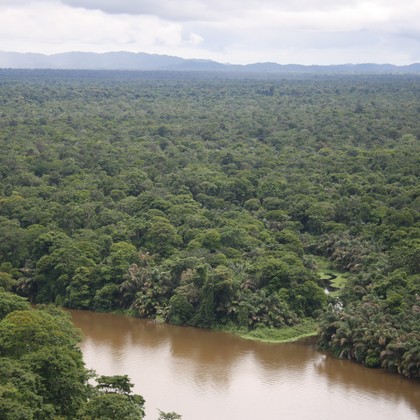
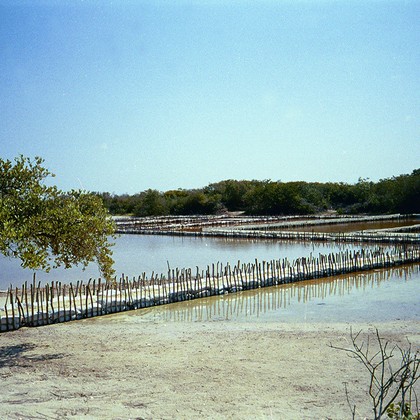
Where the bird is most at home, classified by the vegetation units of Mexico and Central America.



Range and movements
Resident in the lowlands of the Gulf slope of Mexico from southern Tamaulipas and Veracruz, through Tabasco, Campeche and the Yucatán Peninsula, and on through Belize and northern Guatemala. In Central America local in the lowlands on both slopes, mainly around large lakes and marshes, such as the lakes of Nicaragua, the Gulf of Fonseca, the marshes of El Salvador, Caño Negro and Palo Verde in Costa Rica and the Panama Canal area and rice fields of Panama. Outside the guide area in Florida, on Cuba and in tropical South America south to northern Argentina.
- Resident
- dark = core range, pale = thinly spread
How and when to look
On the marshes of Palo Verde and Caño Negro in Costa Rica and around Gamboa on the Panama Canal, groups are often seen hunting low over the water. Empty snail shells beneath a perch reveal a regular feeding spot.
Conservation status
Not threatened. Dependent on marshes with apple snails; locally benefits from rice fields and canals, but declines where marshes are drained.
Scientific name
Rostrhamus sociabilis | (Vieillot, 1817)
Vieillot described the species in 1817 as Herpetotheres sociabilis; because it was later moved to another genus, the author and year stand in brackets. The genus Rostrhamus was introduced in 1830 by Lesson. Rostrhamus is Latin, from rostrum 'bill' and hamus 'hook', after the strongly hooked bill used to extract snails from their shells. sociabilis is Latin for 'sociable', after its habit of foraging, roosting and sometimes nesting in groups. The specimen the first description was based on came from Corrientes, Argentina.