All species › Birds of prey › Kites, Old World vultures, eagles and hawks › Solitary Eagle
Position in the tree Birds Aves › Birds with a flexible palate Neognathae › All other modern birds Neoaves › Landbirds Telluraves › Raptors, owls, kingfishers and woodpeckers Afroaves › Hawks and owls Hieraves
Solitary Eagle | Buteogallus solitarius
Amerikaanse zwarte arend | Águila solitaria
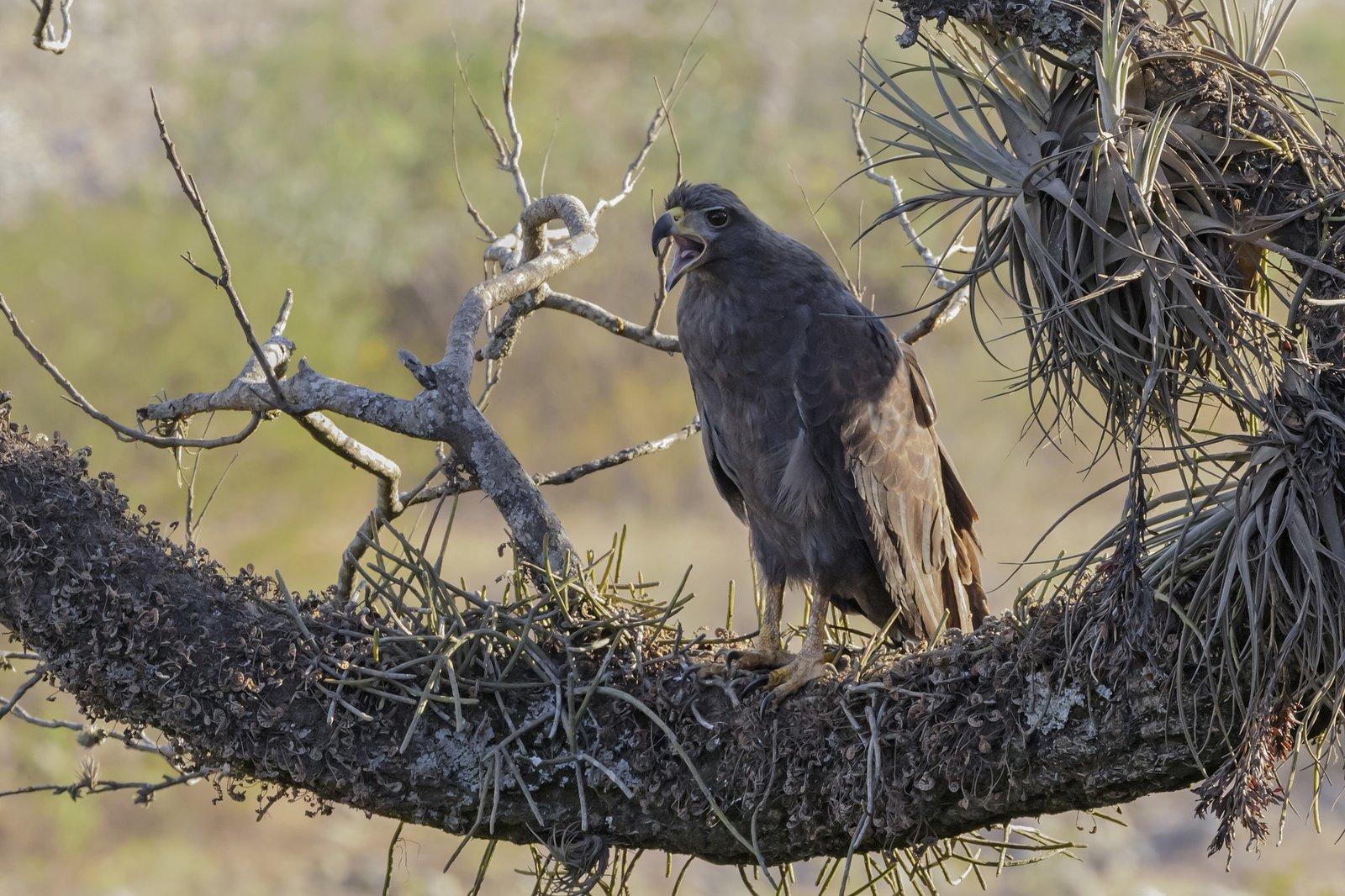
The Solitary Eagle is a very large, slate-grey eagle with exceptionally broad wings and a short tail, which lives in remote, forested mountain areas. It often circles high over slopes and ravines and hunts mainly snakes, but also other reptiles, mammals and birds. In the guide area it is a scarce and rarely seen resident in the mountains, from northwestern Mexico to Panama.
Voice
A series of loud, high, whistled calls, pee-pee-pee-pee, and a drawn-out, shrill whistle, mainly in flight over the breeding area.
Recording: Jonas Nilsson — CC BY-NC-SA 4.0 · converted to mono · xeno-canto
Identification
64–76 cm, with very broad, long wings that reach the tip of the short tail on a perched bird, and a heavy bill. Adults are uniform dark slate-grey, with yellow cere, lores and legs. The tail is black with one broad white band in the middle and a narrow white tip. In flight the wings are broad and rectangular, with the primaries spread like fingers, and the tail projects only a short way behind the wings. Young birds are dark brown above and buff with dark streaks and blotches below, with dark flanks and thighs, a pale head with a dark cheek patch and a grey-brown, mottled tail with a dark terminal band. Male and female are alike; the female is larger.
Confusion species
The Common Black Hawk Buteogallus anthracinus is very similar in plumage, but is much smaller, blacker and less grey, with relatively narrower wings and a longer tail, and usually lives in the lowlands near water. The Great Black Hawk Buteogallus urubitinga is smaller and black, with a white rump and a longer tail with a white base. The Black Hawk-Eagle Spizaetus tyrannus has a small crest, feathered legs and a long tail with several grey bands. Young birds can be told from young Common and Great Black Hawks by their size, very broad wings and short tail.
Habitat
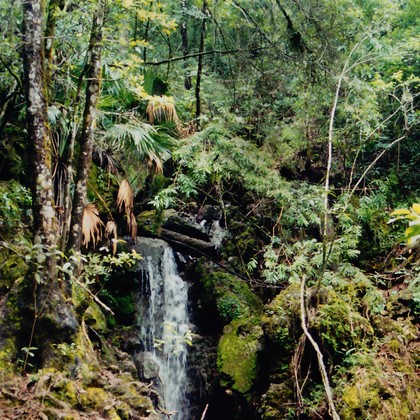
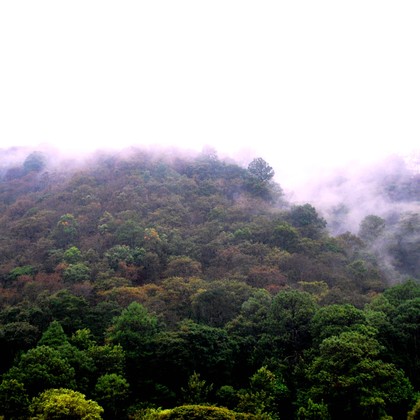
Humid montane forest, cloud forest and foothill forest in rugged terrain with steep slopes and ravines, in Mexico also pine-oak forest; mostly between about 600 and 2000 m. It nests high in a large tree. It is usually seen circling high over forested slopes or perched in the crown of a tree.
Where the bird is most at home, classified by the vegetation units of Mexico and Central America.



Range and movements
Scarce and local resident in the mountains. In Mexico in the Sierra Madre Occidental from Sonora and Chihuahua south through Sinaloa, Durango, Nayarit and Jalisco, and further in the mountains of Guerrero, Oaxaca and Chiapas. In Central America very patchily in the mountains of Guatemala, Belize (the Maya Mountains), Honduras, Nicaragua, Costa Rica and Panama, to the mountains of Darién. There are few records anywhere, and in large parts of the guide area the species is known from only a handful of sites. Outside the guide area very patchily along the Andes from Colombia and Venezuela to northwestern Argentina.
- Resident
- Summer visitor (c. Apr–Sep)
- Winter visitor (c. Oct–Mar)
- Passage (Mar–Apr, Oct–Nov)
- dark = core range, pale = thinly spread
How and when to look
The best chances are at viewpoints over large, forested ravines in the morning, as thermals develop, for example in the Sierra Madre Occidental of western Mexico. Because of confusion with the Common Black Hawk every record is notable, and a good view of the size, wing shape and short tail is needed.
Conservation status
Near Threatened. The population is small, very patchily distributed and declining through the clearing and fragmentation of montane forest and through shooting.
Scientific name
Buteogallus solitarius | (Tschudi, 1844) (GBIF: Harpyhaliaetus solitarius)
Tschudi described the species in 1844 as Circaetus solitarius; because it was later moved to another genus, the author and year stand in brackets. The genus Buteogallus was introduced in 1830 by Lesson. Buteogallus is Latin, from buteo 'buzzard' and gallus 'cock, fowl'; the reason for the second part is unclear. solitarius is Latin for 'solitary', after this scarce eagle that usually lives alone or in pairs. The specimen the first description was based on came from Río Chanchamayo, Junín, Peru.