All species › Owls › Owls › Stygian Owl
Position in the tree Birds Aves › Birds with a flexible palate Neognathae › All other modern birds Neoaves › Landbirds Telluraves › Raptors, owls, kingfishers and woodpeckers Afroaves › Hawks and owls Hieraves
Stygian Owl | Asio stygius
Grote ransuil | Búho cara oscura
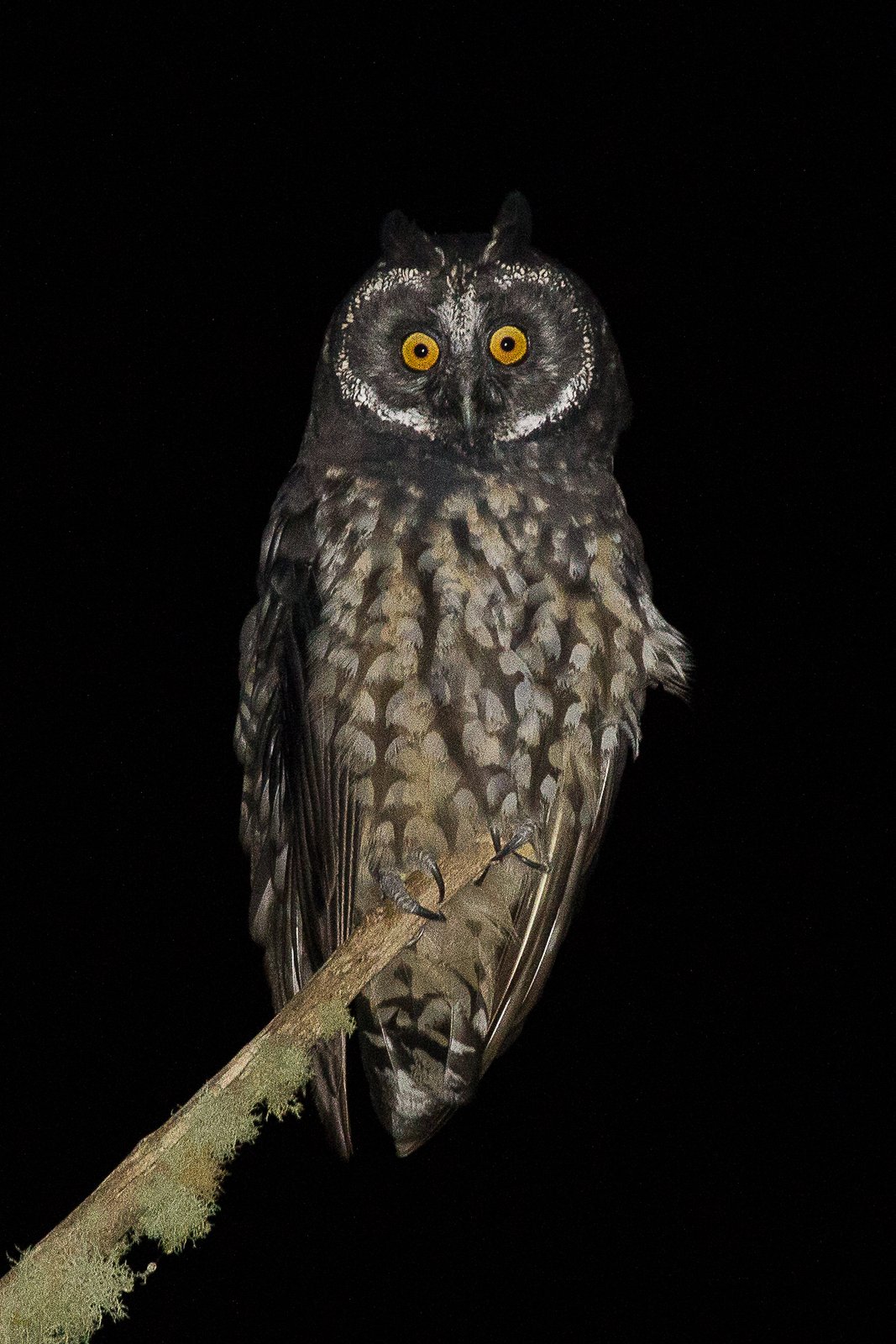
The Stygian Owl is a dark, large Asio owl with long ear tufts, found from Mexico to Argentina and on Cuba and Hispaniola. In the guide area it is a scarce and local resident, mainly in montane pine-oak forest and in lowland pine forest. It is strictly nocturnal, catches mainly birds at their roosts and is seldom seen.
Voice
The male gives a single, deep and emphatic hoo or whoo at intervals of several seconds. The female answers with a higher, cat-like nyeh. Near the nest also short, screamed calls.
Recording: Marcelo J Feliti — CC BY-NC-SA 4.0 · shortened to the first 60 s, mono · xeno-canto
Identification
38–46 cm, large and very dark, with long ear tufts set close together. The facial disc is blackish with a pale rim and a whitish forehead; the eyes are yellow. The upperparts are dark blackish-brown with small pale spots. The underparts are buff to dirty white with heavy dark streaks and crossbars that together form a cross-shaped pattern. The toes are feathered. Females are larger than males.
Confusion species
The Long-eared Owl Asio otus is smaller and paler, has a rufous face and orange eyes and in the guide area is mainly a winter visitor in the north. The Striped Owl Asio clamator has a white face with a black rim, dark eyes and only streaks on the underparts, and lives in open country. The Great Horned Owl Bubo virginianus is much larger, with widely spaced ear tufts and a white throat. The Short-eared Owl Asio flammeus is paler buff, has a pale face and short ear tufts and hunts over open country.
Habitat
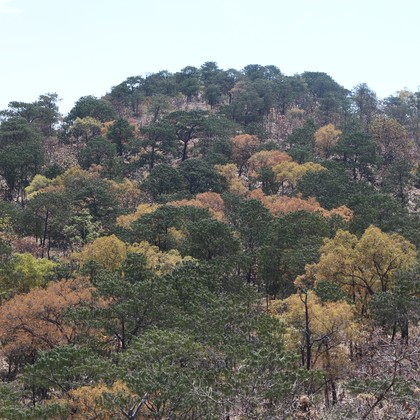
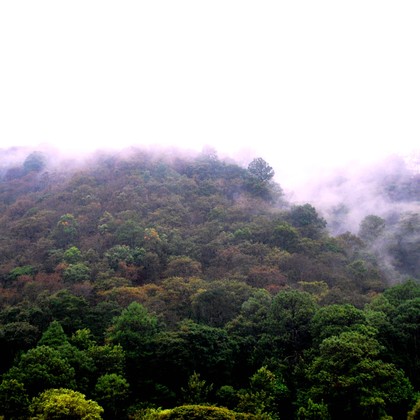
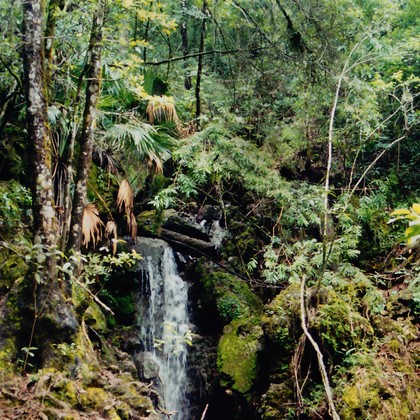
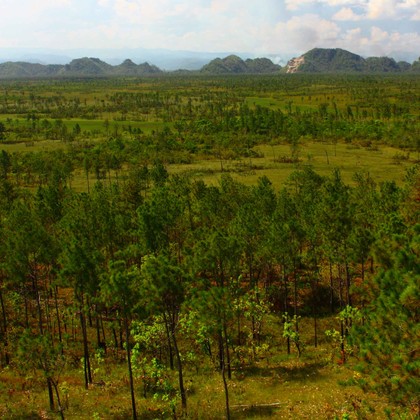
Forest of various types: montane pine-oak and oak forest, cloud forest, pine savanna and lowland pine forest, and locally dry and humid broadleaf forest, also around ruins and in wooded parks. From the lowlands to about 3,000 metres. It hunts mainly birds that it surprises at their roost, also bats, small mammals and large insects. It nests in old nests of other birds, in tree cavities or on the ground.
Where the bird is most at home, classified by the vegetation units of Mexico and Central America.


Range and movements
Scarce and local resident in Mexico, mainly in the Sierra Madre Occidental from Sinaloa, Durango and Nayarit to Jalisco, in the Sierra Madre Oriental of Nuevo León and Tamaulipas, and further in the mountains of Guerrero, Oaxaca and Chiapas; a few records on the Yucatán Peninsula. Further in Belize, mainly in the pine savannas and pine forest of the interior, in Guatemala, Honduras and Nicaragua, including the pine savannas of the Mosquitia. Very rare in El Salvador and Panama; not known with certainty from Costa Rica. Outside the guide area on Cuba, Hispaniola and in South America south to northern Argentina.
- Resident
- dark = core range, pale = thinly spread
How and when to look
Most often reported in Sinaloa, in pine-oak forest along the road from Mazatlán to Durango, and in Guatemala around the ruins of Tikal, where it roosts in tall trees. By day the owl sits upright and hidden in a dense tree against the trunk. At night the deep, single call is the best clue.
Conservation status
Not threatened as a species, but scarce and little studied in the guide area. Deforestation and logging reduce its habitat.
Scientific name
Asio stygius | (Wagler, 1832)
Wagler described the species in 1832 as Nyctalops stygius; because it was later moved to another genus, the author and year stand in brackets. The genus Asio was introduced in 1760 by Brisson. Asio is the Latin name of a horned or eared owl. stygius is Latin for 'of the Styx', the river of the underworld: 'gloomy', after the very dark plumage. The specimen the first description was based on came from Minas Gerais, Brazil.