All species › Tubenoses › Northern storm petrels › Townsend's Storm Petrel
Position in the tree Birds Aves › Birds with a flexible palate Neognathae › All other modern birds Neoaves › Birds of the elements Elementaves › Tropicbirds and waterbirds Phaethoquornithes › Core waterbirds Aequornithes
Townsend's Storm Petrel | Hydrobates socorroensis
Townsends stormvogeltje | Paíño de Townsend
Townsend's Storm Petrel is a small, sooty black storm petrel, usually with a white rump, that breeds only on a few rocky islets off Guadalupe Island, off the west coast of Baja California. It breeds there in summer; on the same islets the very similar Ainley's Storm Petrel breeds in winter. Both were long regarded as forms of Leach's Storm-Petrel and have only recently been recognised as separate species.

Voice
Silent at sea. At the breeding site purring and rattling calls come from burrows and crevices at night; they differ from those of Leach's and Ainley's Storm Petrels and helped to separate the species.
No recording with a suitable Creative Commons licence is available for this species yet.
Identification
16–18 cm. A small, compact storm petrel with fairly short wings and a shallowly forked tail. The plumage is sooty black, with a pale, often indistinct band across the upperwing coverts. In most birds the rump is white, the white extending onto the sides of the undertail coverts and hardly divided by a dark central line; some birds have a grey or entirely dark rump. Male, female and young birds are alike. Flies low and fairly fast, with short glides, less bounding than Leach's Storm-Petrel.
Confusion species
Leach's Storm-Petrel Hydrobates leucorhous is larger, with longer, more angled wings, a more deeply forked tail, a white rump usually divided by a grey central line and a more bounding flight. Ainley's Storm Petrel Hydrobates cheimomnestes breeds on the same islets but in winter; it is slightly larger, with longer wings and a more deeply forked tail, and usually has a greyer rump. At sea the three often cannot be separated with certainty. The Wedge-rumped Storm Petrel Hydrobates tethys has a much larger white rump, and the Band-rumped Storm Petrel Hydrobates castro a broader, square-cut rump band and a steadier flight.
Habitat
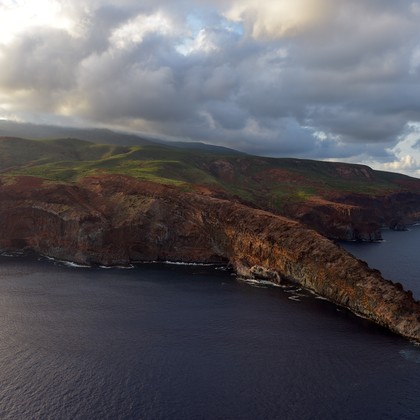
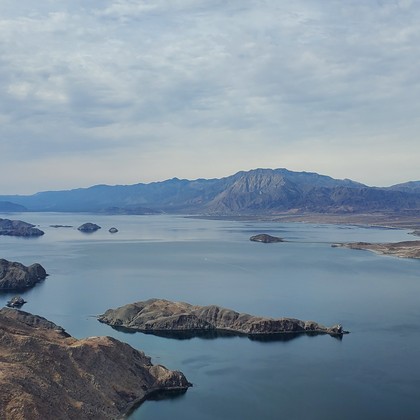
Open, warm-temperate ocean water far offshore. Takes small crustaceans, fish larvae and small squid from the surface in flight. Breeds in rock crevices and self-dug burrows on bare rocky islets.
Where the bird is most at home, classified by the vegetation units of Mexico and Central America.

Range and movements
Breeds only on a few rocky islets close to Guadalupe Island, off the west coast of Baja California. After the breeding season over the eastern Pacific, north to off southern California and probably south to about 10 degrees north, at the latitude of Central America. In the guide area there are almost only records from the waters off north-western Baja California; the non-breeding distribution is poorly known, partly because the species is hard to separate from related species at sea.
- Summer visitor (c. Apr–Sep)
- Passage (Mar–Apr, Oct–Nov)
- dark = core range, pale = thinly spread
How and when to look
Only seen on boat trips far off north-western Baja California, in summer and autumn. Look at the wing shape, the shallow tail fork and the flight rather than the colour of the rump, which is variable.
Conservation status
Endangered. The entire world population breeds on a few rocky islets off a single island, which makes the species very vulnerable to a single disaster or to new predators. Feral cats on Guadalupe Island earlier drove the Guadalupe Storm Petrel to extinction there; the present breeders are confined to the offshore islets. Artificial light from ships and predation by gulls and owls are further risks. Reliable numbers are lacking.
Scientific name
Hydrobates socorroensis | (Townsend, 1890) (GBIF: Oceanodroma leucorhoa)
Townsend described the species in 1890 as Oceanodroma socorroensis; because it was later moved to another genus, the author and year stand in brackets. The genus Hydrobates was introduced in 1822 by Boie. Hydrobates is Greek, from hudro- 'water' and batēs 'walker': 'water walker'. socorroensis means 'of Socorro', after Socorro Island in the Revillagigedo Islands off western Mexico. The specimen the first description was based on came from Socorro Island, Revillagigedo Islands, Mexico.