All species › Passerines › Crows, jays and magpies › Transvolcanic Jay
Position in the tree Birds Aves › Birds with a flexible palate Neognathae › All other modern birds Neoaves › Landbirds Telluraves › Falcons, parrots and passerines Australaves › Falcons and passerines Eufalconimorphae › Parrots and passerines Psittacopasserae
Transvolcanic Jay | Aphelocoma ultramarina
Zuid-Mexicaanse gaai | Chara transvolcánica
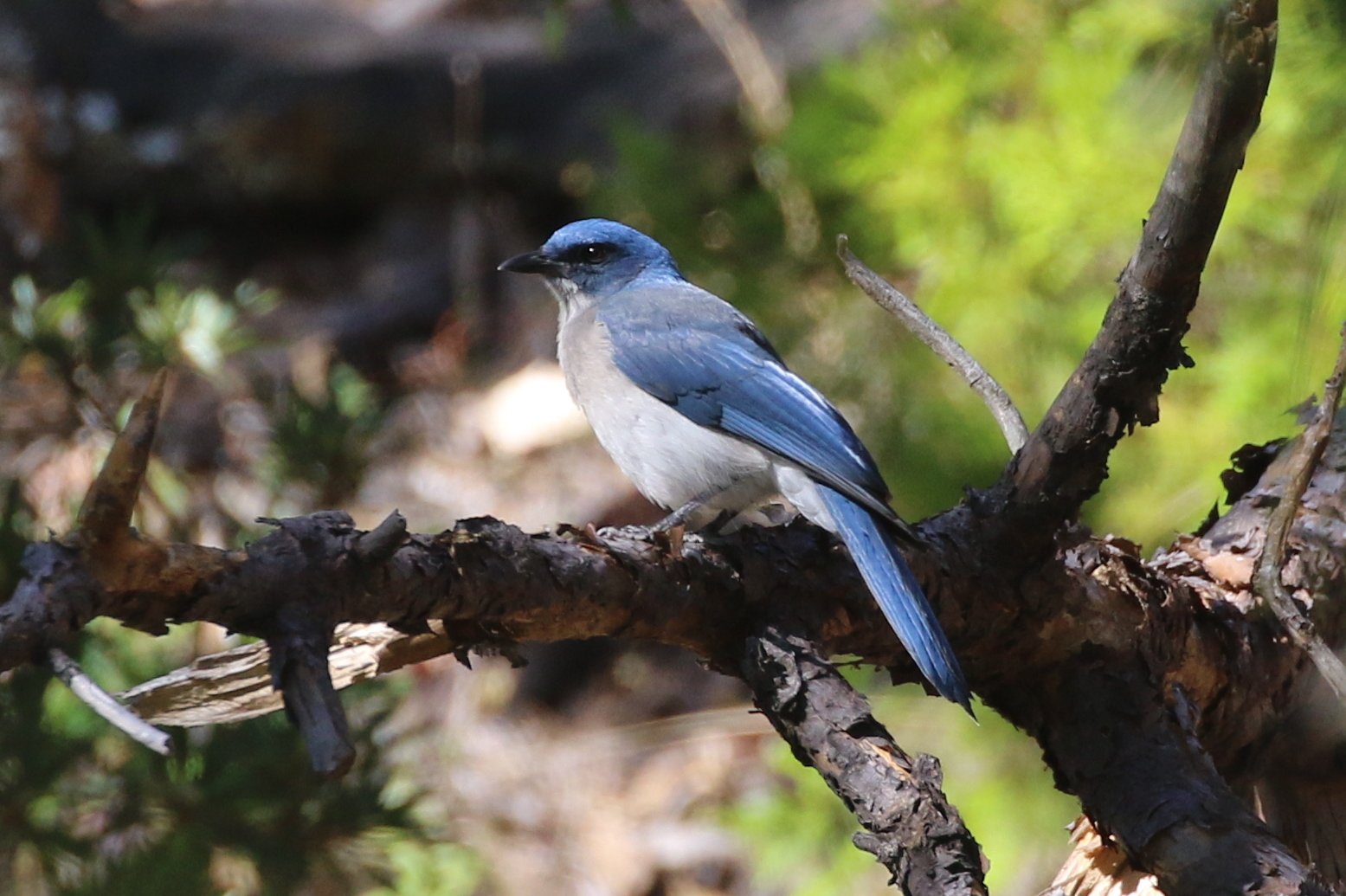
The Transvolcanic Jay is a blue-and-grey, crestless jay of the mountains of the Trans-Mexican Volcanic Belt in central Mexico. It was long treated as the same species as the Mexican Jay and closely resembles it. Like that species it lives in family groups, and it occurs only in Mexico.
Voice
Loud, repeated calls recalling those of Mexican Jay, and rattling notes; groups are noisy.
Recording: Andrew Spencer — CC BY-NC-SA 4.0 · converted to mono · xeno-canto
Identification
29–32 cm, of which much is tail. Head, wings and tail dull blue, back greyish blue. Lores and ear coverts darker. Throat and underparts uniform pale grey, without streaks or breast band. Bill black and stout. On average slightly larger and longer-tailed than Mexican Jay.
Confusion species
Mexican Jay Aphelocoma wollweberi is almost identical and is best separated in the field by range. Woodhouse's Scrub Jay Aphelocoma woodhouseii has a white supercilium, a streaked white throat and a blue breast band. Steller's Jay Cyanocitta stelleri has a long dark crest. Unicolored Jay Aphelocoma unicolor is dark blue below as well.
Habitat
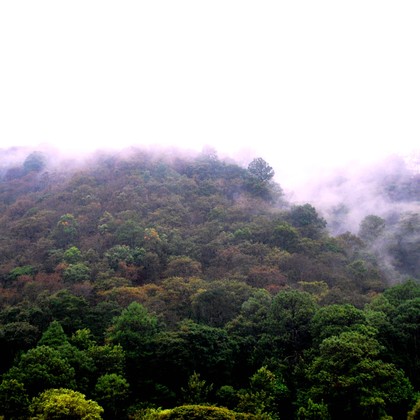
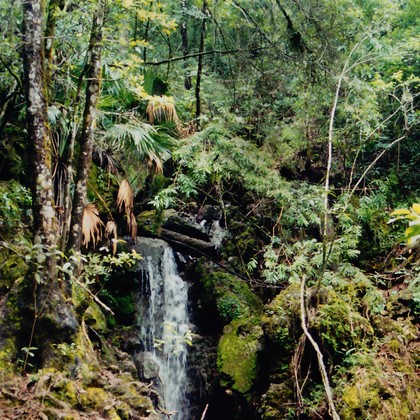
Pine-oak forest, oak woodland and forest edges in the mountains, also wooded ravines and edges of montane forest. It lives in groups year-round. It eats insects, acorns, seeds and fruit.
Where the bird is most at home, classified by the vegetation units of Mexico and Central America.

Range and movements
Endemic to Mexico, in the mountains of the Trans-Mexican Volcanic Belt in central Mexico. The entire range lies within the guide area.
- Resident
- dark = core range, pale = thinly spread
How and when to look
Noisy groups are easiest to find in oak and pine-oak woodland on the slopes of the volcanoes around the central highlands of Mexico.
Conservation status
Not threatened. Locally common, although montane forest in central Mexico is fragmented in many places.
Scientific name
Aphelocoma ultramarina | (Bonaparte, 1825)
Bonaparte described the species in 1825 as Corvus ultramarinus; because it was later moved to another genus, the author and year stand in brackets. The genus Aphelocoma was introduced in 1851 by Cabanis. Aphelocoma is Greek, from aphelēs 'simple, smooth' and komē 'hair of the head', after the uncrested head. ultramarina is Latin for 'ultramarine' (literally 'from overseas', after the blue pigment), after the blue plumage. The specimen the first description was based on came from Temascaltepec, State of México, Mexico.