All species › Passerines › Thrushes and allies › Veery
Position in the tree Birds Aves › Birds with a flexible palate Neognathae › All other modern birds Neoaves › Landbirds Telluraves › Falcons, parrots and passerines Australaves › Falcons and passerines Eufalconimorphae › Parrots and passerines Psittacopasserae
Veery | Catharus fuscescens
Veery | Zorzal rojizo
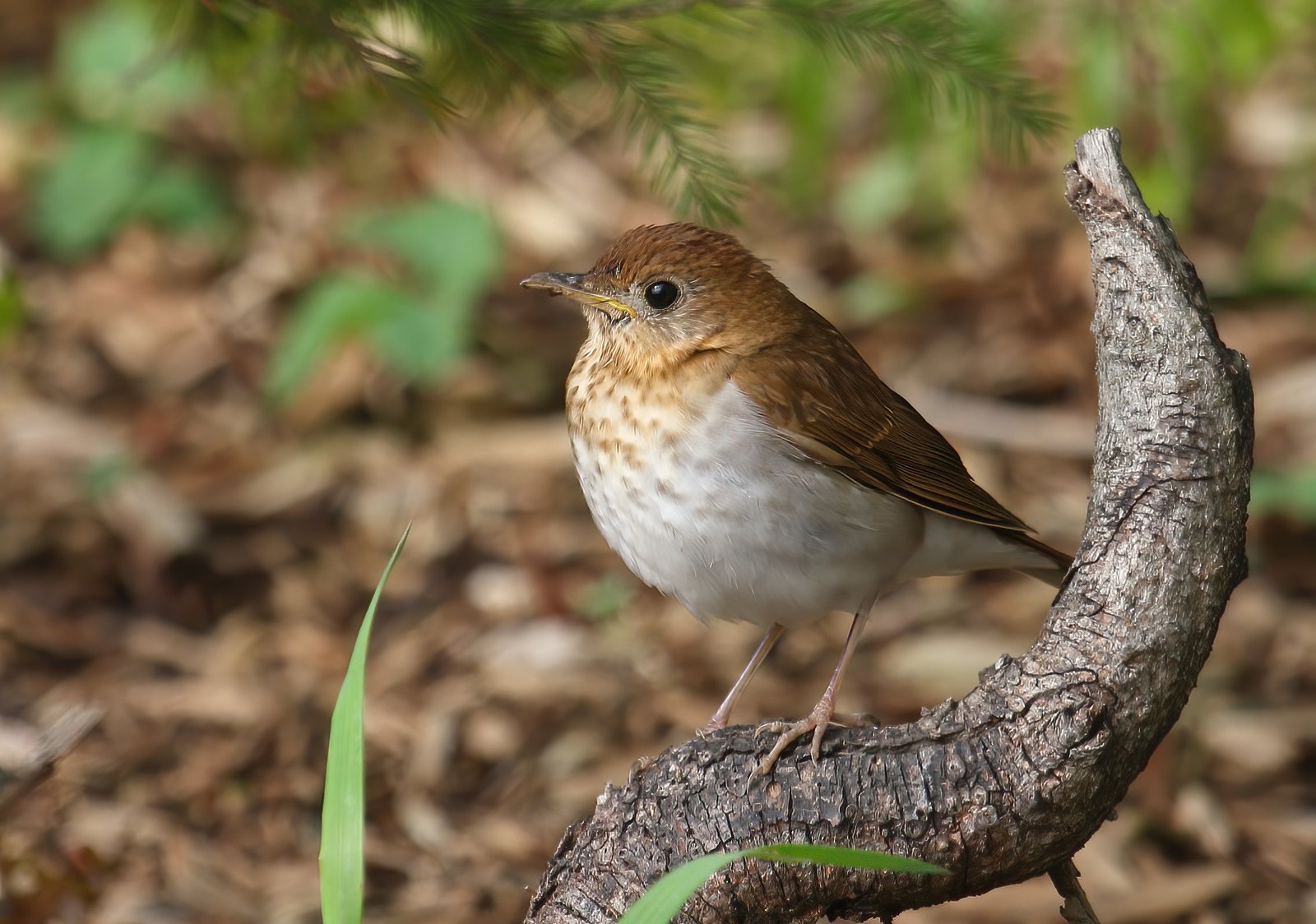
The Veery is a slim, warm rufous-brown thrush with only faint spots on the breast. It breeds in damp deciduous forest in Canada and the northern United States and winters in the southern Amazon Basin in Brazil. In the guide area it is exclusively a passage migrant, more numerous in autumn than in spring.
Voice
Usually silent in the guide area. The call is a low, falling vee-ur, from which the species takes its name; also a soft wuk. The nocturnal flight call is a hoarse, falling veer. The song, on the breeding grounds, is a series of descending, fluting spirals.
Recording: Stanislas Wroza — CC BY-NC-SA 4.0 · shortened to the first 60 s, mono · xeno-canto
Identification
16–19 cm. Slim, with a short bill. Upperparts plain warm rufous-brown to cinnamon-brown, including head and tail; birds from the west of the breeding range are duller. Eye-ring faint greyish white. Throat and breast washed light brown with small, faint rufous spots; rest of the underparts white, with grey flanks. The sexes are alike.
Confusion species
Swainson's Thrush Catharus ustulatus is more olive-brown above, has distinct buffy spectacles and darker, sharper breast spots. Gray-cheeked Thrush Catharus minimus is greyish brown above, with grey cheeks and black breast spots. Hermit Thrush Catharus guttatus has a rufous tail contrasting with a browner back and darker spots. Wood Thrush Hylocichla mustelina is larger, with large black spots on white underparts.
Habitat
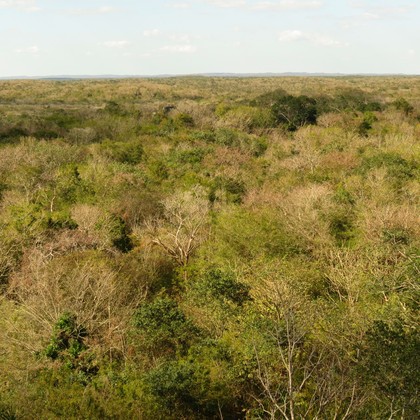
On migration in humid and dry forest, forest edges, secondary forest, shade coffee, parks and wooded gardens, mainly in the lowlands and foothills. It searches the ground for insects and other invertebrates and eats much fruit on migration.
Where the bird is most at home, classified by the vegetation units of Mexico and Central America.





Range and movements
Breeds in southern Canada and the northern United States, south along the Appalachians. Passes through eastern Mexico, the Yucatán Peninsula and the Caribbean slope of Central America to Panama; in autumn many birds cross the Gulf of Mexico. Winters in the southern Amazon Basin.
- Passage (Mar–Apr, Oct–Nov)
- dark = core range, pale = thinly spread
How and when to look
Most often seen in September and October in fruiting trees along forest edges in the Caribbean lowlands, for example on the Yucatán Peninsula and around the Panama Canal. Often together with other migrant thrushes.
Conservation status
Not threatened (LC). Widespread, but the breeding population has been declining gradually for decades. Deforestation in the wintering range and collisions with lit buildings during migration play a part.
Scientific name
Catharus fuscescens | (Stephens, 1817)
Stephens described the species in 1817 as Turdus Fuscescens; because it was later moved to another genus, the author and year stand in brackets. The genus Catharus was introduced in 1850 by Bonaparte. Catharus is from Ancient Greek katharos 'pure, clean', a name given for the clean plumage of the orange-billed nightingale-thrush. fuscescens is Latin for 'darkish, dusky', from fuscus 'dark', after the tawny-brown upperparts. The specimen the first description was based on came from Pennsylvania, USA.