All species › Passerines › Penduline tits › Verdin
Position in the tree Birds Aves › Birds with a flexible palate Neognathae › All other modern birds Neoaves › Landbirds Telluraves › Falcons, parrots and passerines Australaves › Falcons and passerines Eufalconimorphae › Parrots and passerines Psittacopasserae
Verdin | Auriparus flaviceps
Geelkopmees | Baloncillo
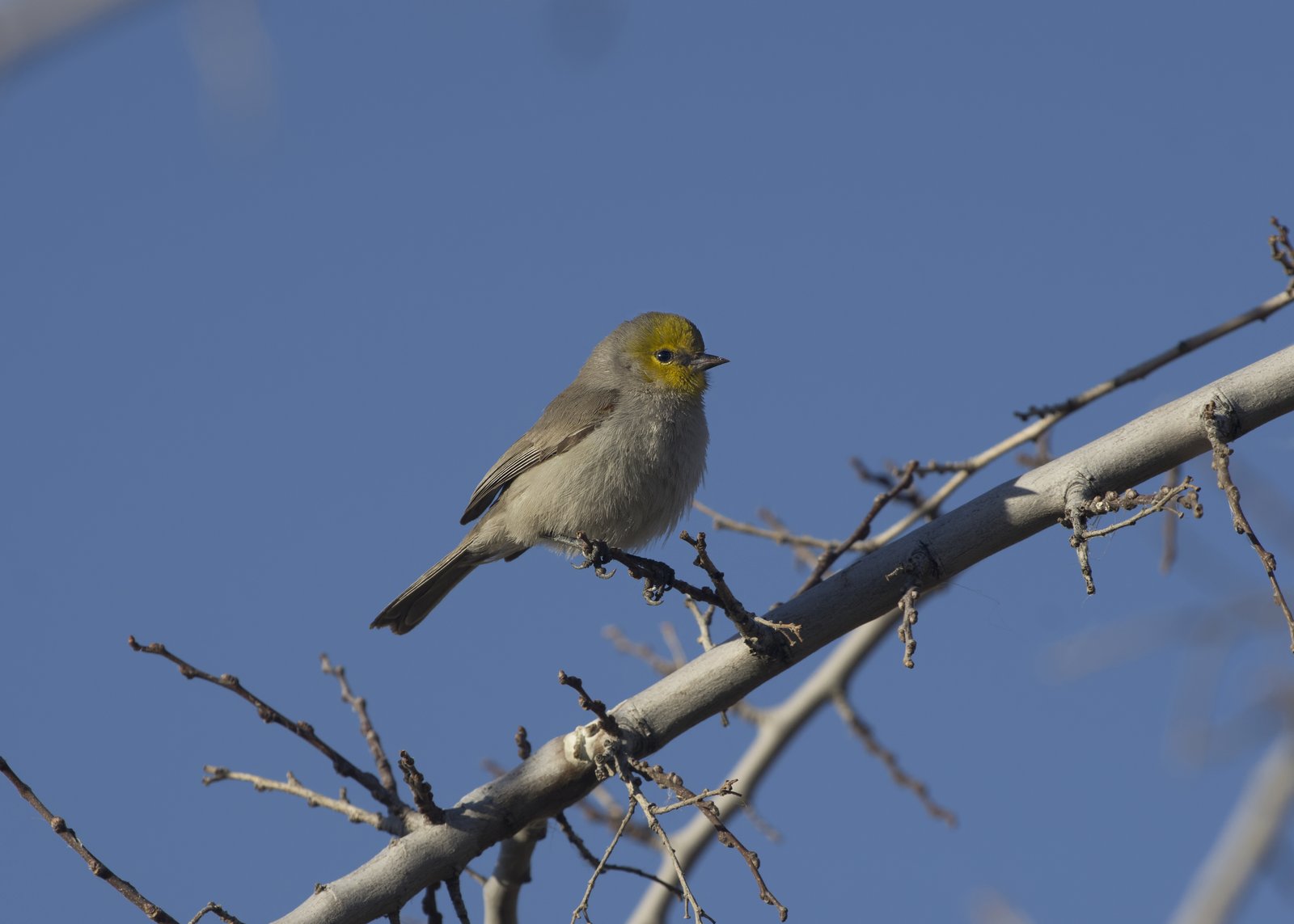
The Verdin is a very small, grey songbird with a yellow head and a chestnut shoulder patch that lives in desert and thorn scrub. It is active and forages like a chickadee among twigs and leaves for insects. It builds conspicuous, globular nests of thorny twigs.
Voice
A loud, piercing cheep or tseet, often repeated, and rapid series of tsip-tsip-tsip. The song consists of a few clear, even whistles.
Recording: Pat Goltz — CC BY-NC-SA 4.0 · converted to mono · xeno-canto
Identification
10–11 cm. Adults grey with paler underparts; head and throat yellow, the yellow sometimes mixed with grey. A small chestnut patch on the shoulder, not always visible. Bill short, pointed and dark, slightly paler at the base. Juveniles entirely grey, without yellow and without the shoulder patch.
Confusion species
Juveniles resemble American Bushtit Psaltriparus minimus, which has a longer tail and lives in flocks, and gnatcatchers such as Black-tailed Gnatcatcher Polioptila melanura, which have a long black-and-white tail. Lucy's Warbler Leiothlypis luciae is also small and grey but has a rufous rump and no yellow head.
Habitat
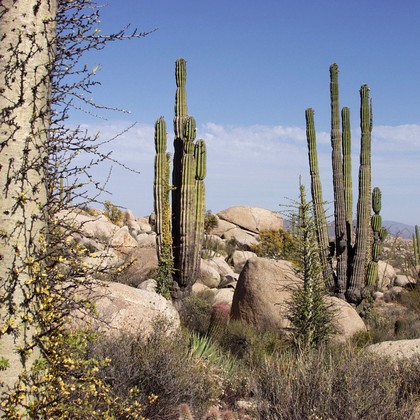
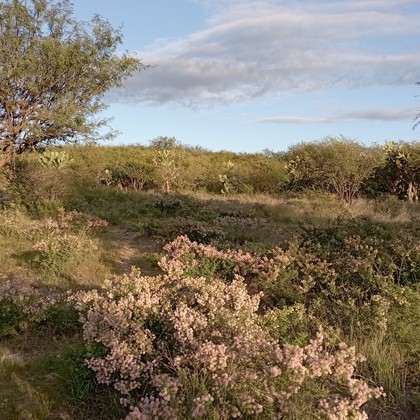
Desert scrub with mesquite, acacia and other thorny shrubs, thorn scrub, semi-desert grassland with shrubs and riparian woodland in arid regions; also in gardens and parks in dry towns. It eats insects, spiders, nectar and berries. It builds globular nests with a side entrance throughout the year, which also serve as roosts.
Where the bird is most at home, classified by the vegetation units of Mexico and Central America.





Range and movements
In the guide area in Baja California and northern Mexico, from Sonora to Tamaulipas, and south across the dry northern plateau to central Mexico. Outside the guide area in the south-western United States.
- Resident
- dark = core range, pale = thinly spread
How and when to look
Often first heard by its loud, piercing call. In thorny shrubs the globular twig nests are sometimes easier to find than the bird itself.
Conservation status
Not threatened. Common in suitable dry scrub.
Scientific name
Auriparus flaviceps | (Sundevall, 1850)
Sundevall described the species in 1850 as Aegithalus flaviceps; because it was later moved to another genus, the author and year stand in brackets. The genus Auriparus was introduced in 1864 by Baird. Auriparus is Latin, from aurum 'gold' and the tit genus Parus: a 'golden tit', after the yellow head. flaviceps is Latin, from flavus 'yellow' and -ceps '-capped' (from caput 'head'), after the yellow head. The specimen the first description was based on came from probably near Loreto, Baja California Sur, Mexico.