All species › Owls › Owls › Western Screech Owl
Position in the tree Birds Aves › Birds with a flexible palate Neognathae › All other modern birds Neoaves › Landbirds Telluraves › Raptors, owls, kingfishers and woodpeckers Afroaves › Hawks and owls Hieraves
Western Screech Owl | Megascops kennicottii
Westelijke schreeuwuil | Tecolote del oeste
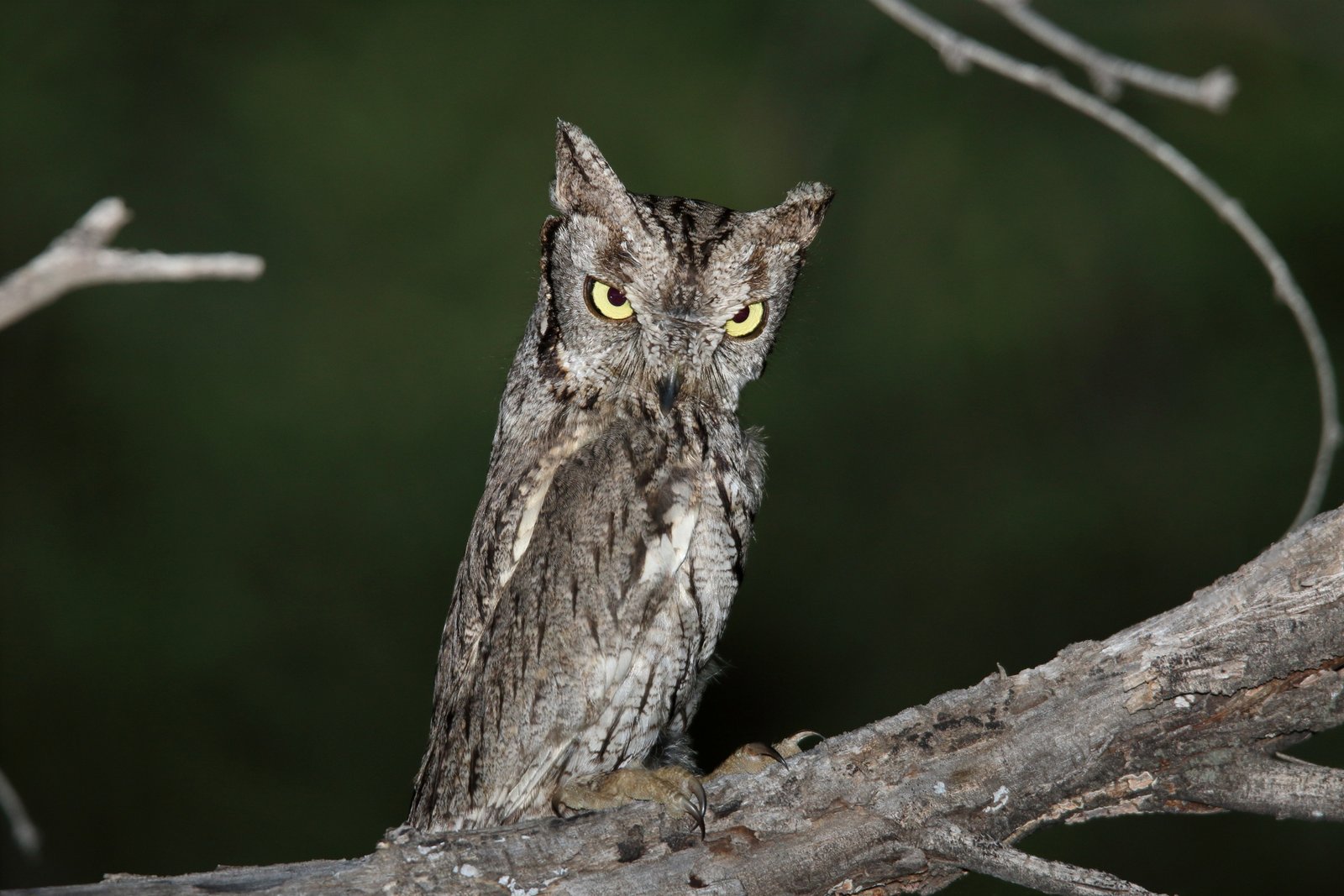
The Western Screech Owl is a small, grey, ear-tufted owl of western North America that occurs in northern and central Mexico within the guide area. It lives in desert with columnar cacti, riparian woodland and oak forest, and also in parks and gardens. Despite its name it does not screech: the song is a series of short whistled notes following each other ever faster. It is active only at night.
Voice
The song is a series of about ten short, hollow whistles on the same pitch that follow each other ever faster: poo… poo… poo-poo-poo-poo-pooroo, with the rhythm of a bouncing ball coming to rest. Also a double trill, a short roll followed by a longer one, used by the pair to keep in contact. The male sings lower than the female; sharp barks are given when disturbed.
Recording: David Tattersley — CC BY-NC-SA 4.0 · converted to mono · xeno-canto
Identification
19–25 cm, stocky, with a square head, short tail and ear tufts that are raised when alarmed. The plumage is grey to grey-brown, finely vermiculated with black streaks and cross-bars, like tree bark. The eyes are yellow and the bill is dark grey to blackish. There is no rufous morph in this species. Birds of the deserts of Baja California and Sonora are pale, sandy grey. Male and female are alike; the female is heavier.
Confusion species
The Eastern Screech Owl Megascops asio, in northeastern Mexico, is very similar but has a pale, yellowish-green bill and sings a descending whinny and an even, purring trill. The Whiskered Screech Owl Megascops trichopsis lives in oak and pine-oak forest in the mountains, is slightly smaller, has coarser bars on the underparts and sings an even or Morse-code-like series of toots. The Balsas Screech Owl Megascops seductus, in southwestern Mexico, has dark eyes. The Flammulated Owl Psiloscops flammeolus is much smaller, has dark eyes and gives a single low note.
Habitat
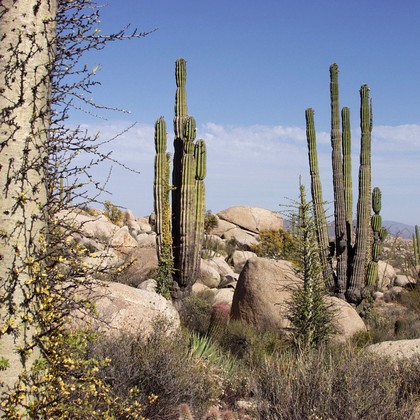
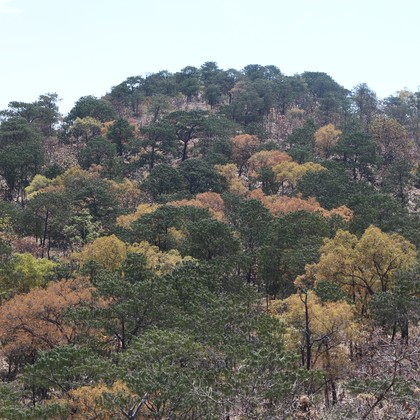
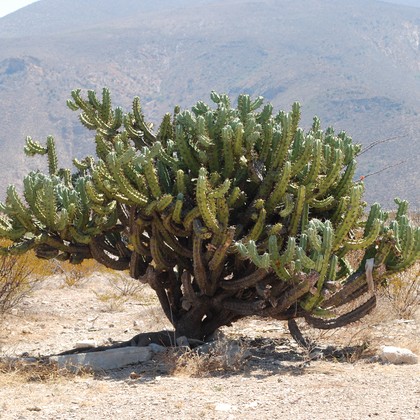
Desert with columnar cacti such as saguaro and cardón, thorn scrub, riparian woodland with cottonwoods, sycamores and oaks along streams and dry washes, oak and pine-oak forest up to about 2500 m, mesquite scrub and plateau scrub; also parks, gardens and villages with old trees. It nests in old woodpecker holes, natural tree cavities and cavities in columnar cacti. It hunts at night from a perch for large insects, scorpions, mice, small birds and lizards.
Where the bird is most at home, classified by the vegetation units of Mexico and Central America.




Range and movements
Resident in northern and central Mexico: throughout Baja California and Baja California Sur, in Sonora, Chihuahua, Coahuila and western Nuevo León, and south through Sinaloa, Durango and across the plateau, through Zacatecas, Aguascalientes, San Luis Potosí, Jalisco, Guanajuato and Querétaro to Hidalgo, the Valley of Mexico, Tlaxcala, Puebla and northern Michoacán. Outside the guide area from southeastern Alaska and southwestern Canada through the western United States to western Texas.
- Resident
- dark = core range, pale = thinly spread
How and when to look
In Baja California Sur and Sonora the song can be heard after sunset in cactus forest and along dry washes with large trees; in the Valley of Mexico it also lives in parks and gardens with old trees. By day it sits with its feathers sleeked against a trunk or in a cavity and is then hard to find; small songbirds mobbing it noisily sometimes give away its roost.
Conservation status
Not threatened. Locally common in Mexico; the species adapts well to gardens and villages with old trees, but depends on cavities and disappears where old trees and columnar cacti are cut.
Scientific name
Megascops kennicottii | (Elliot, 1867)
Elliot described the species in 1867 as Scops Kennicottii; because it was later moved to another genus, the author and year stand in brackets. The genus Megascops was introduced in 1848 by Kaup. Megascops combines the Greek megas 'great' with Scops, the old genus name of the scops owls. kennicottii honours the American naturalist Robert Kennicott (1835–1866), explorer of Alaska. The specimen the first description was based on came from Sitka, Alaska.