All species › Gamebirds › Guans, curassows and chachalacas › White-bellied Chachalaca
Position in the tree Birds Aves › Birds with a flexible palate Neognathae › Fowl Galloanserae
White-bellied Chachalaca | Ortalis leucogastra
Witbuikchachalaca | Chachalaca vientre blanco
The White-bellied Chachalaca is a small chachalaca of the Pacific side of northern Central America, from south-eastern Chiapas to north-western Nicaragua. The species occurs only in the guide area. The white belly and the white tail tips set it apart from the other chachalacas.

Voice
Flocks sing a gruff, burry, rhythmic chorus of four-syllable phrases, something like k-ku-uh-uh or ch-k-uh-urr, mainly at dawn. Also cackling calls.
Recording: Scott Olmstead — CC BY-NC-SA 4.0 · shortened to the first 60 s, mono · xeno-canto
Identification
43–50 cm; a small, slender chachalaca with a long tail. Head, neck, upperparts and breast are brown, the head somewhat greyer; the belly is dull white and clearly demarcated from the brown breast. The tail is dark brown with white tips to the outer feathers. There is bare, dark slate-grey skin around the eye and a small bare reddish patch on the throat. Male and female are alike.
Confusion species
Plain Chachalaca Ortalis vetula has a greyish to ochre-brown, not white, belly and pale ochre tail tips; it lives mainly on the Caribbean side and in north-western Costa Rica. West Mexican Chachalaca Ortalis poliocephala is larger, has an ochre wash on the belly and lives further west in Mexico. Crested Guan Penelope purpurascens is much larger, with white streaks on the neck and breast and a red dewlap.
Habitat
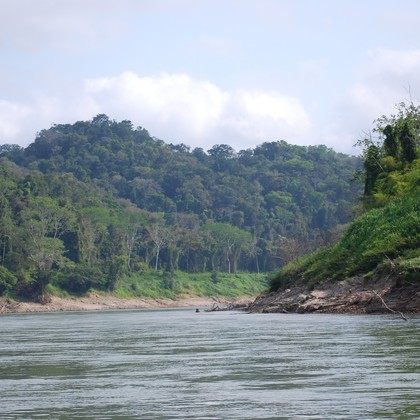
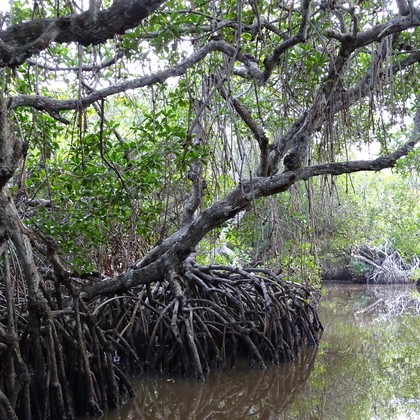
Dry and semi-evergreen forest, swamp forest, dense scrub in and along swamps, mangroves, forest edges and the edges of pasture. Mainly in the Pacific lowlands, in Guatemala up to about 1500 m. It lives in groups in shrubs and treetops and eats mainly fruit and leaves.
Where the bird is most at home, classified by the vegetation units of Mexico and Central America.



Range and movements
Endemic to the guide area, on the Pacific side: in Mexico only in south-eastern Chiapas (Soconusco), further in the Pacific lowlands and foothills of Guatemala, in El Salvador, in southern Honduras (Valle, Choluteca and locally the dry interior) and in north-western Nicaragua.
- Resident
- dark = core range, pale = thinly spread
How and when to look
In El Salvador and along the Pacific coast of Guatemala in scrub, forest edges and mangroves; flocks come to fruiting trees at dawn and give themselves away with their chorus.
Conservation status
Not threatened. The species is locally fairly common and tolerates secondary forest and scrub, although the dry forest on the Pacific side has largely disappeared.
Scientific name
Ortalis leucogastra | (Gould, 1843)
Gould described the species in 1843 as Penelope leucogastra; because it was later moved to another genus, the author and year stand in brackets. The genus Ortalis was introduced in 1786 by Merrem. Ortalis is Greek for 'chick, young hen'. leucogastra is Greek, from leukos 'white' and gastēr 'belly', after the white belly. The specimen the first description was based on came from not stated.