All species › Waders, gulls and terns › Sandpipers and allies › Willet
Position in the tree Birds Aves › Birds with a flexible palate Neognathae › All other modern birds Neoaves › Birds of the elements Elementaves › Cranes and waders Gruimorphae
Willet | Tringa semipalmata
Willet | Playero aliblanco
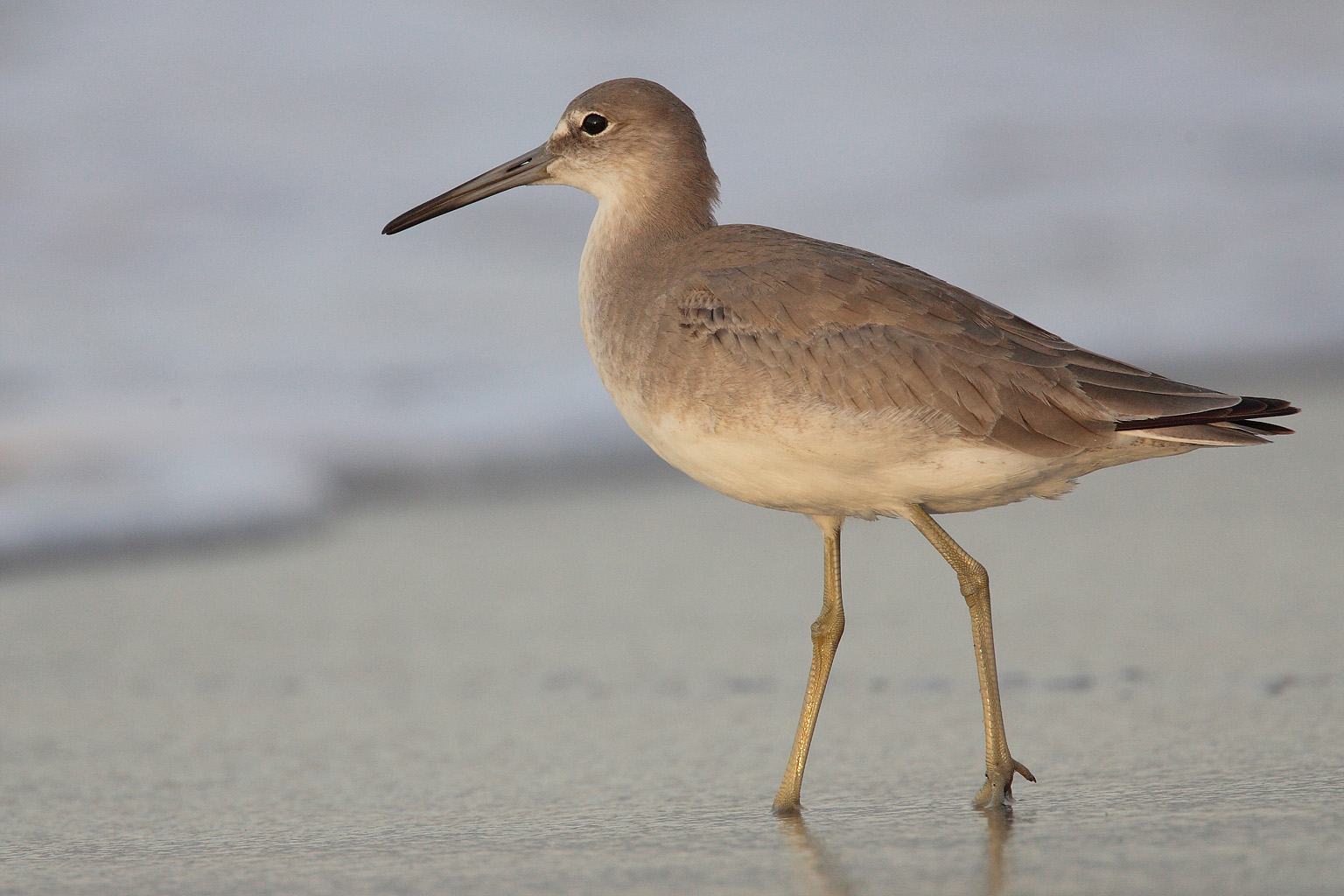
The Willet is a large, grey sandpiper of coasts, mangroves and lagoons, inconspicuous at rest but showing a black-and-white wing pattern on take-off. The name comes from its call. The eastern subspecies Tringa semipalmata semipalmata breeds along the Atlantic coast of North America and the western T. s. inornata on the prairies; both are regularly proposed as separate species. In the guide area the Willet is a common winter visitor and passage migrant along both coasts.
Voice
Outside the breeding season a loud, clear kee-ee or kee-wee-weet, often on taking flight, and when disturbed a rapid kip-kip-kip. The rhythmic pill-will-willet of the breeding season is sometimes heard in the guide area in spring.
Recording: Ed Pandolfino — CC BY-NC-SA 4.0 · converted to mono · xeno-canto
Identification
33–41 cm, bulky, with a thick, straight, dark bill with a paler base and thick blue-grey legs. In non-breeding plumage plain pale grey above and white below, with a pale line between bill and eye and a white eye-ring. In breeding plumage brownish grey with dark barring and streaking on the head, neck, breast and flanks. In flight the upperwing shows a broad white band across the black primaries, and the underwing is black and white; the rump is white, the tail grey. The western subspecies is larger, longer-billed and in breeding plumage paler and less heavily marked than the eastern. Females are slightly larger than males.
Confusion species
Greater Yellowlegs Tringa melanoleuca has bright yellow legs, a thinner, often slightly upturned bill, spotted upperparts and no wing pattern. Marbled Godwit Limosa fedoa is cinnamon-brown, with a long, two-toned, upturned bill. Hudsonian Whimbrel Numenius hudsonicus has a curved bill and a striped head. Short-billed Dowitcher Limnodromus griseus is smaller and shorter-legged, with a much longer bill. In flight the wing pattern of the Willet is unique in the guide area.
Habitat
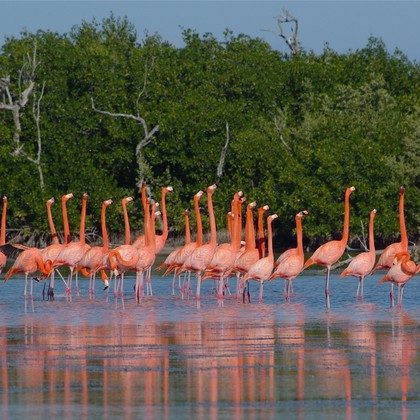
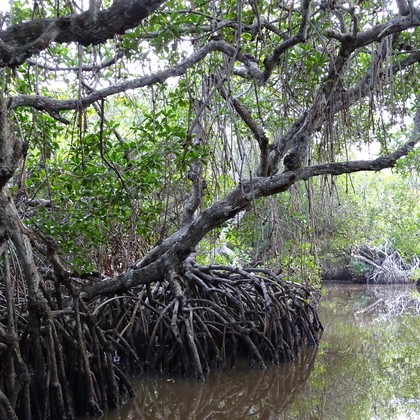
Tidal mudflats, sandy beaches, mangrove edges, brackish lagoons, estuaries, salt pans and salt marshes; rarely far from salt or brackish water. It feeds by walking and probing in mud and sand, mainly for crabs, worms and molluscs, and on beaches sometimes follows the retreating waves. At high tide it roosts in flocks on sandbars, dykes and mangrove branches.
Where the bird is most at home, classified by the vegetation units of Mexico and Central America.



Range and movements
Winter visitor and passage migrant along the whole Pacific coast, from Baja California and the Gulf of California to Panama, and along the coast of the Gulf of Mexico and the Caribbean Sea, from Tamaulipas via Yucatán to Panama. On the Pacific side mainly the western subspecies; on the Atlantic side both winter. Rare inland, mainly on migration. Outside the guide area the eastern subspecies breeds from Nova Scotia to the Gulf of Mexico coast of the United States and the Caribbean, the western in the interior of western North America; the species winters from the United States to northern Chile and southern Brazil.
- Winter visitor (c. Oct–Mar)
- dark = core range, pale = thinly spread
How and when to look
Tidal mudflats and sandy beaches along almost any coast in the guide area hold the species, often in loose groups among other waders. On take-off the black-and-white wing pattern is immediately recognisable.
Conservation status
Not threatened. Heavily hunted in the nineteenth century and lost from large parts of its breeding range, it has since recovered. In the guide area coastal development, disturbance and loss of mangroves and tidal areas are the main threats.
Scientific name
Tringa semipalmata | (Gmelin, 1789)
Gmelin described the species in 1789 as Scolopax semipalmata; because it was later moved to another genus, the author and year stand in brackets. The genus Tringa was introduced in 1758 by Linnaeus. Tringa is the Neo-Latin name Aldrovandi gave to the green sandpiper, after Ancient Greek trungas, a thrush-sized, white-rumped, tail-bobbing wading bird mentioned by Aristotle. semipalmata is Latin, from semi 'half' and palmatus 'webbed', after the short webs between the toes. The specimen the first description was based on came from New York.