All species › Waders, gulls and terns › Sandpipers and allies › Greater Yellowlegs
Position in the tree Birds Aves › Birds with a flexible palate Neognathae › All other modern birds Neoaves › Birds of the elements Elementaves › Cranes and waders Gruimorphae
Greater Yellowlegs | Tringa melanoleuca
Grote geelpootruiter | Archibebe patigualdo grande
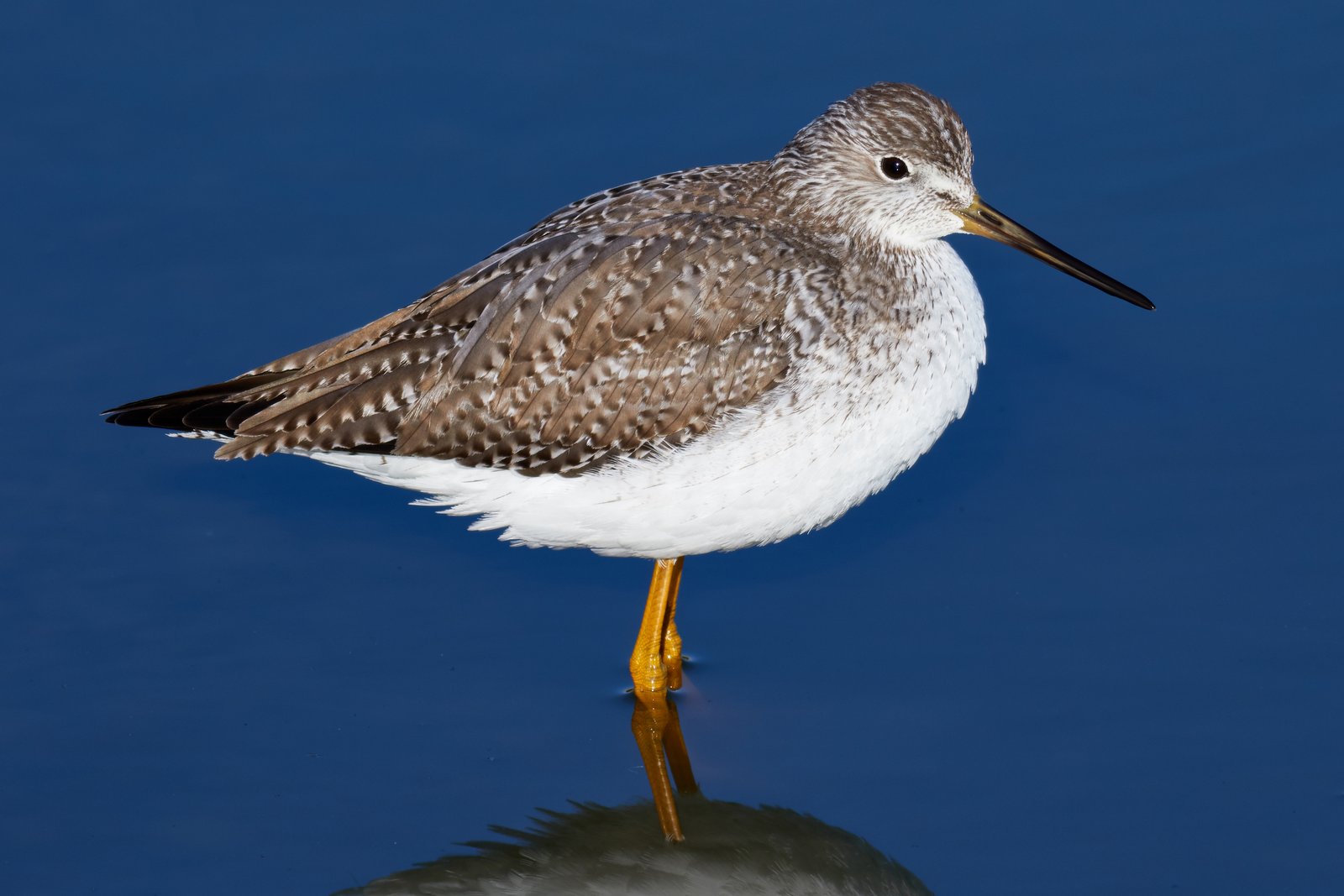
The Greater Yellowlegs is a large, long-legged sandpiper with bright yellow legs and a loud call, often the first bird to raise the alarm when waders are disturbed. It breeds in the boreal wetlands of Alaska and Canada and is a widespread winter visitor and passage migrant in the guide area, on the coast and inland, usually in smaller groups than the Lesser Yellowlegs.
Voice
A loud, clear, descending tew-tew-tew in a series of three or four notes, more urgent than that of Lesser Yellowlegs; often given on take-off. In spring also a repeated, rolling toowee-toowee.
Recording: Don Profota — CC BY-NC-SA 4.0 · converted to mono · xeno-canto
Identification
29–33 cm, large and long-legged, with bright yellow legs and a long bill about one and a half times the length of the head, often slightly upturned and greyish at the base in winter. In non-breeding plumage grey above with white spots and fringes, white below with a finely streaked neck and breast and a white eye-ring. In breeding plumage the upperparts are chequered black, grey and white, and the breast and flanks heavily streaked and spotted black. Juveniles have browner upperparts with fine pale spots. In flight dark wings without a wing bar, a square white rump and a barred tail.
Confusion species
Lesser Yellowlegs Tringa flavipes is smaller and finer, with a straight, thin, all-dark bill about as long as the head and a softer call of one or two notes; in mixed flocks the difference in size helps. Willet Tringa semipalmata is greyer and heavier, with grey legs, a thick straight bill and a striking black-and-white wing pattern in flight. Stilt Sandpiper Calidris himantopus is smaller, with greenish legs and a bill slightly drooping at the tip.
Habitat
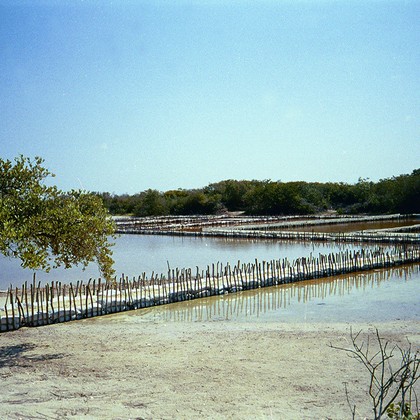
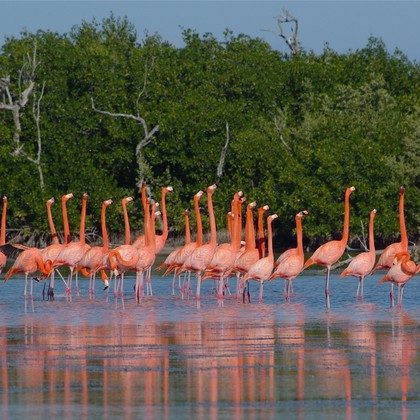
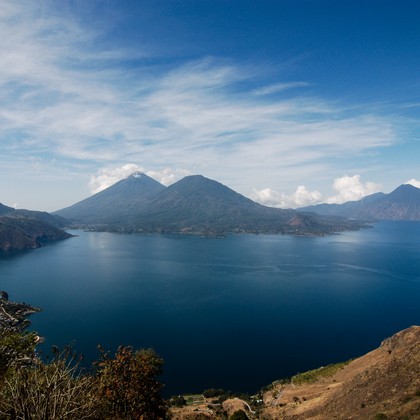
Shallow margins of lagoons, estuaries, salt pans, mudflats and mangrove channels, and inland lakes, reservoirs, riverbanks, wet grassland, rice fields and shrimp ponds, from the lowlands up to the Mexican Plateau. It feeds in deeper water than most waders, often running after small fish, and also takes crustaceans and insects.
Where the bird is most at home, classified by the vegetation units of Mexico and Central America.



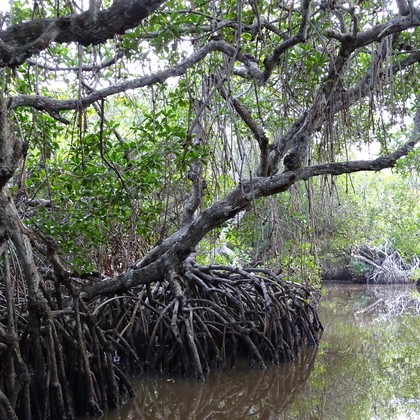
Range and movements
Winter visitor and passage migrant throughout the guide area, from Baja California and northern Mexico to Panama, on both coasts and inland up to the plateau. The first birds arrive in July and the last leave in April and May; a few non-breeding birds stay through the summer. Outside the guide area the species breeds in Alaska and Canada and winters from the coasts of the United States and the Caribbean to southern South America.
- Winter visitor (c. Oct–Mar)
- dark = core range, pale = thinly spread
How and when to look
Lagoons, salt pans and flooded fields with flocks of waders; the loud series of three or four notes on take-off usually gives the species away before it is seen. Where Lesser Yellowlegs stand alongside, size and bill length can be compared directly.
Conservation status
Near Threatened. The world population is declining. Causes include the loss of staging and wintering sites and the hunting of waders in the Caribbean and northern South America. In the guide area lagoons and wet grassland are being lost to drainage, coastal development and the construction of shrimp farms.
Scientific name
Tringa melanoleuca | (Gmelin, 1789)
Gmelin described the species in 1789 as Scolopax melanoleuca; because it was later moved to another genus, the author and year stand in brackets. The genus Tringa was introduced in 1758 by Linnaeus. Tringa is the Neo-Latin name Aldrovandi gave to the green sandpiper, after Ancient Greek trungas, a thrush-sized, white-rumped, tail-bobbing wading bird mentioned by Aristotle. melanoleuca is Greek, from melas 'black' and leukos 'white', after the black-and-white patterned plumage. The specimen the first description was based on came from Château Bay, Labrador.