All species › Passerines › New World warblers › Wilson's Warbler
Position in the tree Birds Aves › Birds with a flexible palate Neognathae › All other modern birds Neoaves › Landbirds Telluraves › Falcons, parrots and passerines Australaves › Falcons and passerines Eufalconimorphae › Parrots and passerines Psittacopasserae
Wilson's Warbler | Cardellina pusilla
Wilsons zanger | Chipe corona negra
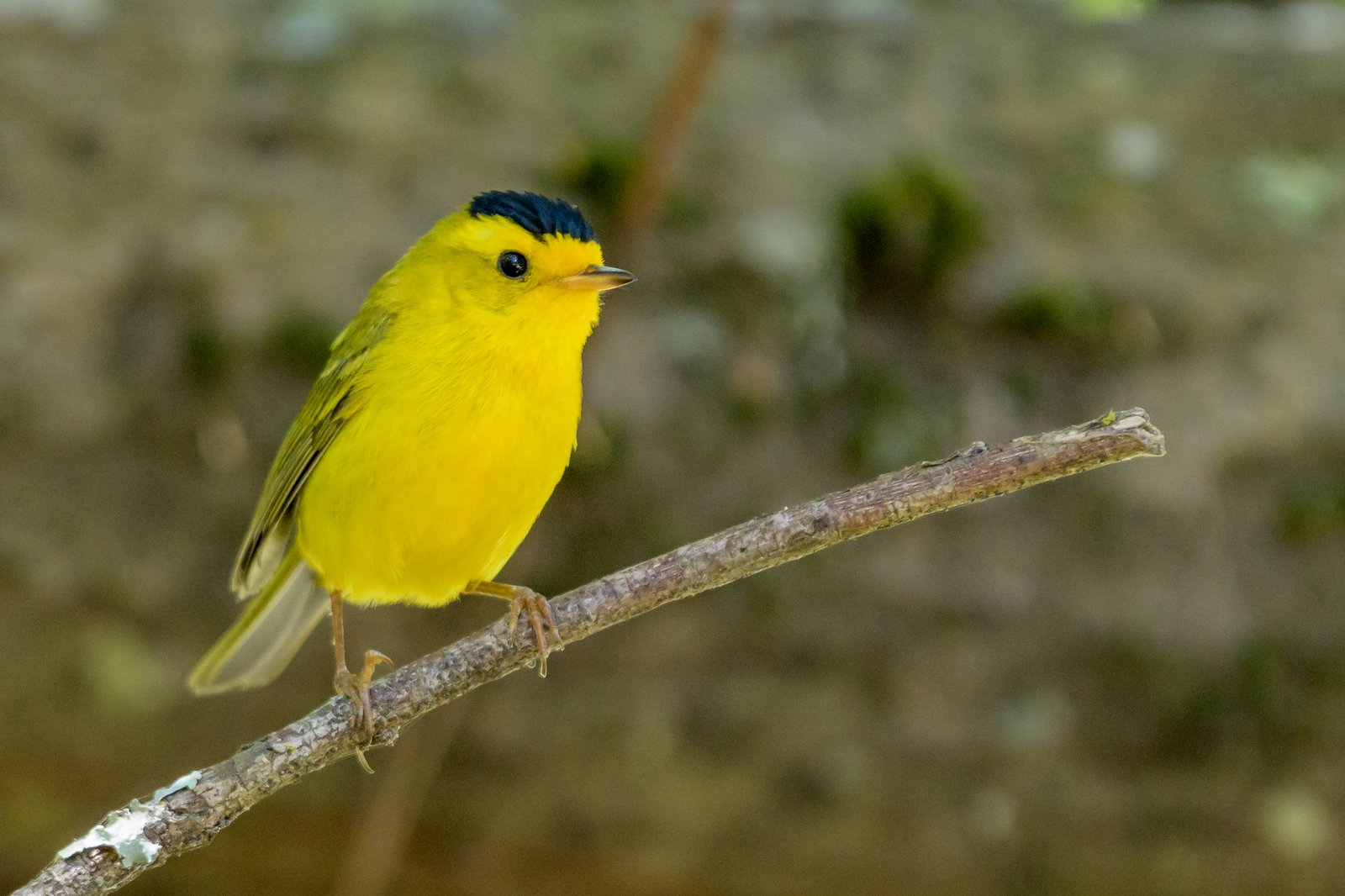
Wilson's Warbler is a small olive-green and yellow warbler; the male has a glossy black cap. It breeds in northern and western North America and in winter is one of the most numerous migrant warblers in the guide area, from the lowlands to high in the mountains.
Voice
The song is a fast, staccato series of chipping notes that often speeds up or drops at the end, roughly chi-chi-chi-chi-chet-chet; in the guide area heard mainly in spring. The call is a flat, nasal chip or jimp.
Recording: Andrew McCafferty — CC BY-NC-SA 4.0 · shortened to the first 60 s, mono · xeno-canto
Identification
10–12 cm. Upperparts olive-green, without wing bars or tail spots. Face and underparts plain yellow; the dark eye contrasts with the yellow face. The male has a black cap on the crown; in the female the cap is absent or smaller and olive to dull black. Western birds are brighter, with a yellow-orange wash on forehead and face. It moves restlessly and often flicks its tail.
Confusion species
American Yellow Warbler Setophaga aestiva has yellow spots in the tail, yellow-edged wing feathers and a larger, less active appearance. The female Hooded Warbler Setophaga citrina is larger and has white spots in the tail, which it fans regularly. Orange-crowned Warbler Leiothlypis celata is duller and greener, with a faint eye-stripe and faint streaks on the breast.
Habitat
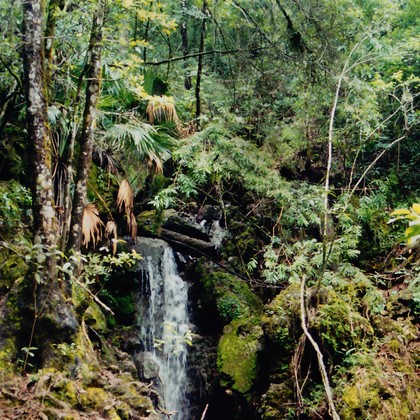
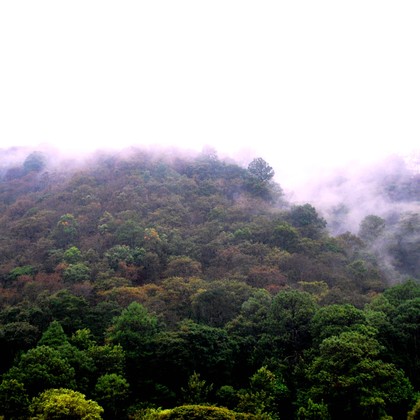
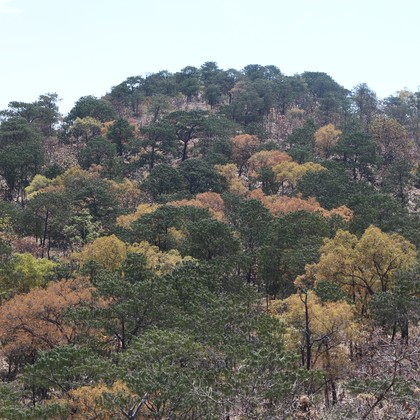
In winter in almost any type of forest with shrubs: edges of montane and pine-oak forest, secondary forest, riparian woodland, shade coffee, gardens and parks; from sea level to above 3000 m, but most numerous in the mountains. It searches for insects low to mid-level, also catches them in short flights and often joins mixed flocks.
Where the bird is most at home, classified by the vegetation units of Mexico and Central America.



Range and movements
Breeds in Alaska, Canada, the mountains of the western United States and the north-eastern United States. Winters from northern Mexico (including Baja California) through all of Mexico and Central America to western Panama; scarce further south. On migration throughout the guide area.
- Winter visitor (c. Oct–Mar)
- dark = core range, pale = thinly spread
How and when to look
In winter present in almost every mixed flock in the highlands of Mexico and Guatemala, often also in gardens and parks in towns; the nasal call and restless movements help to find it.
Conservation status
Not threatened (LC). Very common and widespread, although the breeding population in North America is slowly declining.
Scientific name
Cardellina pusilla | (Wilson, 1811)
Wilson described the species in 1811 as Muscicapa pusilla; because it was later moved to another genus, the author and year stand in brackets. The genus Cardellina was introduced in 1850 by Bonaparte. Cardellina is a diminutive of the Italian dialect word cardella 'goldfinch'. pusilla is Latin for 'very small'. The specimen the first description was based on came from southern New Jersey (USA).