All species › Passerines › New World warblers › Canada Warbler
Position in the tree Birds Aves › Birds with a flexible palate Neognathae › All other modern birds Neoaves › Landbirds Telluraves › Falcons, parrots and passerines Australaves › Falcons and passerines Eufalconimorphae › Parrots and passerines Psittacopasserae
Canada Warbler | Cardellina canadensis
Canadese zanger | Chipe de collar
The Canada Warbler is a blue-grey warbler with yellow underparts, white or yellow spectacles and a necklace of dark streaks across the breast. It breeds in Canada and the north-eastern United States and winters mainly in the Andes of South America. It crosses the guide area on migration, mainly on the Caribbean side.

Voice
The song is a fast, irregular series of clear, chipping notes, often introduced by a separate chip; sometimes heard on spring migration. The call is a soft tchup or tchik.
Recording: Sue Riffe — CC BY-NC-SA 4.0 · converted to mono · xeno-canto
Identification
12–14 cm. Upperparts plain blue-grey, without wing bars. Distinct spectacles: yellow lores and a white eye-ring. Throat and belly yellow, undertail coverts white. The male has a blackish forehead, a black cheek stripe and a necklace of black streaks across the breast. The female and young birds are duller, with a greyer head and a faint, grey necklace.
Confusion species
Magnolia Warbler Setophaga magnolia has a yellow rump, white wing bars and white spots in the tail. Kentucky Warbler Geothlypis formosa has an olive-green back, a yellow eyebrow and black sideburns, but no necklace. Wilson's Warbler Cardellina pusilla is olive-green above, without breast streaks, and has yellow undertail coverts.
Habitat
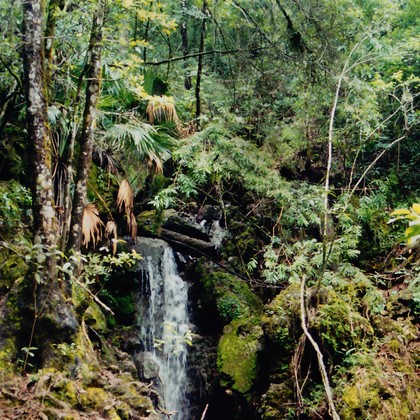
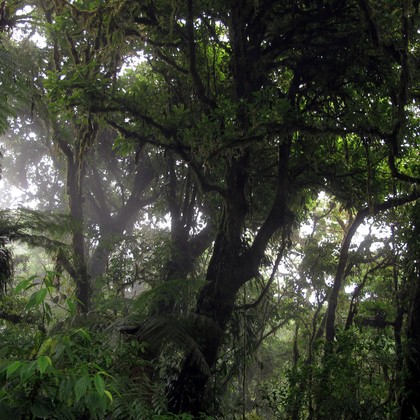
On migration in the understorey of humid forest, secondary forest, forest edges and shade coffee, from the lowlands up into montane forest. It searches for insects low in the vegetation, often with the tail cocked, and joins mixed flocks; it regularly catches insects in short flights.
Where the bird is most at home, classified by the vegetation units of Mexico and Central America.




Range and movements
Breeds in Canada and the north-eastern United States, south along the Appalachians. Winters mainly in the Andes from Colombia and Venezuela to Peru, in small numbers also in Panama and Costa Rica. Migrates through eastern Mexico and along the Caribbean side of Central America; scarcer on the Pacific side and on the Yucatán Peninsula.
- Passage (Mar–Apr, Oct–Nov)
- dark = core range, pale = thinly spread
How and when to look
Most often recorded in May and September in humid forest edges on the Caribbean slopes, for example in Veracruz and in Costa Rica; often together with other migrant warblers in mixed flocks.
Conservation status
Not threatened (LC). The breeding population in North America has been declining for decades, partly through loss of breeding forest and of montane forest in the wintering range.
Scientific name
Cardellina canadensis | (Linnaeus, 1766)
Linnaeus described the species in 1766 as Muscicapa canadensis; because it was later moved to another genus, the author and year stand in brackets. The genus Cardellina was introduced in 1850 by Bonaparte. Cardellina is a diminutive of the Italian dialect word cardella 'goldfinch'. canadensis is Latin for 'of Canada'. The specimen the first description was based on came from Canada.