All species › Parrots › African and New World parrots › Yellow-headed Amazon
Position in the tree Birds Aves › Birds with a flexible palate Neognathae › All other modern birds Neoaves › Landbirds Telluraves › Falcons, parrots and passerines Australaves › Falcons and passerines Eufalconimorphae › Parrots and passerines Psittacopasserae
Yellow-headed Amazon | Amazona oratrix
Geelkopamazone | Loro cabeza amarilla
The Yellow-headed Amazon is the largest amazon of Mexico, green with a yellow head. It lives in several separate areas on both coasts of Mexico and in Belize and northern Honduras. Through trapping for the trade and habitat loss, the wild population has fallen by an estimated more than ninety per cent since the 1970s.

Voice
Loud, low and harsh; a rolling krrao and kra-kra-kra, often in duets between partners, and hoarse, human-like sounds.
Recording: Lars Lachmann — CC BY-NC-SA 4.0 · converted to mono · xeno-canto
Identification
36–41 cm. Green, with a yellow head; the yellow spreads with age and in old birds can reach the neck. The bend of the wing is red, a red speculum shows on the secondaries, the primaries are bluish and the tail has a yellowish-green tip. A white ring surrounds the eye; the bill is pale horn. Young birds have yellow only on the forehead and crown. Birds from Belize and northern Honduras (A. o. belizensis) have less yellow, mainly on the crown and around the eye; those of the Islas Marías (A. o. tresmariae) have more, down to the neck and breast. Male and female are alike.
Confusion species
The Yellow-naped Amazon Amazona auropalliata has only a yellow patch on the nape and a dark bill. The Yellow-crowned Amazon Amazona ochrocephala, only in Panama, has yellow only on the forehead and crown. Young Yellow-headed Amazons with little yellow resemble the Red-lored Amazon Amazona autumnalis, but that species has a red forehead. The Lilac-crowned Amazon Amazona finschi is smaller and has a dark red forehead and a lilac crown.
Habitat
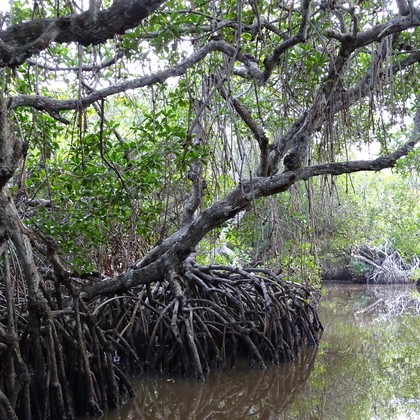
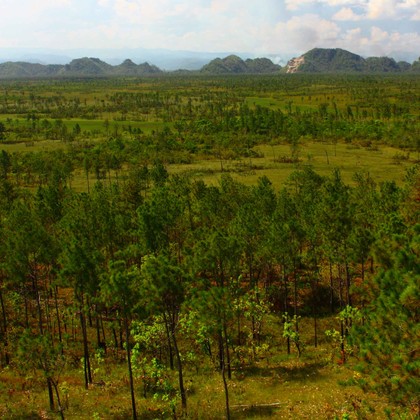
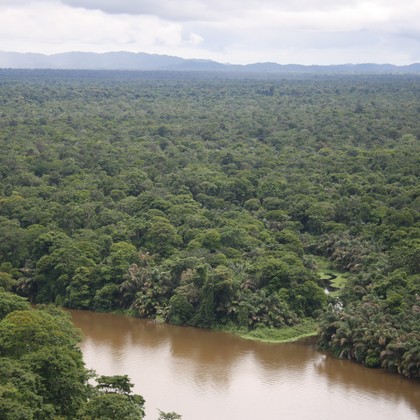
Gallery forest along rivers, semi-deciduous and dry lowland forest, swamp forest, mangroves, savanna with scattered large trees and, in Belize, pine savanna; mainly in the lowlands below 500 m. It eats seeds, fruit and flowers. It nests in a cavity in a large tree.
Where the bird is most at home, classified by the vegetation units of Mexico and Central America.




Range and movements
Fragmented. On the Pacific side of Mexico from Jalisco and Colima through Michoacán and Guerrero to Oaxaca, and on the Islas Marías off Nayarit. On the Caribbean side from southern Tamaulipas through Veracruz to Tabasco and northern Chiapas, and further in Belize, eastern Guatemala and northern Honduras (Sula Valley). Records elsewhere, including on the Yucatán Peninsula and in cities such as Monterrey, probably involve escaped cage birds. Outside the guide area feral in southern California and Florida.
- Resident
- dark = core range, pale = thinly spread
How and when to look
In Belize pairs and small groups live in the coastal pine savanna, for example around Crooked Tree, where they fly between roost and feeding areas early in the morning. The yellow head shows well in flight in the early light.
Conservation status
Endangered. The wild population has declined very steeply since the 1970s through the taking of chicks from nests for the cage-bird trade and the clearance of riverine and lowland forest. In many areas only small, isolated groups remain.
Scientific name
Amazona oratrix | Ridgway, 1887
Ridgway described the species in 1887 and placed it straight away in the genus where it still stands. The genus Amazona was introduced in 1830 by Lesson. Amazona comes from 'Amazone', the French name Buffon gave to various tropical American parrots because they came from the Amazon region. oratrix is Latin for 'female speaker, orator', after this parrot's great talent for mimicking speech. The specimen the first description was based on came from Petapa, Oaxaca, Mexico.