All species › Passerines › Waxbills › African Silverbill
African Silverbill | Euodice cantans
Zilverbekje | Capuchino picoplata africano
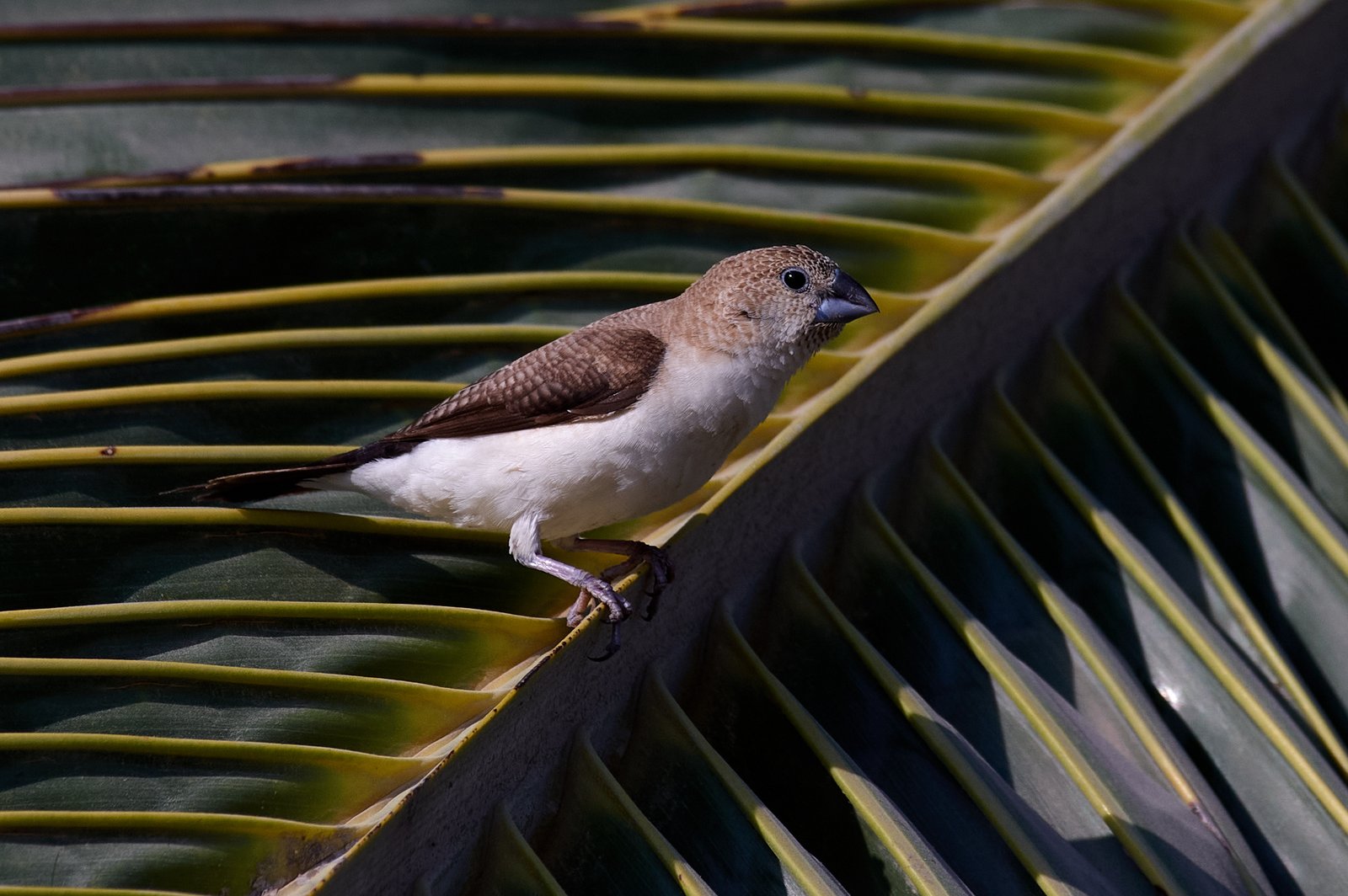
The African Silverbill is the African counterpart of the Indian Silverbill: a small, brownish estrildid with a silvery-blue bill and a pointed black tail, but with a black rump. In the region it lives in the acacia wadis of south-western Arabia and, as the northernmost outpost of the Sahel, in the Hoggar mountains of southern Algeria.
Voice
A soft, silvery chip or tseep as a contact call within the flock, repeated in flight. The song is a quiet, descending series of fine trills and squeaks, somewhat more melodious than that of Indian Silverbill.
Recording: Stanislas Wroza — CC BY-NC-SA 4.0 · converted to mono · xeno-canto
Identification
10–11 cm, with a long, pointed black tail and a short, thick silvery-blue bill. Upperparts pale brown with fine dark vermiculations, also on the head and wing coverts; flight feathers dark brown. Underparts off-white to pale buff, finely barred on the flanks. Rump and uppertail coverts black, so there is no pale patch between back and tail on take-off. Birds in Arabia (subspecies orientalis) are somewhat darker on the face and upperparts than Saharan birds. Sexes alike; juveniles lack the vermiculations.
Confusion species
Indian Silverbill (Euodice malabarica) has a white rump, a plain sandy-brown back without vermiculations and a slightly longer tail; both occur in south-western Arabia and Oman, and there the rump is the best feature. Scaly-breasted Munia (Lonchura punctulata) has a dark bill, a dark brown head and a scaled breast. Arabian Waxbill (Estrilda rufibarba) is just as finely barred, but has a red eye mask and a black bill.
Habitat
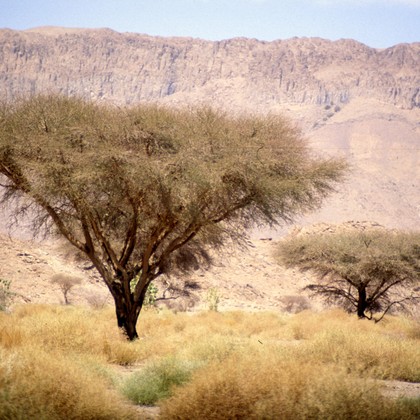
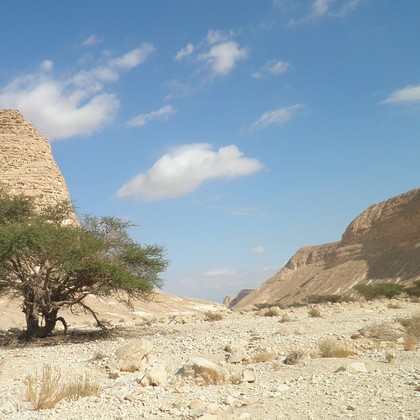
Dry savanna and thorn scrub with acacias, vegetated wadis and dry riverbeds, the edges of fields and villages, in Arabia from the coastal plain to about 2,000 m; in the Hoggar along wadis with tamarisks and acacias, palm groves and village gardens. Feeds on the ground on grass seeds, in small flocks all year, and breeds in loose colonies in thorn bushes, also in old weaver nests.
Where the bird is most at home, classified by the habitats of North Africa and the Middle East.

Range and movements
In south-western Arabia in the Tihama and the foothills of Asir and Hijaz (south-western Saudi Arabia), in Yemen from the coastal plain to the highlands, and in Dhofar (Oman). Scarce in the far south-east of Egypt (Gebel Elba). In southern Algeria a breeding resident around Tamanrasset in the Hoggar (Oued Tamanrasset, Oued Tit, Outoul and Abalessa, the northernmost colony in Africa); formerly regarded as an irregular visitor, it is now clearly established there. Escaped birds in Qatar. Beyond the region in the Sahel belt from Mauritania and Senegal to Sudan and Ethiopia, and in Somalia, Kenya and Tanzania.
- Resident
- Summer visitor (c. Apr–Sep)
- Winter visitor (c. Oct–Mar)
- Passage (Mar–Apr, Oct–Nov)
- dark = core range, pale = thinly spread
How and when to look
In Tamanrasset small flocks along the oued and in the gardens at the edge of town are not hard to find; in Arabia search at water troughs and irrigated plots in the acacia wadis of the Tihama and lower Asir. On take-off note the wholly dark rear end.
Conservation status
Not globally threatened. Trapped for the cage-bird trade, but its large range makes it little vulnerable. The Hoggar population appears healthy and may long have been overlooked.
Scientific name
Euodice cantans | (Gmelin, 1789)
Gmelin described the species in 1789 as Loxia cantans; because it was later moved to another genus, the author and year stand in brackets. The genus Euodice was introduced in 1863 by Reichenbach. Euodice is Greek, from eu 'good' and ōdikos 'singing', so roughly 'good singer'. cantans is Latin for 'singing', from cantare 'to sing'. The specimen the first description was based on came from Dakar, Senegal.