All species › Owls › Typical owls › Arabian Scops Owl
Arabian Scops Owl | Otus pamelae
Arabische dwergooruil | Autillo árabe
A small, pale scops owl found only in the south-west of the Arabian Peninsula, from the Asir and Hijaz mountains of Saudi Arabia through Yemen to Dhofar in Oman. Once treated as a subspecies of African Scops Owl, it is now regarded as an Arabian endemic.
Voice
The song is a short, purring prrrrup or krrrr, like a frog or cricket, repeated every few seconds. The female answers slightly higher.
Recording: Zsombor Károlyi — CC BY-NC-SA 4.0 · converted to mono · xeno-canto
Identification
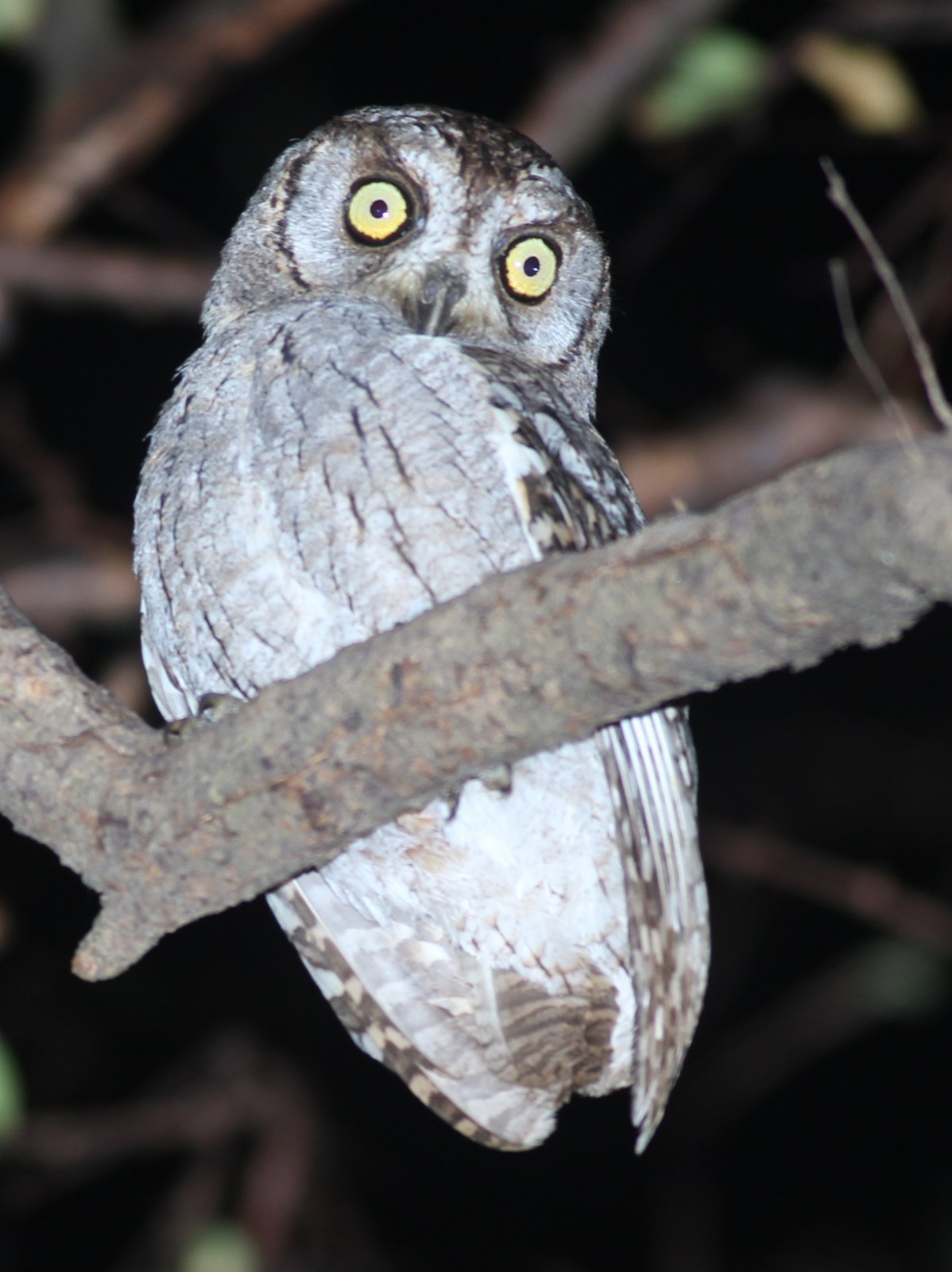
Small, with short ear tufts and fairly short wings. Paler and plainer than African Scops Owl: light grey-brown to sandy grey with fine vermiculation, narrow dark shaft streaks below, a row of pale scapular spots and a pale face with a thin dark rim. The eyes are yellow. By day it sits tight against a trunk or among dense foliage, ear tufts raised and eyes narrowed to slits.
Confusion species
Pallid Scops Owl (Otus brucei), present in the same area in winter, is larger and longer-winged, with bolder black streaks and a hollow, dove-like cooing. Eurasian Scops-Owl (Otus scops) occurs here only on passage, is larger, with longer wings and a whistled song. Socotra Scops Owl (Otus socotranus) lives only on Socotra.
Habitat
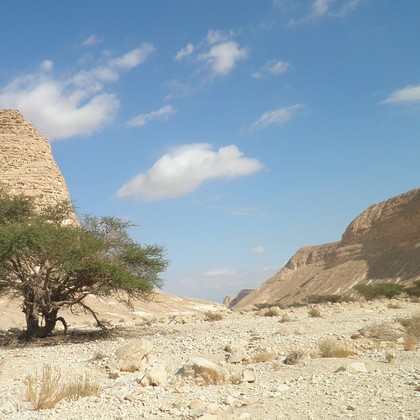
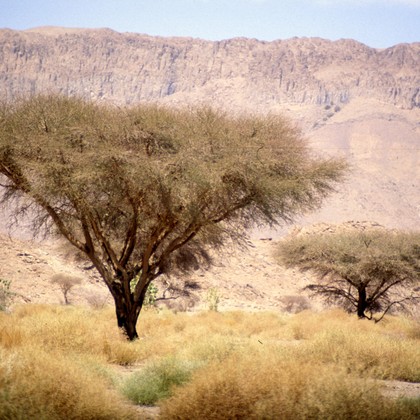
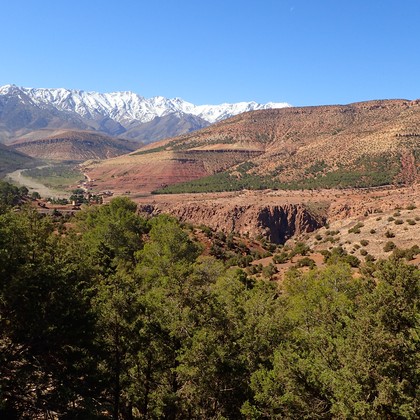
Wooded wadis and slopes with acacias, figs and tamarisks, juniper woods in the high mountains of Asir and Yemen, the cloud forest and fig woods of Dhofar, also parks, orchards and gardens. From sea level to over 2,000 metres. Feeds mainly on insects and spiders; nests in tree holes.
Where the bird is most at home, classified by the habitats of North Africa and the Middle East.
Range and movements
Endemic to the south-west of the Arabian Peninsula. In Saudi Arabia in the mountains and Tihama plain of Hijaz and Asir, from around Taif and Al Baha south to Abha and Jizan. In Yemen in the western highlands, the steep western escarpment and the Tihama, east to the Hadramawt. In Oman in Dhofar, on the seaward slopes of the monsoon mountains. Not found outside Arabia; the related African Scops Owl lives south of the Sahara.
- Resident
- Summer visitor (c. Oct–Mar)
- Winter visitor (c. Apr–Sep)
- Passage (Mar–Apr, Oct–Nov)
- dark = core range, pale = thinly spread
How and when to look
In the parks and wadis around Abha, such as Al Mehfar, and at the fig woods of Ayn Hamran and Wadi Darbat in Dhofar, the song can be heard after dark. With patience and a torch the bird can often be found on a low branch.
Conservation status
Not threatened; the world population is estimated at several tens of thousands of birds. Sensitive to the felling of juniper and acacia woodland, overgrazing and expanding building in the mountains, but also present in gardens and parks.
Scientific name
Otus pamelae | Bates, 1937
Bates described the species in 1937 and placed it straight away in the genus where it still stands. The genus Otus was introduced in 1769 by Pennant. Otus is Latin for 'eared owl', borrowed from the Greek ōtos, from ous 'ear'. pamelae is named after a woman called Pamela; exactly who is meant is uncertain. The specimen the first description was based on came from Wadi Bisha, Saudi Arabia.