All species › Rodents › Squirrels and marmots › Eastern Gray Squirrel
Eastern Gray Squirrel | Sciurus carolinensis
Grijze eekhoorn | Sciurus carolinensis
The Grey Squirrel is a North American tree squirrel that has been introduced to Britain, Ireland and northern Italy. In Britain and Ireland it has replaced the Red Squirrel over much of its range. This did not happen through direct displacement but because the Grey Squirrel is heavier, forages more on the ground, digests acorns the Red Squirrel cannot use, and carries a virus that does not make it ill. In northern Italy it is spreading through the Po plain to the foot of the Alps.

Tracks
The feeding signs of Grey and Red Squirrel cannot be told apart. Both hold a conifer cone in the forefeet and gnaw the scales off from the base to the core, leaving a rough core with stubble and a tuft of untouched scales at the tip; both split a hazelnut into two half shells or gnaw a large ragged hole in it; both use fixed feeding places on a stump or a stout branch. Where both species occur, a stripped cone therefore indicates only the presence of a squirrel. Two signs are usable. The first is bark stripping: from April to July the Grey Squirrel, usually a two- to four-year-old animal, gnaws the bark off young beech, sycamore and oak to reach the sappy cambium, in broad irregular patches high on the stem or on the main branches; the crown above then dies. Beech woodland with bare patches at about ten metres and dead tops is a clear indication in England. The Red Squirrel does this at most occasionally and not on that scale. The second is the jump group in snow or dust: four prints in a group, the larger five-toed hind feet side by side in front of the smaller four-toed forefeet, with a bound of half a metre to over a metre. The shape is the same in all tree squirrels; only the size differs. Further, the drey of twigs with leaves, 30 to 50 cm across, against the trunk or in a fork, often several in one tree; this too cannot be told from a Red Squirrel's. In British gardens: emptied peanut feeders, broken-open nest boxes and disturbed window boxes with buried nuts.

In its habitat

Head close-up

Identification
A large tree squirrel, head-body 20 to 31 cm and 300 to 710 grams, clearly heavier and broader in build than the Red Squirrel. The coat is grizzled grey from hairs banded black and white; in summer there is a rusty wash over head, flanks and legs, which can cause confusion. The belly is sharply demarcated white. The tail is grey with a broad silvery-white fringe, conspicuous against the light. The decisive character: the species never has ear tufts, in any season; the ears are short, round and bare. A narrow pale ring surrounds the eye. Black (melanistic) animals occur locally, especially in England and Italy, and can be recognised by size and tail fringe. The Grey Squirrel moves more heavily and slowly through the canopy than the Red Squirrel and spends far more time on the ground.
Similar species
The Red Squirrel is the main confusion species. The distinction is not simple: many Red Squirrels are grey-brown to nearly black and many Grey Squirrels have rusty flanks. Use three characters together. The ears: in winter and early spring the Red Squirrel has long ear tufts and the Grey never does; during the summer moult the Red Squirrel also loses its tufts. The tail: in the Grey Squirrel grey with a broad white fringe, in the Red uniform red-brown to cream, without a fringe. Size and posture: the Grey is a third to a half heavier, broader in the back and far more often on the ground. Both species have a white belly. In northern Italy the introduced Eastern Fox Squirrel may also occur; it is larger and orange-brown below. The Grey Squirrel does not occur on the European mainland outside Italy; a record there requires a photograph.
Habitat
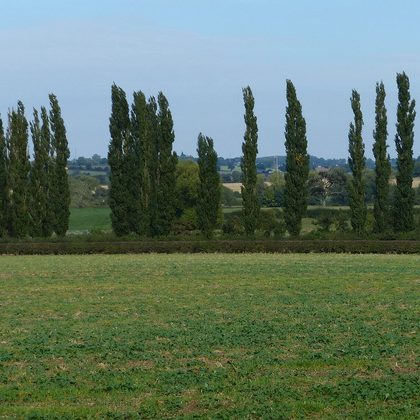
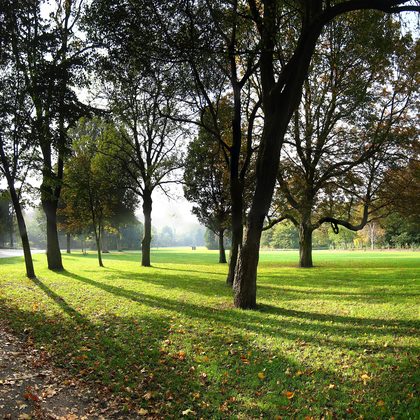
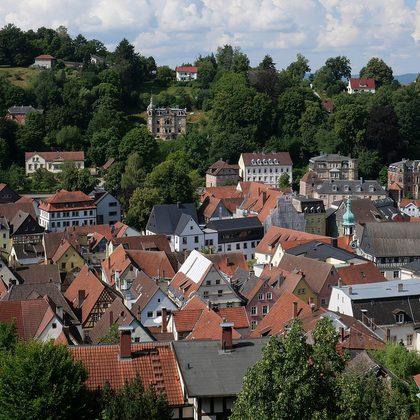
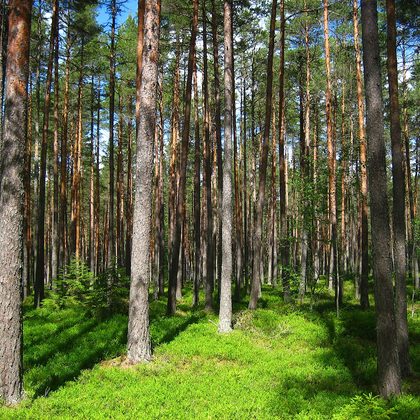
The optimal habitat is broadleaved and mixed woodland with a rich seed crop of oak, beech, sweet chestnut and hazel; in this woodland type the Red Squirrel is at a disadvantage compared with the Grey. Also parkland, estates, shelterbelts, cemeteries, allotments, town parks and gardens into city centres; in London, Dublin and Turin the species is common in parks and streets and allows people to approach to within a metre. In pure conifer forest the Grey Squirrel does less well than the Red; the large spruce and pine forests of Scotland and northern England therefore form the main boundary between the two species.
Where the animal is most at home, classified with EUNIS — the European standard for habitats.


Distribution
Native to eastern North America, from southern Canada to Florida and Texas. In Europe there are three areas of introduction. Britain: from 1876 animals were released about thirty times, beginning at Henbury Park in Cheshire, until import and release were banned in 1937; the species has since occupied almost all of England and Wales and southern Scotland, with an estimated 2.7 million animals. Ireland: in 1911 twelve animals were released as a wedding present at Castle Forbes in County Longford; the entire Irish population descends from these twelve. Italy: four animals at Stupinigi south of Turin in 1948, a second nucleus in the parks of Nervi near Genoa in 1966, a third at Trecate in 1994; from these the species is spreading through Piedmont, Lombardy and Liguria, with isolated nuclei as far as Umbria. The species does not occur on the European mainland outside Italy. Management in Italy aims to prevent spread beyond the Po plain, including into France and from there to the rest of the continent.
- Established introduction
- dark = core range, pale = thinly spread
Way of life
Diurnal, with a peak early in the morning and late in the afternoon and in summer a rest period around midday. There is no hibernation, but in gales and hard frost the animal stays in the drey for days. The diet consists mainly of tree seeds (acorns, beech mast, sweet chestnuts, hazelnuts, sycamore seed, conifer seed), supplemented with buds, flowers, bark, cambium, fungi, insects and occasionally eggs and nestlings. In autumn thousands of nuts are buried one by one in shallow scrapes and recovered by memory and smell; in acorns of white oaks the embryo is bitten out so that they do not germinate in the ground. The species holds no territory but a network of overlapping ranges in which related females stay together. Two litters a year, in late winter and in summer, after 44 days' gestation, of two to eight young in a drey or tree hole; the young emerge at seven or eight weeks. In the wild few animals live beyond five or six years.
Where and when to look
In Britain and Ireland the species occurs in almost every town park and cemetery and allows people to approach to within a metre. There the characters that matter most for identification elsewhere in Europe can be studied: the broad white tail fringe, the bare round ears and the heavy build. In northern Italy it is easiest to see in the parks of Nervi near Genoa and in the park of Stupinigi near Turin, where the first Italian introduction took place. In the same woodland, look at the trees as well: bare patches in the bark and dead tops indicate the presence of the species.
Conservation status
Least Concern globally (LC, 2016); this assessment mainly concerns the North American range, where the species is common and hunted. In Europe the Grey Squirrel has been on the list of invasive alien species of Union concern since 3 August 2016 (Regulation 1143/2014): keeping, breeding, transporting, trading and releasing are prohibited and member states must eradicate or manage the species; the United Kingdom has retained an equivalent prohibition of its own since leaving the EU. The main consequence concerns the Red Squirrel, which is displaced in three ways: the Grey Squirrel is heavier and takes more food from the same woodland, it can digest unripe acorns with their tannins and the Red Squirrel cannot, and it carries squirrelpox virus without becoming ill, while the Red Squirrel dies of it. In Britain and Ireland the Red Squirrel has as a result been reduced to a few dozen strongholds. In Ireland the Red Squirrel returns where the Pine Marten returns, because the heavier, slower and more ground-dwelling Grey Squirrel is caught more easily. There is also forestry damage: bark stripping of young beech, sycamore and oak makes growing broadleaved timber almost impossible over much of England and Wales and costs woodland owners millions. In Britain the species is trapped and shot on a large scale, and oral contraception is being researched as an alternative; in Italy management aims to contain the nuclei before they merge. An eradication programme in Piedmont begun in 1997 was halted by a lawsuit; in the following years the species spread so far that eradication was no longer possible.
Scientific name
Sciurus carolinensis | J. F. Gmelin, 1788
J. F. Gmelin described the species in 1788 and placed it straight away in the genus where it still stands. Sciurus is the Latin word for 'squirrel', from Greek skiouros, from skia, 'shadow', and oura, 'tail': the animal that shades itself with its tail. carolinensis means 'of Carolina', the North American colony from which Gmelin described the animal. The specimen the first description was based on came from USA, Carolina.