All species › Rodents › Dormice › Forest Dormouse
Forest Dormouse | Dryomys nitedula
Bosslaapmuis | Muscardino Balcánico
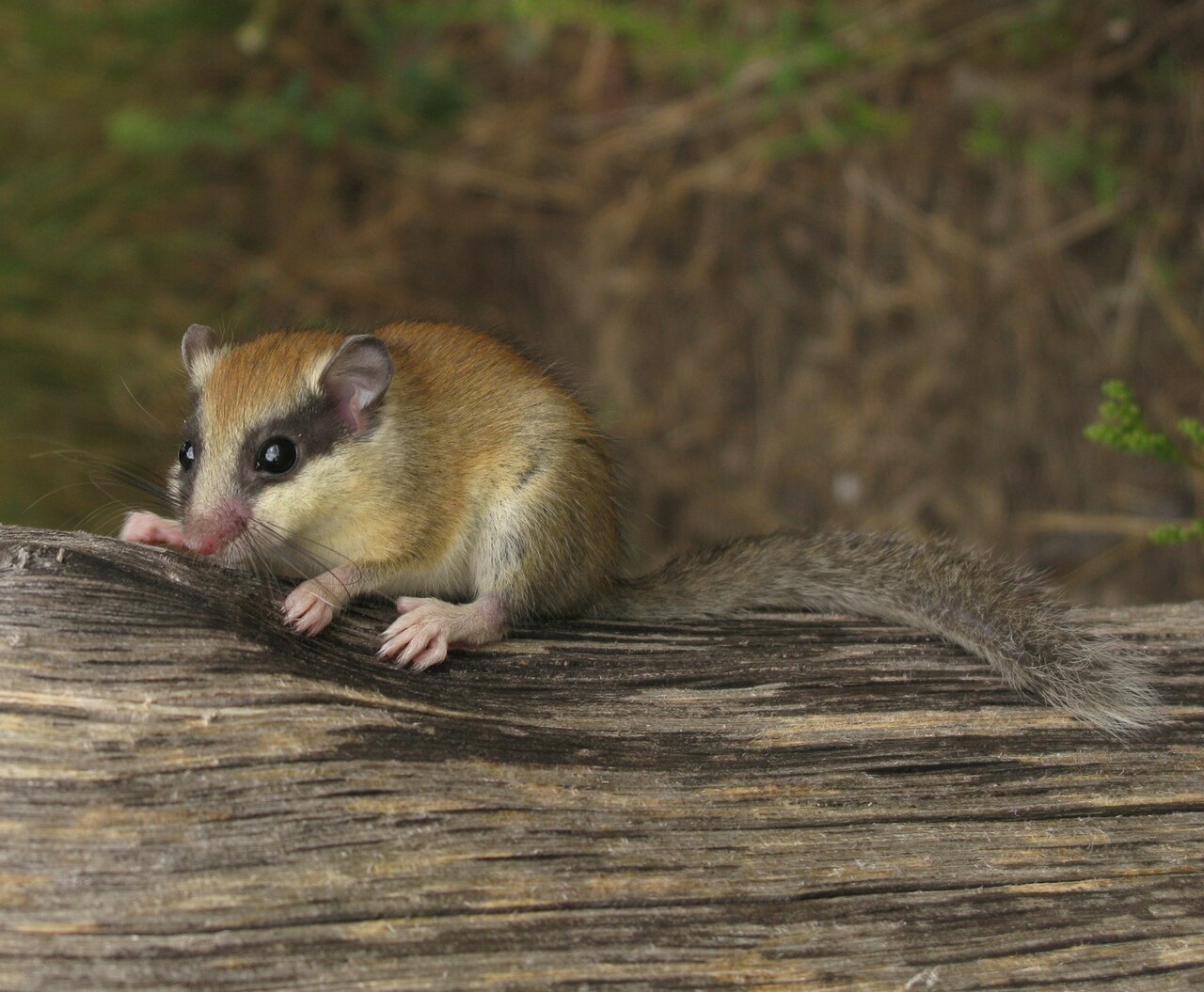
The Forest Dormouse is a dormouse of central and eastern Europe and south-western and Central Asia. It is smaller than the Edible and Garden Dormice, has a black mask through the eye and a grey, evenly furred tail. It hibernates from October to April and is rarely seen. In photographs it is often confused with the Garden Dormouse and the Hazel Dormouse.
Tracks
Signs are scarce and match those of other dormice. The best-known sign is the gnawed hazelnut: a round hole with a smooth inner rim without cross grooves, with a ring of fine tooth marks set at an angle to the hole on the shell around it; these result from the hole being ground round with the lower incisors instead of bitten through from outside. The Forest Dormouse makes a smaller hole than the Edible Dormouse, because its incisors are narrower. In this way Wood Mouse (parallel grooves on the inner rim plus rough scratches on the surface), Bank Vole (regular grooves on the inner rim, no marks outside) and squirrel (nut split in two) can be separated; the three dormouse species cannot be told apart from the nut. The species also builds a summer nest: a ball of leaves, grass and bark about ten to fifteen centimetres across, in dense scrub, in a tree hole, in an old bird's nest or in a nest box, lined with finely shredded material. Droppings of 3 to 5 mm, cylindrical and dark, lie in nest boxes and at nest sites. Footprints are almost never found, because the species seldom comes to the ground.
In its habitat
Head close-up
Identification
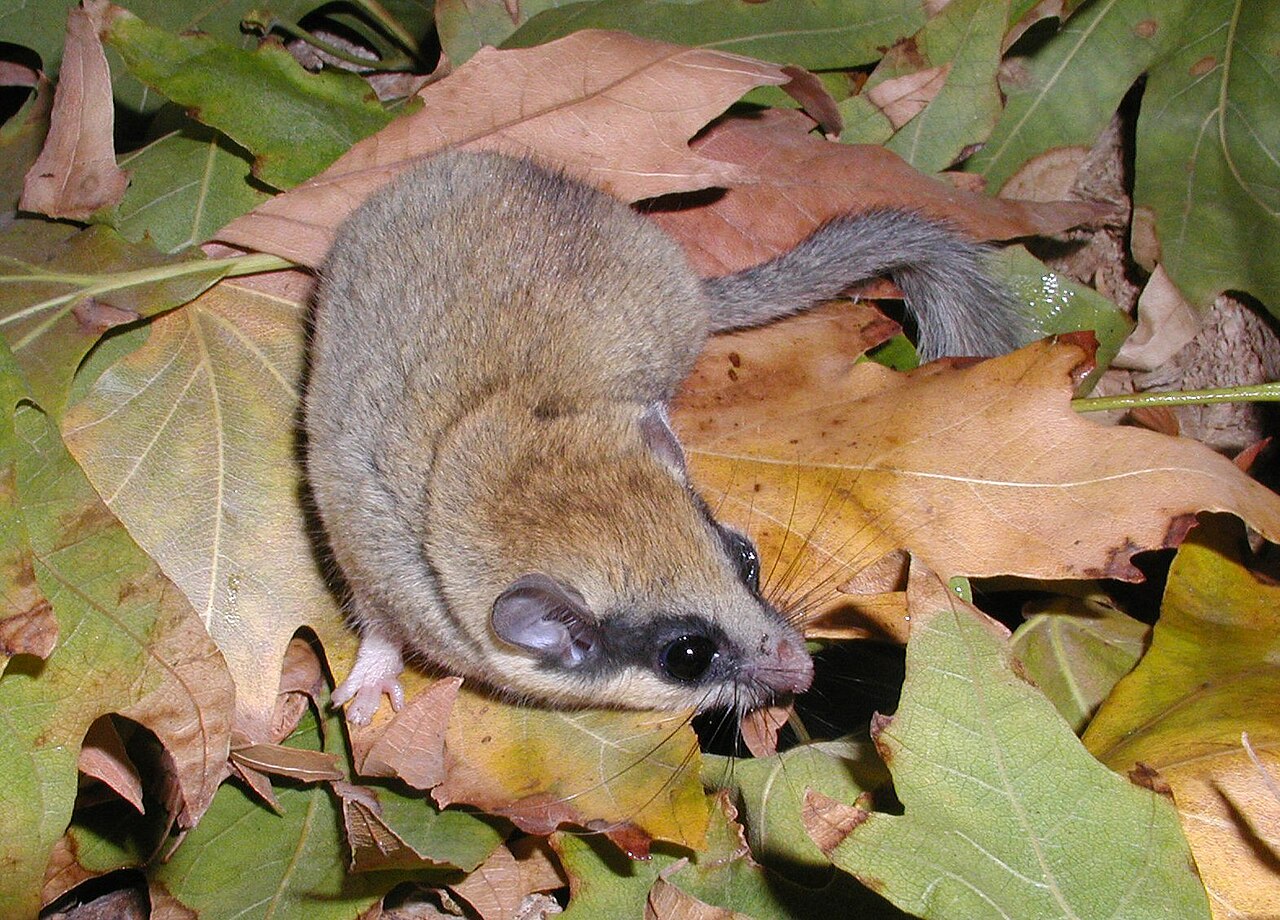
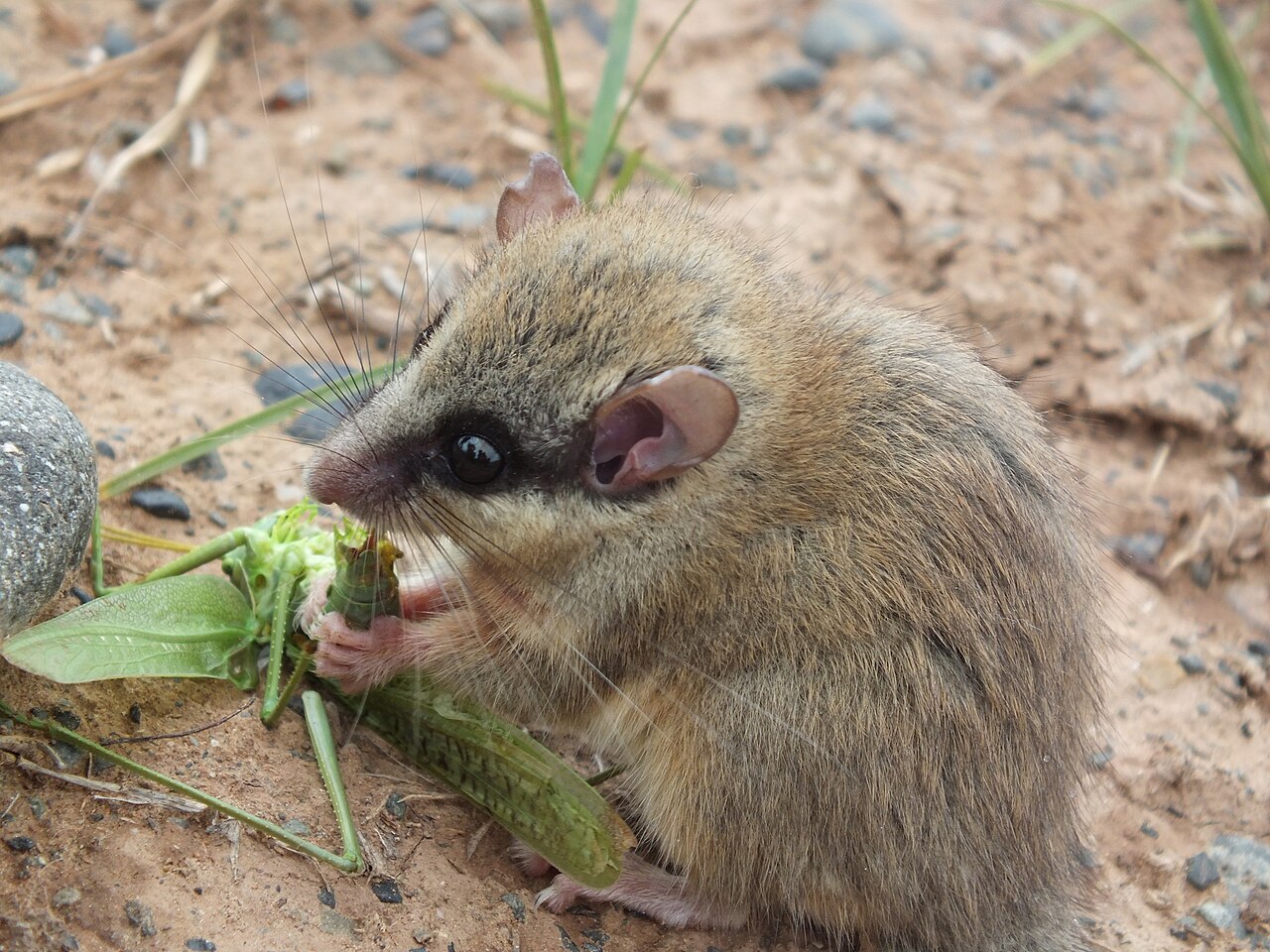
A small, thickset dormouse with large black eyes and large, round, thin ears. The back is ochre to yellow-brown, sometimes greyish, the underside cream to pale yellow, with a fairly sharp division along the flank. The main character is on the head: a black stripe that starts at the nose, runs through the eye and ends at the base of the ear, with white above and below it; the mask is narrow and short, not a continuous band. The tail is grey, dense and evenly furred along its whole length, about equally dark above and below, without a white tip or flattened brush. The legs are short, the toes pink. It climbs well and can descend a trunk head first.
Similar species
In the woods of south-eastern Europe three dormice live side by side, and in photo collections they are often confused. The Garden Dormouse (Eliomys quercinus) is larger and more strongly coloured, cinnamon brown and white, and has two characters that the Forest Dormouse lacks: the black mask continues behind and below the ear, across the cheek into the neck, and the tail ends in a flattened, two-coloured brush with a white tip. The tail tip and how far back the mask reaches are the two decisive characters. The Hazel Dormouse (Muscardinus avellanarius) is smaller still, warm orange-buff over the whole upperside, without a mask, with a furred but distinctly thinner tail. The Edible Dormouse is two to three times as heavy, grey, with a bushy tail and no mask. A Wood Mouse has large ears but no eye-stripe and a long, thinly haired tail that appears almost bare.
Habitat
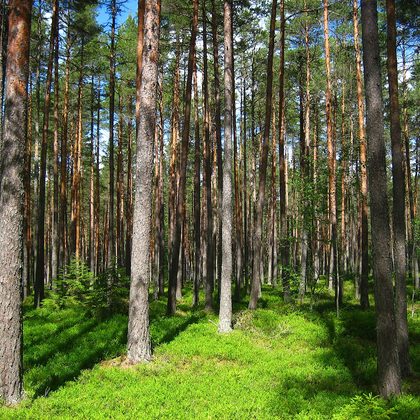
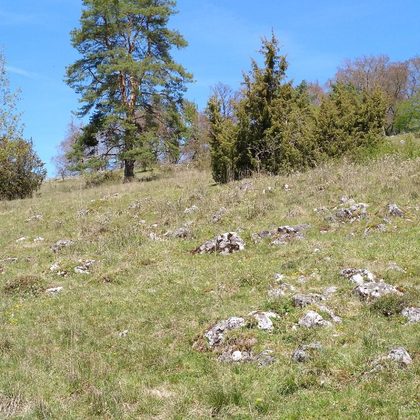
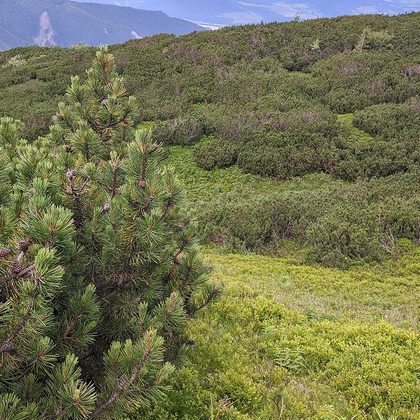
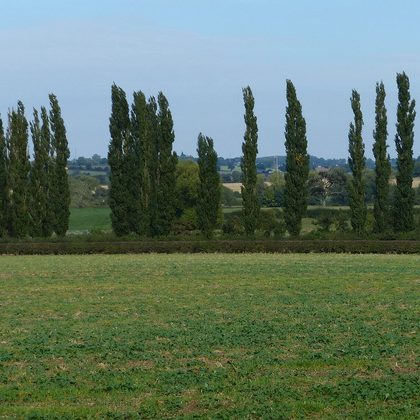
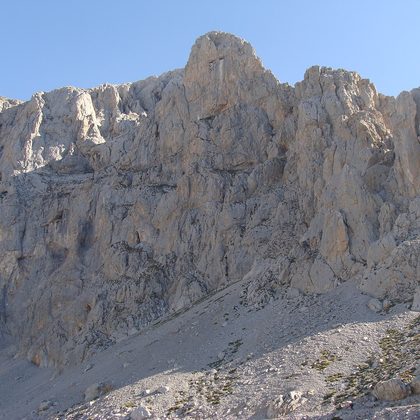
Broadleaved and mixed woodland with a dense shrub layer: oak-hornbeam, beech, riverine woodland with hazel and dogwood, and in the mountains also coniferous forest and dwarf scrub to above the treeline; in the Caucasus and Central Asia up to 3500 metres. Where woodland is absent it lives in dense scrub on rocky slopes, in orchards and in neglected gardens. It is less strictly tied to old woodland than the Edible Dormouse and more to a dense, continuous understorey through which it can move without touching the ground.
Where the animal is most at home, classified with EUNIS — the European standard for habitats.


Distribution
From Switzerland and north-eastern Italy eastward through the Czech Republic, Slovakia, Poland and the Baltic states, across the whole Balkan Peninsula and through Ukraine and Russia to the Volga and the Urals, and further through the Caucasus, Turkey and the Levant to Iran, Central Asia and western China. The highest densities are in Moldova and the Balkans. In Germany it is reduced to a few isolated sites. The species is absent from France, the Low Countries, Britain and Ireland and the Iberian Peninsula; the westernmost populations are in Switzerland, southern Germany, Austria and the Czech Republic.
- Native
- dark = core range, pale = thinly spread
Way of life
Strictly nocturnal and mainly in trees and shrubs. The Forest Dormouse is omnivorous and differs from related species in this: in spring it eats chiefly animal food, such as caterpillars, beetles, spiders, snails and also birds' eggs and nestlings, and later in the year fruit, nuts, seeds and buds from about twenty tree and shrub species. It hibernates from about October to April, curled up in a cavity in the ground, under a tree root or in a rock crevice, with body temperature falling to about five degrees; in the far south of the range, in Israel, there is no continuous hibernation but only daily torpor. Breeding is linked to this: in central and eastern Europe there is one litter a year between March and August, in the south two. After a gestation of four weeks four or five young are born, sometimes seven, naked and blind. In the wild the species lives three to five years. Important predators are Tawny Owl, Long-eared Owl, Pine Marten and cat.
Where and when to look
Without nest boxes the species is difficult to observe. Checking nest boxes in June and September in broadleaved woodland in Slovakia, Hungary, Romania or Bulgaria regularly produces records. An alternative is to search the edge of dense hazel scrub with a torch on a warm night for eyeshine. When you see one, look first at the end of the tail: without a flattened black-and-white brush it is not a Garden Dormouse. Confusion with the Garden Dormouse is the most common identification error in photographs.
Conservation status
Least Concern (2016) for the range as a whole, because the species is widespread and locally numerous in south-eastern Europe, the Caucasus and Central Asia. At the north-western edge of the range the situation is less favourable: in Germany a few relict populations remain, and in the Czech Republic, Poland and the Baltic states the species is rare and fragmented. The causes are the same as for other woodland dormice: loss of the shrub layer through management and browsing, fragmentation of woods so that animals can no longer climb from one wood to the next, and removal of old trees with cavities. The species is listed on Appendix III of the Bern Convention. Because the species is difficult to observe, knowledge of its numbers rests almost entirely on nest-box checks, so that trends are poorly measurable.
Scientific name
Dryomys nitedula | (Pallas, 1779)
Pallas described the species in 1779 as Mus nitedula; because it was later moved to another genus, the author and year stand in brackets. Dryomys is Greek, from drys, 'oak, tree', and mys, 'mouse': the tree mouse. nitedula is in Roman authors the name of a small mouse-like rodent, usually taken to be a dormouse. The origin of the word is uncertain; it is commonly connected with niteo, 'to shine'. The specimen the first description was based on came from Russia, Tatarstan.