All species › Lagomorphs › Hares and rabbits › Granada Hare
Granada Hare | Lepus granatensis
Iberische haas | Liebre Iberica
The Granada Hare is the hare of almost the entire Iberian Peninsula; a hare in Spain or Portugal is usually this species. It is absent only from the Cantabrian coastal strip and the area north of the Ebro. In northern Spain three hare species come into contact that can barely be separated in the field; there locality settles the identification more often than appearance.

Tracks
The signs are the same as those of the Brown Hare, but usually in dry ground. The form is a shallow scrape about 30 by 15 cm, worn down to bare earth, usually under a tussock, a lavender or rosemary bush or in the furrow of a stubble field, with the open end away from the wind. The droppings are flattened spheres of 15 to 20 mm, yellow-brown to ochre and coarsely fibrous; they lie scattered singly and not in heaps, whereas the rabbit deposits its own in latrines on a molehill, stone or wall. The print is long and narrow, with a blurred edge because of the furred soles; in a bound the two long hind feet land ahead of the small forefeet, and the forefeet usually lie one behind the other in a line, where a rabbit places them side by side. On dusty farm tracks and sandy roads in the dehesa this group of four prints is easy to recognise. Then the browsing: clean, oblique cuts of about 45 degrees on young shoots, and in winter bark damage to young vines, olives and almond trees up to about sixty centimetres.
In its habitat
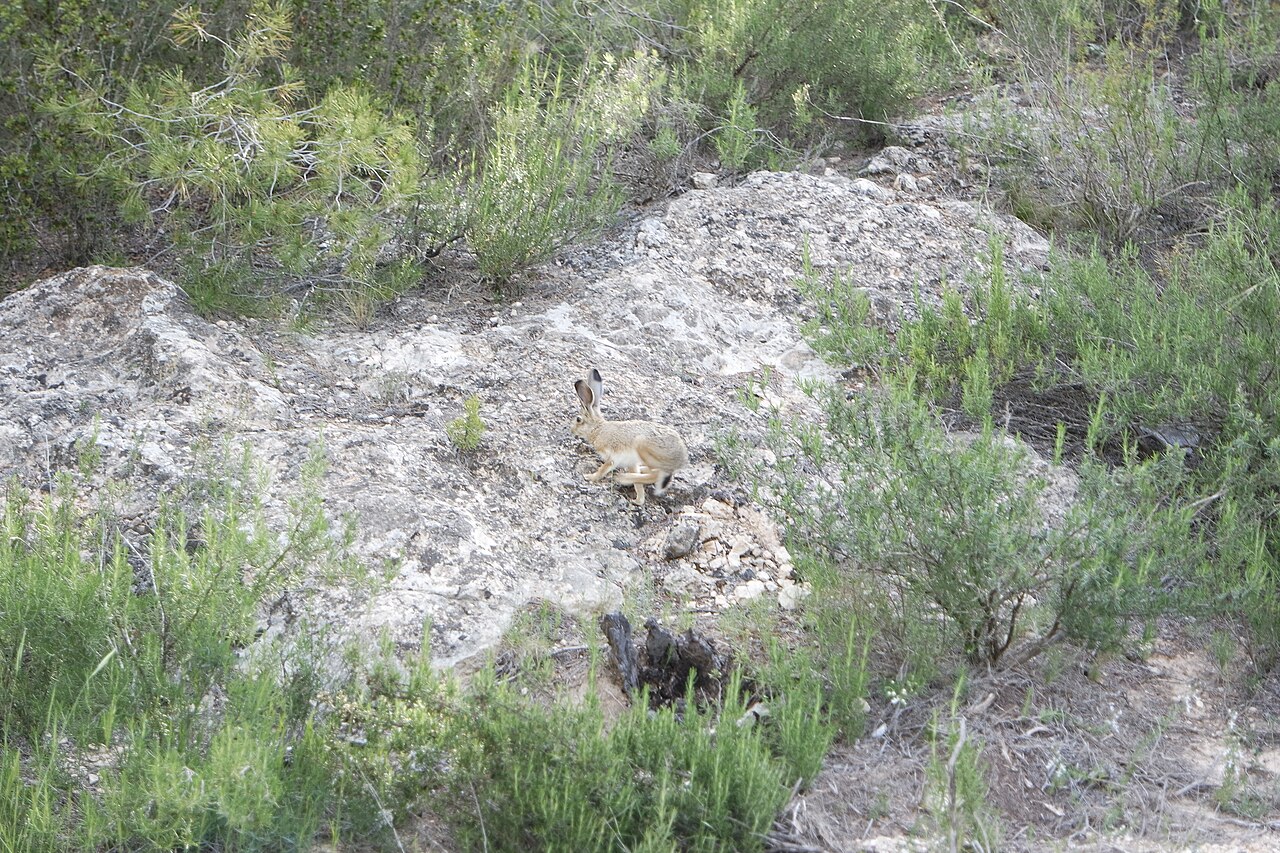
Head close-up
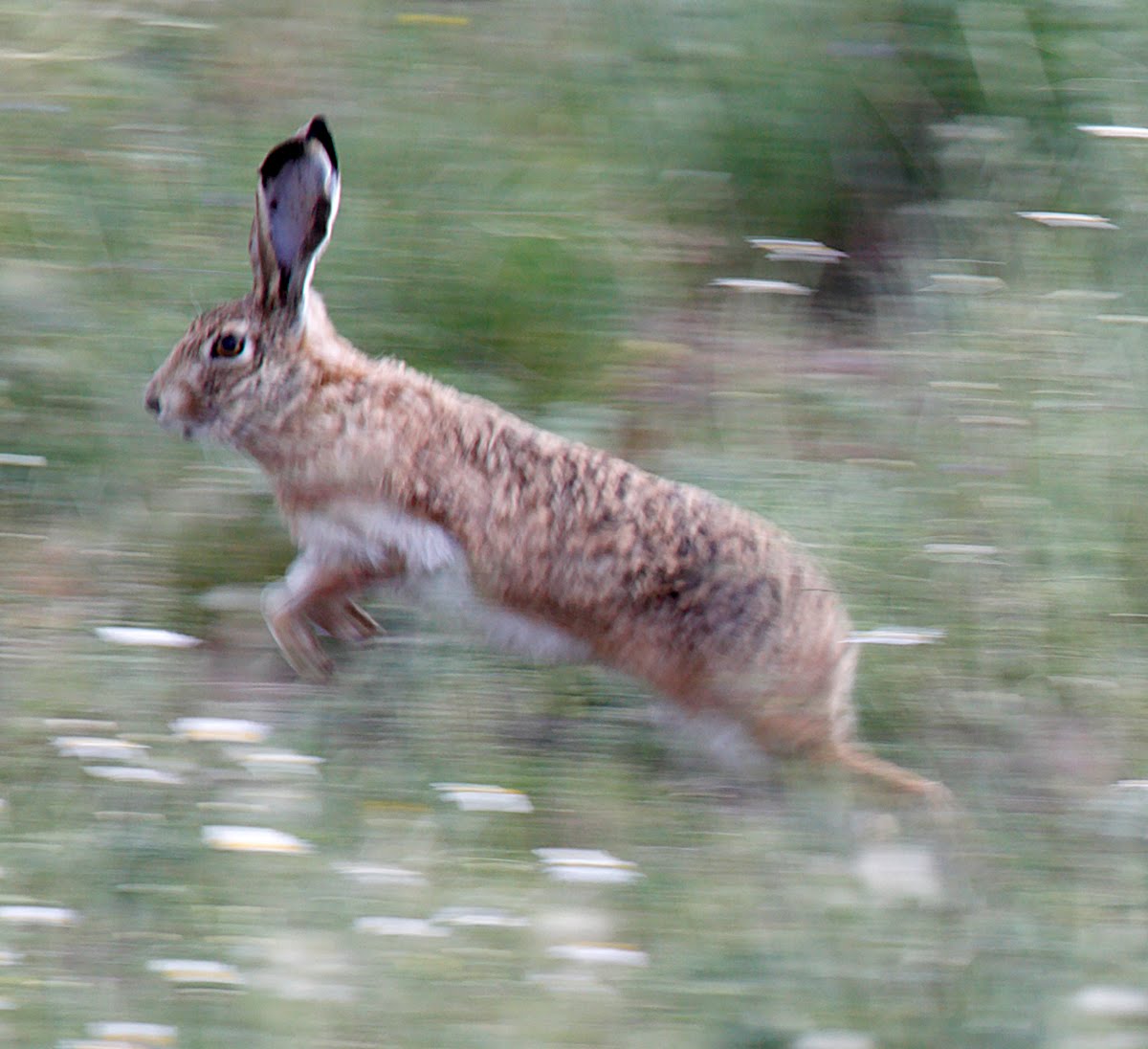
Identification
A medium-sized hare, smaller and more finely built than the Brown Hare: head-body 44 to 48 cm and 1.5 to 2.6 kg. The coat is greyish to reddish brown above and sharply demarcated against the pure white of belly, flank and haunches; this boundary is much clearer than in the Brown Hare and is the first thing noticed on a good photograph or in low-angled light. The outside of the forelegs is rufous with a white stripe, and a white streak runs across the cheek to behind the eye. The ears are about as long as the head (9 to 10.5 cm), with a black tip on the back; the tail is black above and white below and is carried down when fleeing. Animals from Galicia are darker and redder, those from Mallorca paler.
Similar species
In the field appearance often does not settle the identification here, but locality does. The Brown Hare (Lepus europaeus) occupies only the north-eastern quadrant of Spain: from the Catalan coast and the Pyrenees through Aragon and northern Castile to central Asturias, always north of the Ebro or close to it. It is larger and heavier, redder in tone, and the white of the flank grades into the brown. The Broom Hare lives only in the Cantabrian Mountains between 1,000 and 1,900 m, is darker and shorter-eared, and in the field can hardly be separated from the other two. Where the three species meet (the southern slope of the Cantabrian Mountains, the uplands along the Duero, northern Palencia) only an animal in the hand or DNA gives certainty; the field record then reads Lepus sp. South and west of that strip every hare is a Granada Hare. The Rabbit is the most frequent confusion at a distance: smaller, greyer, ears shorter than the head and without a black tip, tail carried upright so that the white shows, and it escapes into a burrow.
Habitat
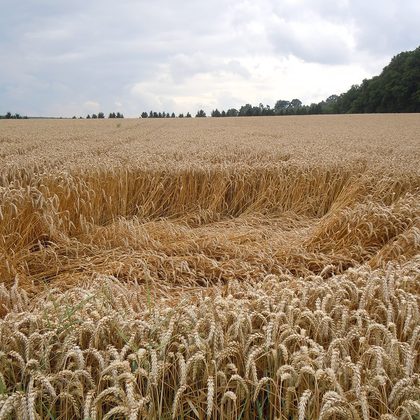
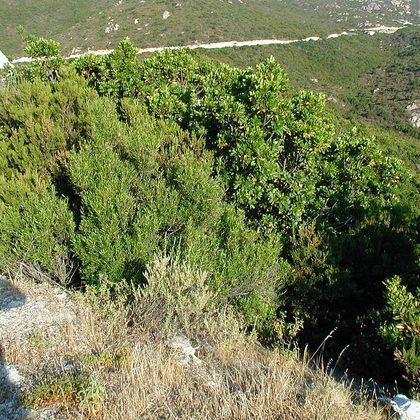
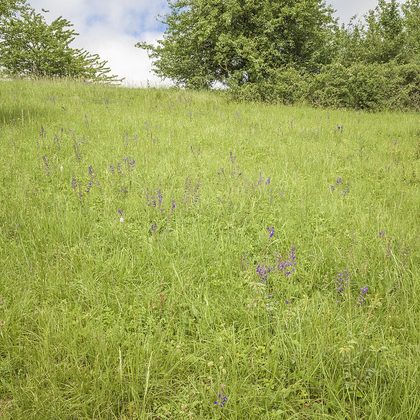
Open, level to rolling country: cereal fields and fallow, vineyards, olive groves, dehesa with scattered holm oaks, steppe grassland of the Castilian plateau, and the herb-rich field margins between them. Also the marismas of the Guadalquivir, dunes and coastal plains, and up to about 1,900 m in the Sierra Nevada, where the species uses summer pastures. Closed woodland and dense scrub are avoided, but the edge of maquis and open ground after forest fires belong to its habitat; in the Iberian Peninsula burnt areas are often occupied by hares.
Where the animal is most at home, classified with EUNIS — the European standard for habitats.




Distribution
Almost the entire Iberian Peninsula: all of Portugal, and in Spain everything except the Cantabrian coastal strip and the area north of the Ebro. The species occurs from sea level into the high mountains of the Baetic Cordillera. On Mallorca there is an ancient, probably introduced population that is now rare. It is absent from the Canary Islands. GBIF holds over eleven thousand records from Spain and more than sixteen hundred from Portugal; it is the most numerous hare of the peninsula. Outside the Iberian Peninsula and Mallorca the species does not occur.
- Native
- dark = core range, pale = thinly spread
Way of life
Nocturnal, with most activity in the first hour after sunset and again at sunrise; by day the hare lies in its form and leaves it only when disturbed. In the south, where summers are hot and dry, activity shifts even further into the night. The diet consists of grass, herbs, young cereals, roots and tubers, and in summer whatever is still green along ditches and under trees; like all hares it re-ingests the soft caecal pellets. Breeding continues almost all year in the south, with a peak from January to June: three to four litters of on average two young, exceptionally up to seven. The leverets are born furred and with open eyes, lie hidden separately and are suckled briefly once every twenty-four hours. There is no winter rest.
Where and when to look
In the last two hours of daylight, scan the stubble of a cereal field or a dehesa with binoculars and look for two black ear tips above the furrow; often nothing more of a lying hare is visible. Densities are highest in La Mancha, Extremadura and the Alentejo, and a slow drive along an unpaved road after sunset usually produces several animals there. In Doñana and on the Castilian steppes the species can also be seen by day. In February and March watch for chases: this species also boxes, though less conspicuously than the Brown Hare. Be cautious with the identification of every hare north of the Ebro: there the species question is genuinely open.
Conservation status
Least Concern (LC, 2025), and across the peninsula still common and hunted as small game. Since 2018, however, an important change has occurred: a recombinant myxoma virus has passed from the rabbit to the hare and has locally wiped out whole populations in Spain and Portugal. In addition there are the same landscape changes as elsewhere (field enlargement, the loss of field margins and fallow, early mechanised mowing) and the release of farmed or imported hares, which introduces diseases and foreign genes. The Mallorca population is small, isolated and has declined sharply in recent decades.
Scientific name
Lepus granatensis | Rosenhauer, 1856
Rosenhauer described the species in 1856 and placed it straight away in the genus where it still stands. Lepus is the Latin word for 'hare'. granatensis means 'of Granada', the Andalusian city in whose neighbourhood Rosenhauer collected. The specimen the first description was based on came from Spain, Andalusia.