All species › Rodents › Birch mice › Nordmann's Birch Mouse
Nordmann's Birch Mouse | Sicista loriger
Sicista loriger | Sicista loriger
Sicista loriger, Nordmann's Birch Mouse, is a birch mouse of about ten grams from the steppes of southern Ukraine, eastern Romania and adjoining south-western Russia, with dark stripes down the back. Until 2016 it was regarded as a subspecies of the Southern Birch Mouse; on the basis of genetic and anatomical work it has since been treated as a separate species. The IUCN assesses it as Critically Endangered.

Tracks
As in all birch mice there are no usable signs. A ten-gram animal leaves no prints, digs no visible runs and leaves no feeding remains that can be identified. Recording is done in three ways. Live-trapping with small traps in undisturbed feather-grass and fescue steppe is the standard method, with little result: in Ukrainian trap series the species makes up 0.1 to 0.2 per cent of the small mammals caught, so that hundreds of trap-nights are needed per animal. Pellets of Barn Owl and Short-eared Owl are the second, often more productive method: the very long tail vertebrae are recognisable in a pellet, but lead only to the genus. The third method is genetic and the only one that reaches the species: tissue or droppings, and a DNA sequence. A striped mouse darting away in the Ukrainian steppe can only be identified in the field as a birch mouse of the subtilis group.
Identification
A very small rodent of five and a half to seven centimetres head-body, with a thin, sparsely haired tail of seven to eight centimetres, about a quarter longer than the body, and a hind foot of 13 to 15.5 millimetres. The coat is grey-brown to ochre-grey, the belly paler. The character is the stripe pattern: a dark spinal stripe runs down the middle of the back, and beside it lie dark side stripes, separated by paler bands; the pattern has three to five stripes, against a single stripe in the Northern Birch Mouse. The head is pointed, with large dark eyes and small rounded ears. The species does not hop, but walks and climbs through the herb layer, using the tail for support.
Similar species
Sicista loriger, S. severtzovi and S. subtilis cannot be separated in the field, nor in the hand or from a good photograph. They share size, colour and stripe pattern; the differences lie in overlapping measurements. Separation rests on four points. First the chromosome number: the genus Sicista is chromosomally highly variable, and this variation long kept the systematics of the group unclear; several chromosome races within the former S. subtilis proved to be separate species. Second the mitochondrial DNA (the cytochrome b gene) and a nuclear gene, on which the 2016 split is based. Third the shape of the baculum and of the spines on the penis, which differ measurably between the species; this requires museum material and a microscope. Fourth, and the only point usable in the field, range: S. loriger lives in the steppes of southern Ukraine, eastern Romania and adjoining south-western Russia; S. severtzovi in the forest-steppe of eastern Ukraine and the Russian black-earth region; S. subtilis in the strict sense further east, from the Volga to Kazakhstan; and S. trizona in isolation in Hungary and Transylvania. The species can be separated from the Northern Birch Mouse by that species' single spinal stripe without side stripes and by habitat: woodland and mire against open steppe.
Habitat
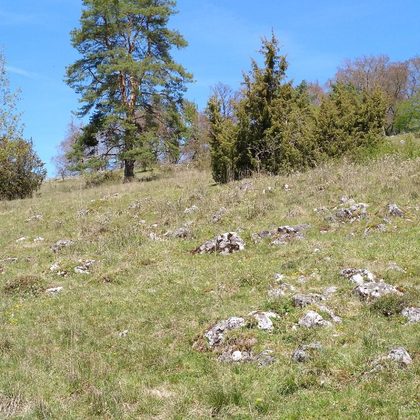
Undisturbed steppe, which survives in few places: herb-rich feather-grass and fescue steppe, wormwood steppe, meadow steppe, slopes of ravines and balkas, hollows around steppe lakes, and psammophytic steppe on sandy soil. The species needs a dense, upright herb layer to climb in; closely grazed or burnt steppe is unsuitable, and ploughed ground entirely so. Near the last steppe remnants it also occurs along field margins and on fallow, but always adjoining a piece of steppe.
Where the animal is most at home, classified with EUNIS — the European standard for habitats.


Distribution
The western half of the Pontic–Caspian steppe, and within it only a few scattered populations. In Ukraine the range runs from the Southern Bug eastward to the Donets, in the steppe and forest-steppe zones, Crimea included. The species is also known from eastern Romania and from western Belgorod province in Russia; it may also occur in Bulgaria and Moldova. The entire world range therefore lies within the guide area. The localities lie far apart and are separated from one another by arable land; GBIF holds fewer than sixty records within the guide area.
- Native
- dark = core range, pale = thinly spread
Way of life
Crepuscular and nocturnal, and solitary. The species climbs through the herb layer and uses the long tail for support. For a rodent the diet consists to a large extent of animal matter: forty to seventy per cent consists of insects and other invertebrates, supplemented with seeds and fruits of herbs. The animals dig their own summer burrow and keep a long hibernation. They become sexually mature only in their second calendar year, have one or two litters a year of three to five young, and live one to two years. Because of this slow life cycle a population barely recovers after a bad year or a fire.
Where and when to look
The species can in practice be seen only during small-mammal surveys. The chance lies in the last unploughed steppe of southern Ukraine and eastern Romania, such as Askania-Nova, the Crimean steppe reserves and the Dobruja, and then only in licensed survey work; trapping is otherwise prohibited, and without trapping the species cannot be recorded. On your own you can walk through tall feather grass in May or June and watch for movement in the stems; what rustles away is usually a vole, but not always. Pellets of Short-eared and Barn Owl are the cheapest way of establishing that the species is still present. A large part of the Ukrainian range is currently a war zone.
Conservation status
Critically Endangered (2024). The species depends entirely on undisturbed steppe, and only a few per cent of the Pontic steppe survives, divided among small, isolated fragments. The Ukrainian red list names as threats the ploughing of steppe vegetation, overgrazing, the burning of hay meadows in spring and summer, which is lethal to an animal living in the herb layer, and the fragmentation of the last populations. In Ukraine the species has been on the red list since 1994. Since 2022 the war has been added: most of the range lies in or just behind the front zone, with fires, armoured traffic and mines, and field research has stopped. For most localities it is currently not known whether animals are still present.
Scientific name
Sicista loriger | (von Nathusius in von Nordmann, 1839) (GBIF: Sicista subtilis)
Von Nathusius in von Nordmann described the species in 1839 as Sminthus loriger; because it was later moved to another genus, the author and year stand in brackets. Sicista is neither Latin nor Greek. Gray took the word over in 1827 without saying where from; it is generally referred to a vernacular name for the mouse in the Russian and Tatar language area, but which one is not settled. loriger is Latin for 'strap-bearing', from lorum, 'strap, thong', and gerere, 'to bear', after the dark stripe down the back. The specimen the first description was based on came from Ukraine, Odessa.