All species › Waders, gulls and terns › Sandpipers and allies › Marsh Sandpiper
Marsh Sandpiper | Tringa stagnatilis
Poelruiter | Archibebe fino
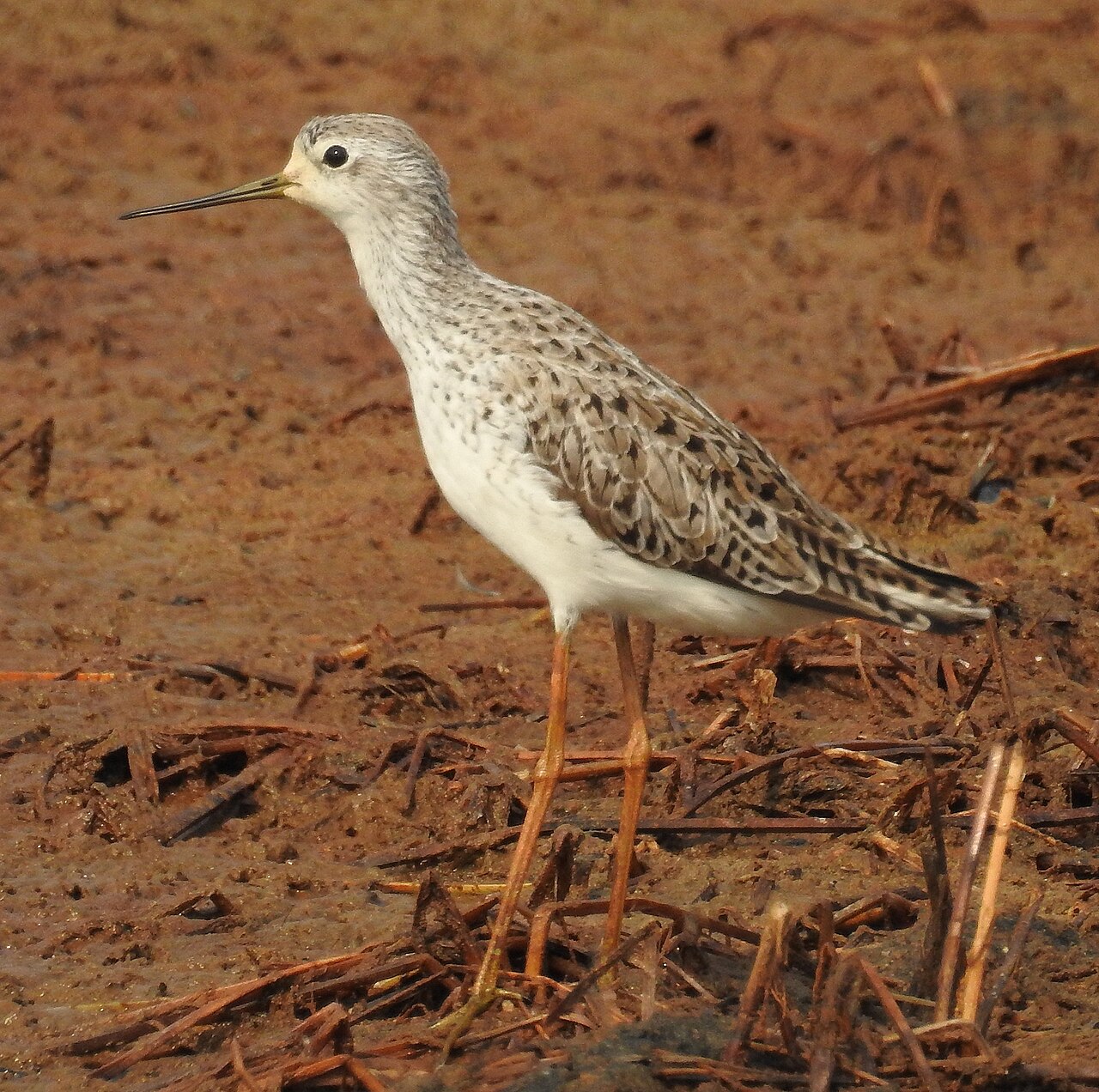
Marsh Sandpiper is the finest and most fragile-looking shank in this guide: a pale, light grey wader of barely a quarter of a metre, with a dead-straight needle-fine bill and legs so long that they trail well beyond the tail in flight. It looks like a Common Greenshank scaled down in every dimension except the legs.
Voice
The take-off call is a rapidly repeated high, sharp yip or tyew, clearly above the full tew-tew-tew of Common Greenshank in pitch and usually in shorter series. In a restless flock it reads as a thin piping skimming over the water. Feeding birds are generally silent, and that silence beside the noisy Common Redshank and Common Greenshank is itself a clue.
No freely licensed recording has been found for this species yet; what to listen for is described below.
Identification
A slim, slight shank of twenty-two to twenty-five centimetres and about seventy grams, strikingly pale in non-breeding plumage: light grey above with white feather edges, white below, with a white face in which the dark eye looks large. The bill is dead straight, needle-thin and dark, with no upward set at all. The legs are very long and yellow-green, and in flight almost the whole tarsus projects beyond the tail. In flight a long white wedge runs from the rump up the back, the tail is pale and the wing plain dark without a wingbar. Breeding birds add black blotches on the mantle and arrowhead marks on breast and flanks.
Confusion species
Common Greenshank (Tringa nebularia) is the main confusion species and shares the white back wedge and green legs, but is a third larger and much more heavily built, with a thick, slightly upturned bill; on Marsh Sandpiper the legs project far further beyond the tail and the bill is less than half as thick. Wood Sandpiper (Tringa glareola) has a square white rump patch instead of a long wedge, is heavily spotted above and has a short broad supercilium. Common Redshank (Tringa totanus) gives itself away on leg colour — orange-red — and on the broad white trailing edges to the wings. Nordmann's Greenshank (Tringa guttifer) has strikingly short legs and a thick bicoloured bill. At range a Marsh Sandpiper in shallow water can also suggest a small stilt, but the compact head and the grey rather than black upperparts rule that out.
Habitat
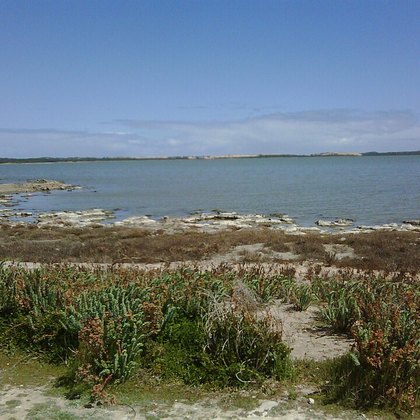
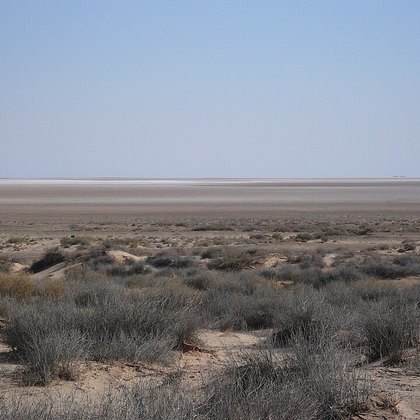
Fresher and shallower than most shanks: samphire saltmarsh, saltworks ponds, flooded claypans and ephemeral lakes, stock dams, rice fields and above all sewage ponds, where in parts of Australia it stands in tens at a time. On the coast it uses the upper edge of tidal flats and the shallow margins of mangrove creeks. It walks high on its legs in water up to the belly and picks from the surface with quick, precise movements.
Where the bird is most often found, arranged by main group and formation.


Range and movements
Widespread across Australia, coastal and inland alike, with the largest numbers in the north and at the big saltworks and treatment complexes of the south and southwest. Birds arrive from August and leave in March and April. It reaches New Zealand annually but in very small numbers: usually one or two birds a year, scattered from Northland to Southland and occasionally on Chatham Island, with an exceptional six together at Miranda in 1998.
- Resident
- Breeding (summer)
- dark = core range, pale = thinly spread
Where and when to look
Look for it on the sewage ponds and salt pans that the other waders skip, and watch the ratio of leg to body: a shank that seems to have too much leg for its body is this bird. On take-off the bill decides it — check in profile whether there is any curve. If the bill is dead straight and so thin that it almost vanishes against the light, it is not a greenshank.
Conservation
Least Concern (LC): the breeding range runs from eastern Europe into Mongolia and the Russian Far East, and the species is numerous throughout. On this flyway it helps that it does not depend on tidal flats, which are precisely what is disappearing around the Yellow Sea; inland marshes and rice fields absorb part of that blow. In Australia it does depend locally on man-made water: when a treatment works is modernised into closed tanks, one of a district's most reliable sites vanishes overnight.
Scientific name
Tringa stagnatilis | (Bechstein, 1803)
Bechstein described the species in 1803 as Tringa stagnatilis, and it has stayed in that genus, so author and year carry no parentheses; the type locality is in Germany. The epithet comes from Latin stagnum, 'pool, standing water', exactly the habitat the bird prefers. The genus name Tringa goes back through Neo-Latin to Greek trungas, a wading bird in Aristotle. The English name Marsh Sandpiper, like the Dutch poelruiter, translates the epithet directly.