All species › Passerines › New World warblers › Prothonotary Warbler
Prothonotary Warbler | Protonotaria citrea
Citroenzanger | Reinita cabecidorada
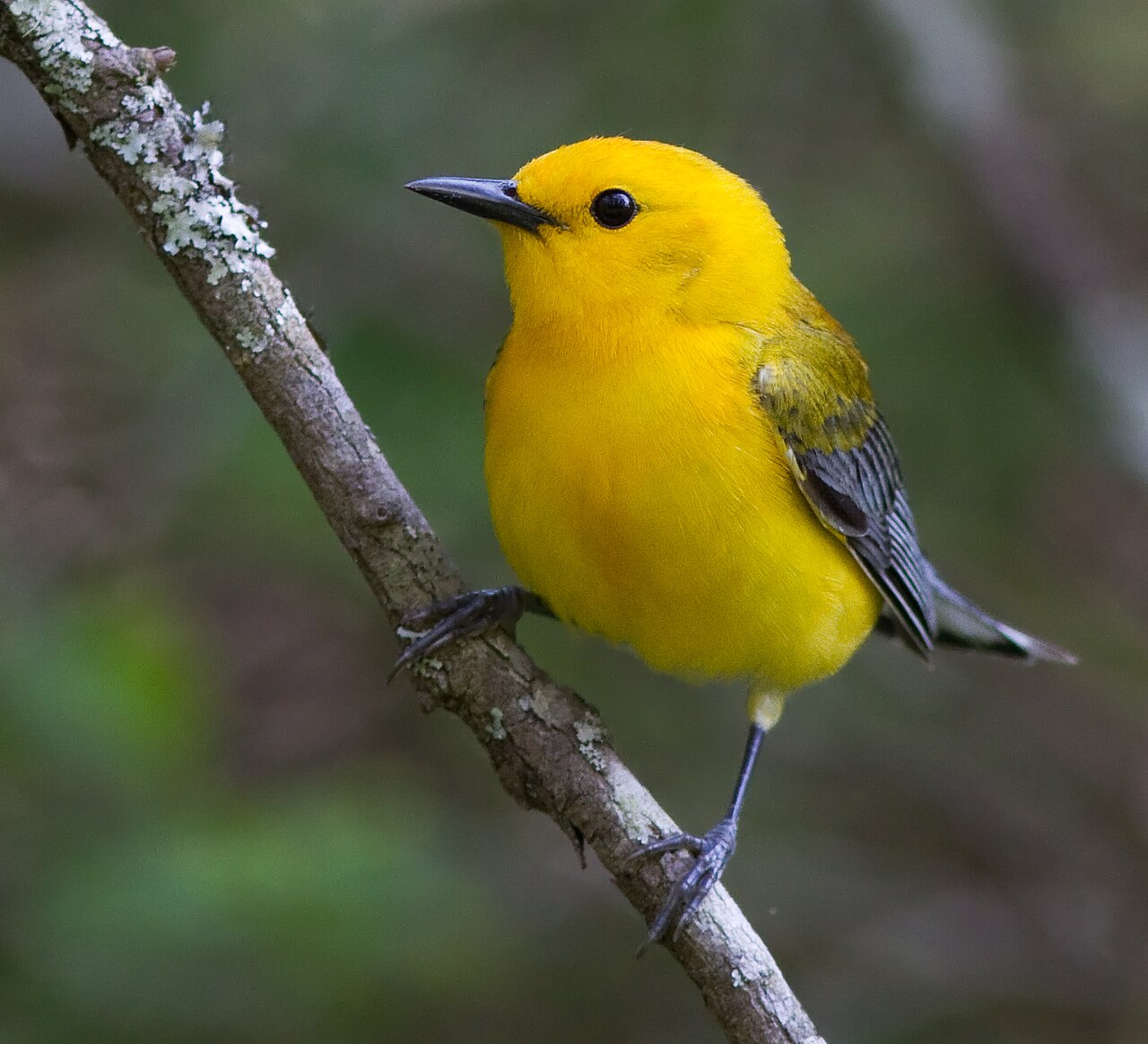
The Prothonotary Warbler is the only eastern New World warbler that nests in tree cavities, and the only one that is yellow with blue-grey wings without any wingbar. It belongs to flooded hardwood forest and slow water, and readily accepts a nest box over the water.
Voice
The song is a series of five to ten loud, clear, even notes on one pitch, rising in volume: sweet-sweet-sweet-sweet-sweet. It sounds harder and sharper than the song of Hooded Warbler and carries over open swamp water. The call is a loud, metallic chink, similar to that of the waterthrushes. The male sings from a low branch above the water and often from the rim of the nest cavity itself.
No freely licensed recording has been found for this species yet; what to listen for is described below.
Identification
The male's head, neck, breast and belly are deep orange-yellow, the back olive-green, and the wings and tail blue-grey without wingbars. The undertail coverts are white, and the tail carries large white patches giving a two-toned pattern from below. The bill is long and black, the eye large and dark against the plain yellow face. The female is patterned the same but duller yellow, especially on the crown. It forages low over the water, climbing sideways and upside down along branches.
Confusion species
Hooded Warbler also has a yellow face, but with an olive-green crown and no blue-grey wings; it stays higher in the canopy. Blue-winged Warbler is yellow with a black eye-line and two white wingbars. Female Yellow Warbler has yellow tail patches instead of white and lacks the blue-grey wing. No other eastern yellow warbler combines a plain yellow head with an unmarked blue-grey wing.
Habitat
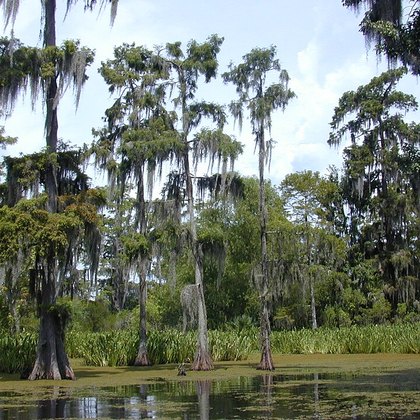
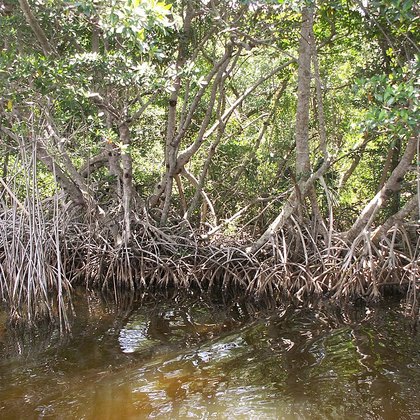
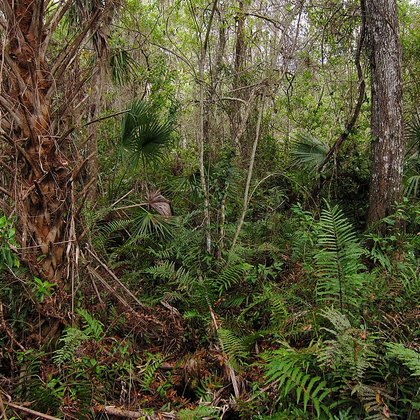
Flooded deciduous and swamp forest in the lowlands: cypress swamp, inundated hardwood forest of oak and ash, and the banks of sluggish rivers, oxbows and standing-water ditches. Nest cavities are old woodpecker holes or natural holes in dead trunks over water, and nest boxes on posts in a swamp are readily occupied. Where Swainson's Warbler takes dense cane and bramble on damp ground, this species is tied to open water beneath the forest. In winter mainly in mangrove, and further in coastal tropical dry forest.
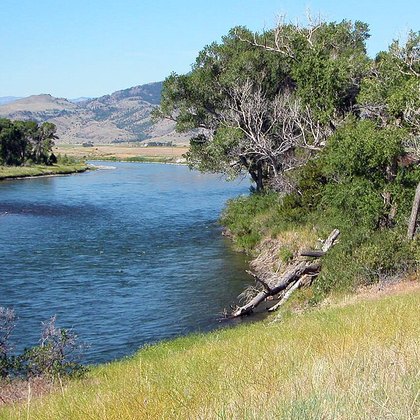
Where the bird is most often found, arranged by the USNVC — the vegetation classification of the United States and Canada — and CMECS for sea and coast.


Range and movements
Breeds in the southeastern and mid-eastern United States, centred on the Mississippi valley and the Gulf and Atlantic coastal plain, and along river valleys north to southern Minnesota, Wisconsin, Michigan and the southernmost tip of Ontario. Departure begins in late July; migration crosses the Gulf of Mexico and follows the Caribbean coast. It winters in mangrove from southeastern Mexico, Belize, Honduras and Nicaragua south to Panama and northern Colombia, Venezuela and western Ecuador.
- Resident
- Breeding (summer)
- Winter
- Passage
- dark = core range, pale = thinly spread
Where and when to look
Take a canoe into a swamp forest or a slow backwater in April or May and listen for the five even sweet notes; the bird will usually be within two metres of the water. Nest boxes along visitor trails in the southern swamps give the best chance of seeing it at the cavity.
Conservation
Partners in Flight puts the breeding population at about 2.1 million birds. The Breeding Bird Survey shows a decline of some 0.7 percent a year between 1966 and 2019, about 31 percent in total; the species is on the Yellow Watch List with a continental concern score of 14 out of 20. Drainage and logging of flooded hardwood forest is the main cause, and in winter the loss of mangrove. In Canada the species is listed as endangered, with about thirty breeding birds in Ontario in 2008. Nest boxes over water are used successfully in many places.
Scientific name
Protonotaria citrea | (Boddaert, 1783)
Boddaert described the species in 1783 as Motacilla citrea; because it was later moved to another genus, author and year stand in parentheses. The genus Protonotaria was introduced in 1858 by Spencer Baird and goes back to Late Latin protonotarius, a papal official whose robe of office was yellow. The species name citrea is Latin for 'citron-coloured'. The English name follows the genus name and thus the yellow robe; the Dutch name follows the colour name directly.