All species › Passerines › Thrushes and allies › Redwing
Redwing | Turdus iliacus
Koperwiek | Zorzal alirrojo
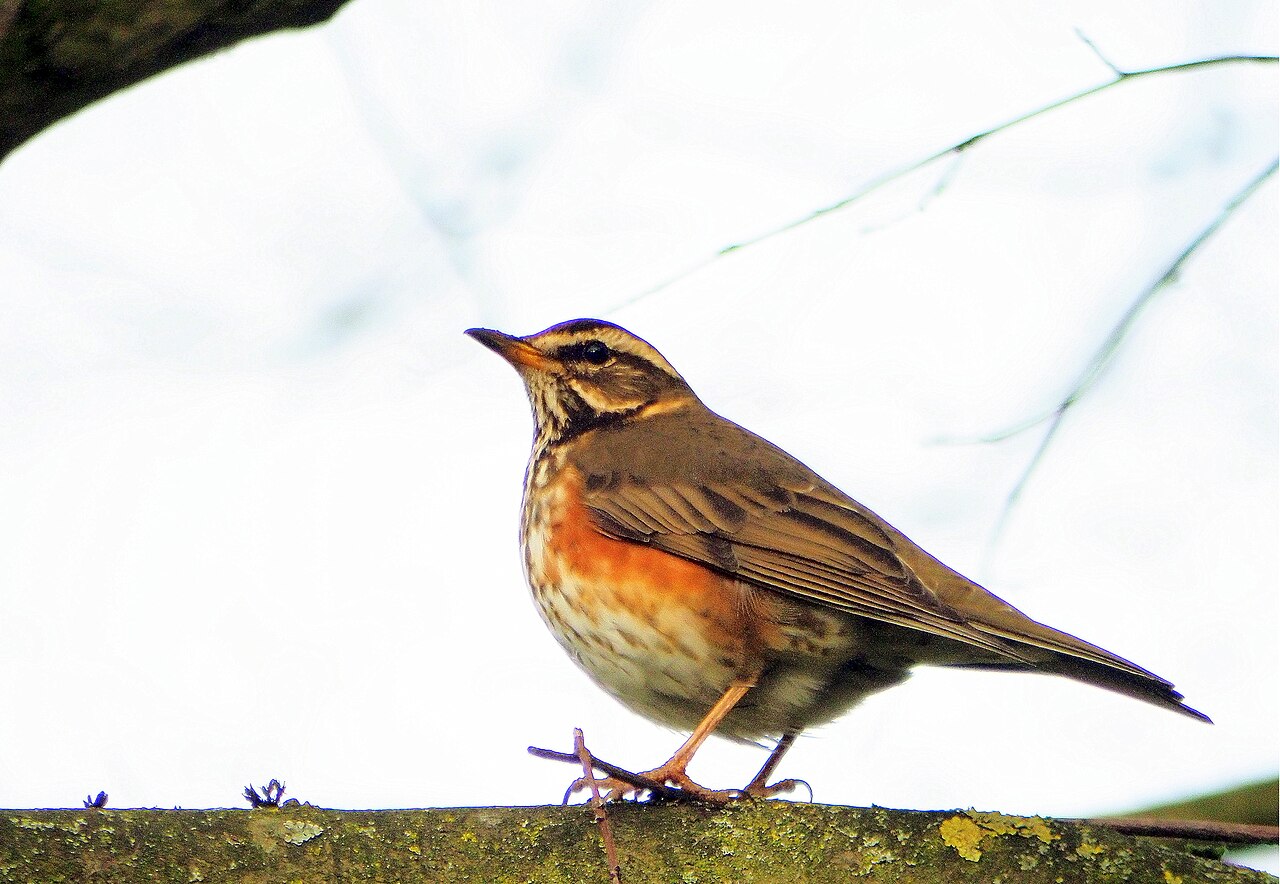
The Redwing is a small Eurasian thrush that has bred in southwestern Greenland since 1990 and otherwise appears in the guide area only as a rare visitor, mainly in winter on the east coast of Canada. Rust-red flanks and underwings and a long white supercilium identify it.
Voice
The song consists of a short, descending series of whistled notes, often three to five, followed by a soft, irregular twitter; the opening phrase varies by region, so that birds within one area use nearly the same introductory motif. The flight call is a thin, drawn-out, high tseep that carries far on autumn nights and by which passing flocks can be recorded in the dark. In flocks a hard, rapid chuck is also heard.
Recording: Julien Bottinelli — CC BY-NC-SA 4.0 · Mouroux, Seine-et-Marne, Île-de-France, France · xeno-canto
Identification
Smaller than most thrushes, plain brown above, white below with dense dark streaking on breast and flanks. A broad cream-white supercilium runs well back above the eye, with a dark eyestripe below it and a pale submoustachial stripe — a sharply drawn head pattern. The flanks and the underwing coverts are rust-red; that colour shows best from below in flight and gives the bird its name. The bill is dark with a yellow base.
Confusion species
Fieldfare is much larger, with a grey head and rump, brown back and black tail, and no supercilium. Song Thrush, where it turns up in the guide area as a visitor, lacks the rusty flanks and the supercilium and has round rather than streaked spots. Dusky Thrush has a black breast shield and rufous in the wing. American species differ clearly: Wood Thrush and the Catharus thrushes are unstreaked below and lack the head pattern.
Habitat
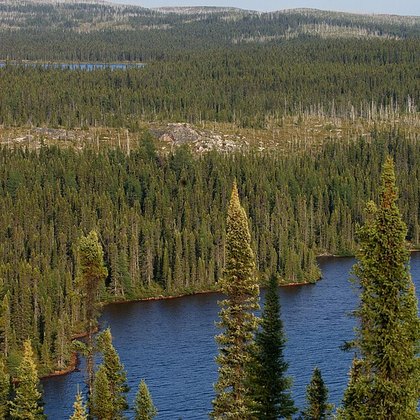
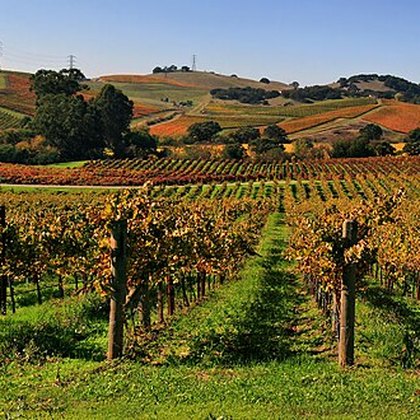
On the breeding grounds birch woodland, willow scrub, open conifer forest and the scrub belt at the tundra edge; in Greenland low shrubs and herb-rich slopes in the fjord districts. Outside the breeding season open country with berries: hedges, pasture, orchards, parks and gardens with rowan, hawthorn and holly. It feeds much on the ground, in flocks, often with Fieldfares.
Where the bird is most often found, arranged by the USNVC — the vegetation classification of the United States and Canada — and CMECS for sea and coast.




Range and movements
The range covers northern Europe and Siberia, from Iceland and Scotland to Chukotka; it winters in western, central and southern Europe, northwest Africa and southwest Asia. In 1990 and 1991 the species settled in southwestern Greenland around Qaqortoq, where it has bred since. In Canada and the United States it is a rare visitor: most records come from Newfoundland and the eastern provinces in winter, with a few further south and scattered western records including Washington in 2005 and Seward, Alaska, in 2011.
- Resident
- Breeding (summer)
- Winter
- Passage
- dark = core range, pale = thinly spread
Where and when to look
On the east coast of Canada January to March is the most promising period, in a flock of American Robins stripping a rowan or an apple tree: look for a smaller bird with a white supercilium. In Greenland the song in June is the quickest lead. On birds flushing, watch for the rusty underwing against the white belly.
Conservation
The world population is put at 98 to 151 million birds, making this one of the most numerous thrushes of the Palearctic. In Europe the ten-year decline has been estimated at nearly thirty per cent, chiefly in Fennoscandia; the IUCN nonetheless keeps the species at Least Concern (LC). The Greenland population is small and stands apart from the North American avifauna; hunting of migrant thrushes in southern Europe and change in the northern birch forest are the factors most often named.
Scientific name
Turdus iliacus | Linnaeus, 1758
Linnaeus described the species in 1758 as Turdus iliacus, from birds of the Swedish conifer forests; because the species still stands in its original genus, author and year appear without parentheses. Turdus is the Latin word for thrush. The species name iliacus belongs to ile 'flank, groin' and refers to the rust-red flanks. The Dutch name names the copper-coloured underwing, and the English name Redwing the same colour.