All species › Sandgrouse › Sandgrouse
Sandgrouse | Pteroclidae
Zandhoenders | Gangas y ortegas
The most remarkable feature lies in the male's belly feathers: their barbules coil up when wetted and hold water like a sponge. He soaks his underparts at the drinking place, flies back, and the chicks strip the water out of his plumage with their bills — nothing else in the bird world does this. The nest is no more than an unlined shallow scrape holding usually three elongated eggs, equally blunt at both ends; the pair take turns incubating, with the male sitting through the night. The downy chicks leave the scrape within a day and pick up their own seed from the start; only the water is brought to them.
Native species 5 species
Species that occur here by nature: breeding birds, winter visitors and passage migrants. They are arranged by genus, in the sequence of the list.
Pterocles 5 species
-
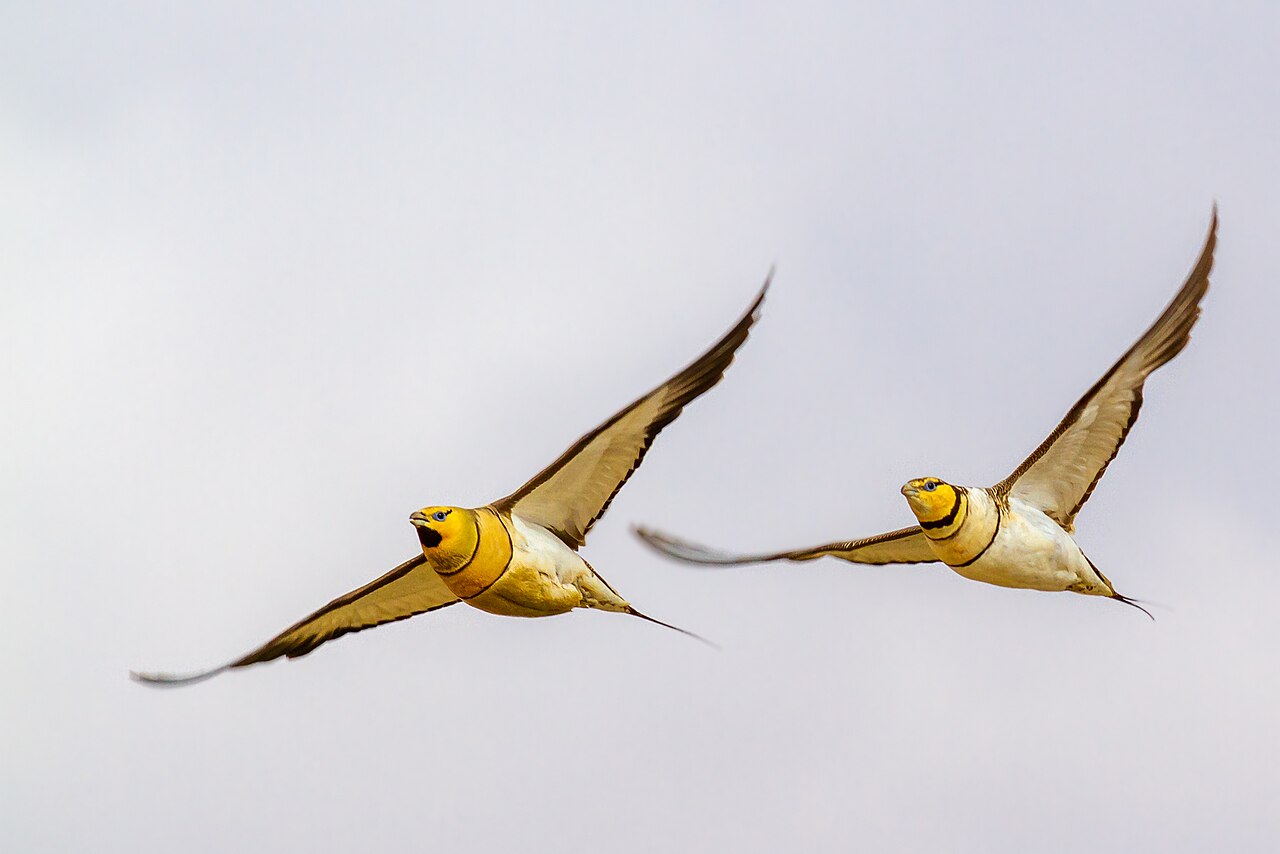
Pin-tailed sandgrouse
Pterocles alchata Dry grasslands
 Arable land and market gardens
 Inland salt steppes
 Miscellaneous inland habitats with sparse or no vegetation
-

Spotted sandgrouse
Pterocles senegallus- Miscellaneous inland habitats with sparse or no vegetation
- Dry grasslands
- Arable land and market gardens
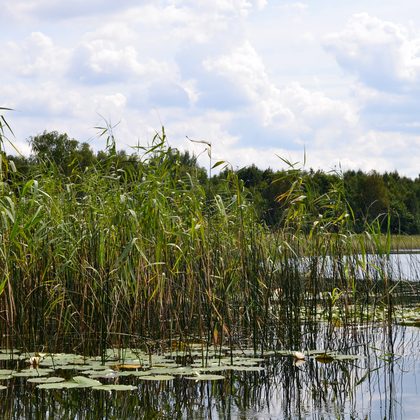 Littoral zone of inland surface waterbodies
-
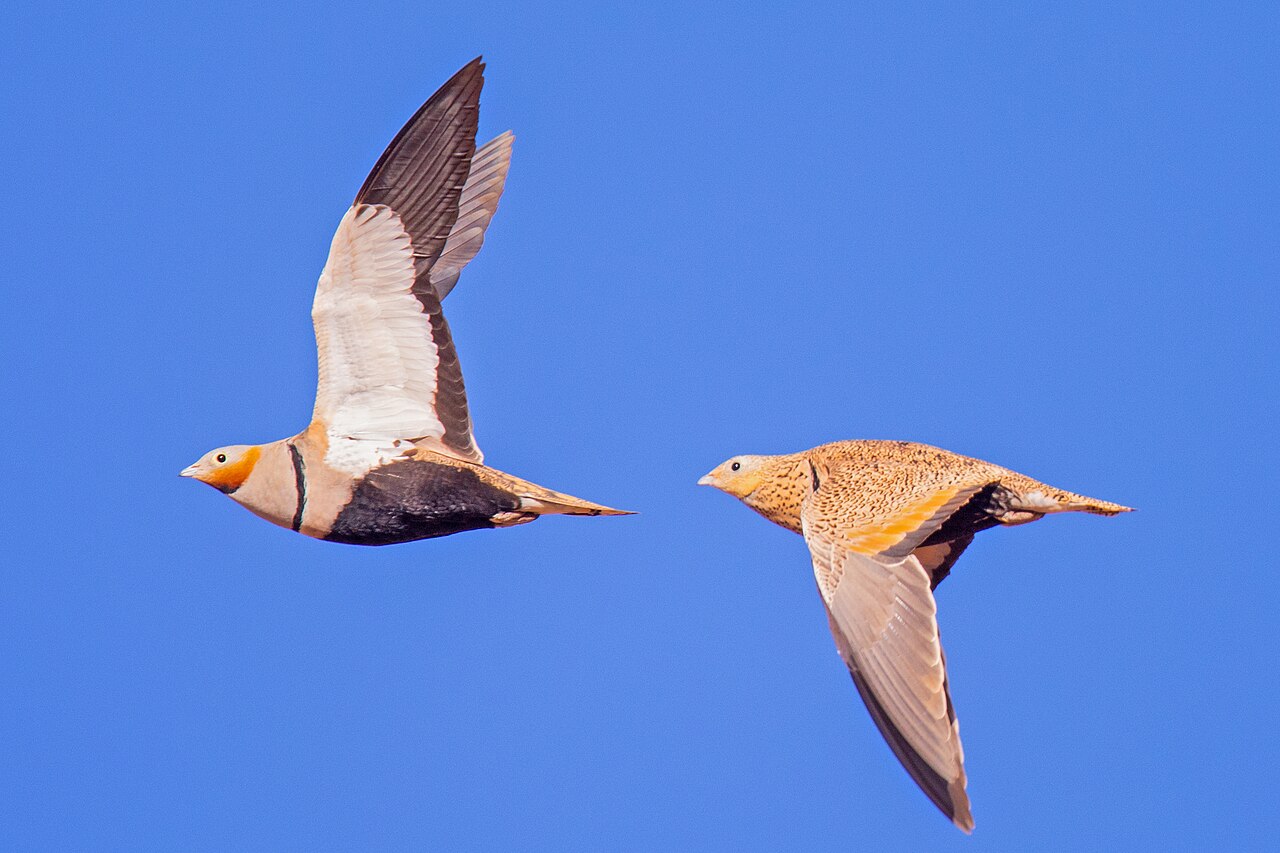
Black-bellied sandgrouse
Pterocles orientalis- Dry grasslands
- Miscellaneous inland habitats with sparse or no vegetation
- Arable land and market gardens
- Inland salt steppes
-

Crowned sandgrouse
Pterocles coronatus- Miscellaneous inland habitats with sparse or no vegetation
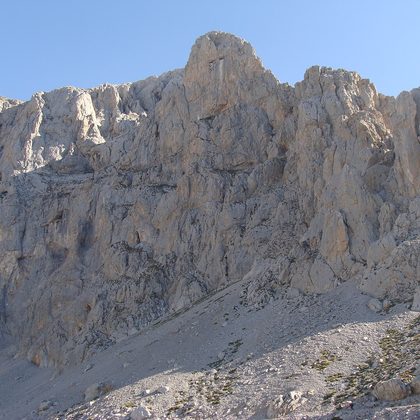 Inland cliffs, rock pavements and outcrops
- Dry grasslands
- Littoral zone of inland surface waterbodies
-
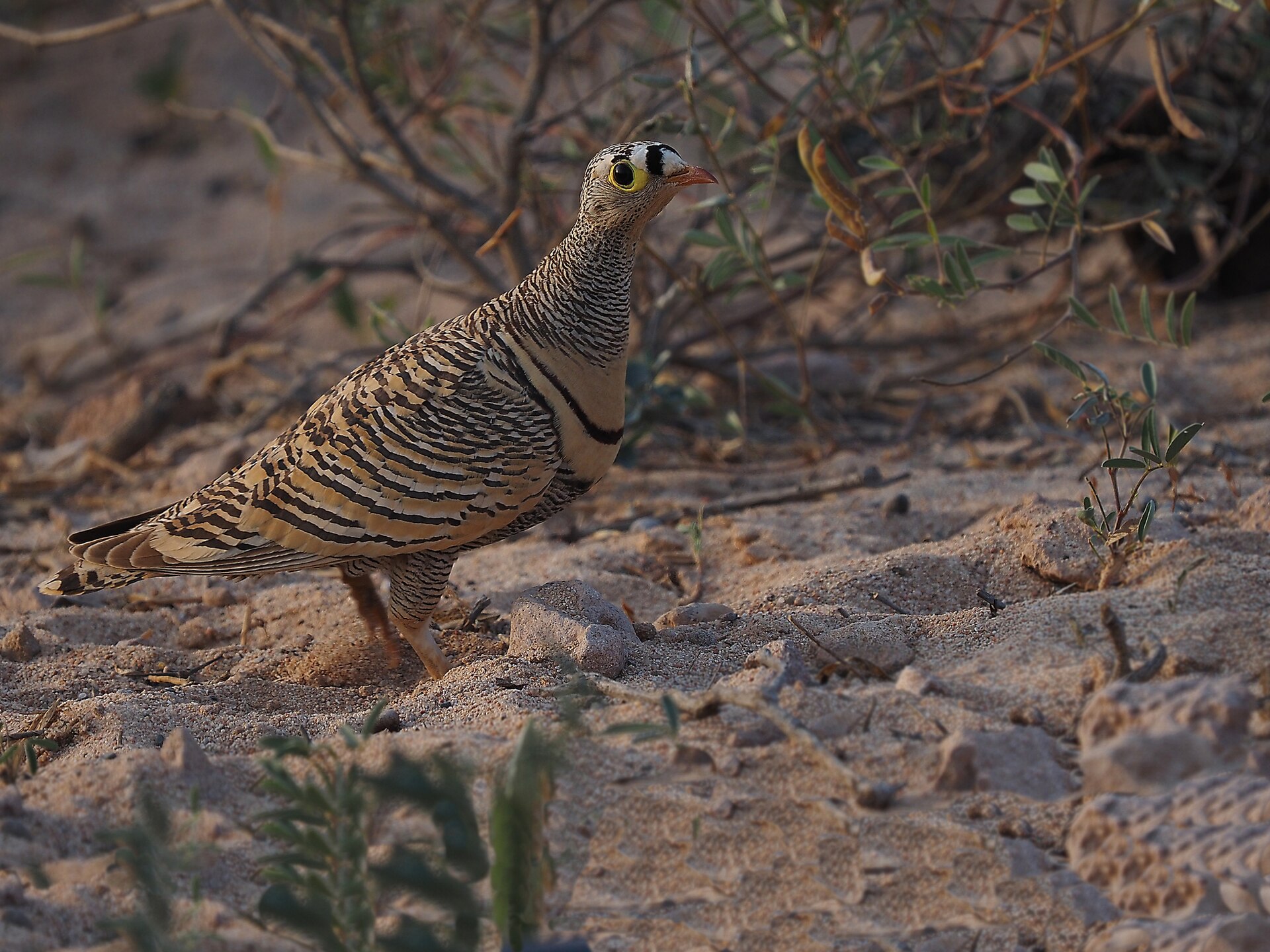
Lichtenstein's sandgrouse
Pterocles lichtensteinii- Miscellaneous inland habitats with sparse or no vegetation
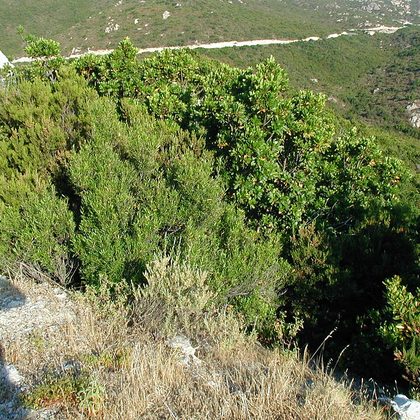 Maquis, arborescent matorral and thermo-Mediterranean brush
- Inland cliffs, rock pavements and outcrops
- Littoral zone of inland surface waterbodies