The habitats of Europe
Every species in this guide is linked to the habitats where it most occurs in Europe, following the EUNIS classification of the European Environment Agency. It has ten main groups, from open sea to built-up land, and beneath them a few dozen broader formations. Each bird carries at most seven of those: not everywhere it has ever turned up, but where it truly belongs.
Select a habitat to read its description.
Marine habitats A
Every habitat governed by sea water, from the high-water mark down to the deep-sea floor. The subdivision follows substratum and depth: hard rock and loose sediment in the intertidal zone, the same pair below the low-water mark, and beneath that the deep-sea bed. Two formations are not tied to the seabed at all: the open water column and sea ice. For birds the range runs from species that walk the flats at low tide to species that come ashore only to breed.
-
 Littoral rock and other hard substrata A1
Hilbre Island, Dee-estuarium, Engeland
10 species
Littoral rock and other hard substrata A1
Hilbre Island, Dee-estuarium, Engeland
10 species
Bedrock, boulders and cobbles between the high- and low-water marks, together with the splash zone above them. EUNIS puts the upper limit at the top of the lichen belt and the lower one where the kelp begins; below that lies infralittoral rock. Sand and mud at the same level belong to littoral sediment. On Atlantic and northern coasts the belts stack up: lichens, barnacles and mussels on the exposed headlands, dense fucoid weed in sheltered bays, and rockpools throughout. Birds work the weed and the barnacle crust for snails, crustaceans and mussels. Purple sandpiper and Ruddy turnstone feed on the wet rock, the Rock pipit nests in crevices above, and European shag and Harlequin duck dive just offshore.
-
 Littoral sediment A2
Waddenzee bij Föhr, Duitsland
111 species
Littoral sediment A2
Waddenzee bij Föhr, Duitsland
111 species
Gravel, sand, muddy sand and mud that dry out at low tide, in every mixture between them. What separates it from littoral rock is the substratum; what separates it from sublittoral sediment is the drying out, since ground that stays submerged falls outside. Coarse, mobile sediment holds little life; fine sand and mud retain water and are full of worms, bivalves and small crustaceans. Along the upper edge the flats grade into eelgrass beds and saltmarsh. The large European examples are the Wadden Sea, the British estuaries, the bay of Mont-Saint-Michel and the mouths of the Tagus and the Guadalquivir. Waders take the buried animals: Dunlin, Red knot, Bar-tailed godwit and Eurasian oystercatcher, while the Brant grazes the eelgrass.
-
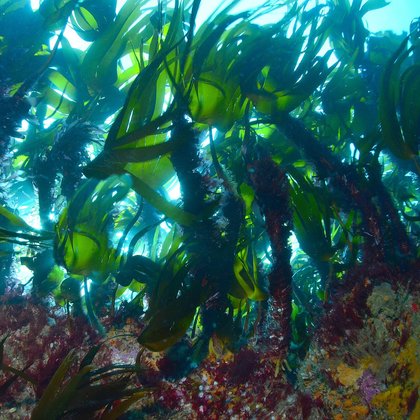 Infralittoral rock and other hard substrata A3
Kelpwoud bij Molène, Iroise-zee, Bretagne
7 species
Infralittoral rock and other hard substrata A3
Kelpwoud bij Molène, Iroise-zee, Bretagne
7 species
Bedrock, boulders and cobbles just below the low-water mark, down to the depth at which kelp and dense seaweed give out, roughly the top ten to thirty metres. The upper limit is the top of the kelp zone, with littoral rock above it; below the lower limit begins rock without an algal cover. Off Norway, Iceland and the British and Irish coasts this is kelp forest with red seaweeds beneath; in turbid estuarine water the kelp fails and sponges and barnacles take over. In the Mediterranean the cover is lower-growing. Birds dive among the stipes for fish and crustaceans: European shag and Black guillemot all year, Harlequin duck and Steller's eider in the north.
-
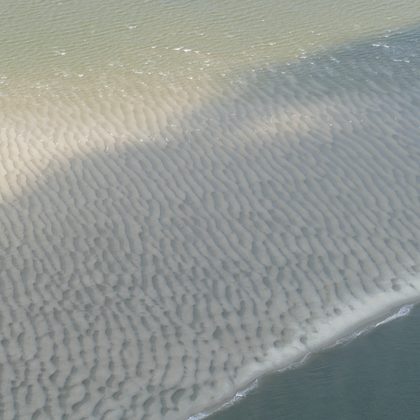 Sublittoral sediment A5
Zandbank bij Wangerooge, Duitse Waddenzee
39 species
Sublittoral sediment A5
Zandbank bij Wangerooge, Duitse Waddenzee
39 species
Sand, mud, gravel and mixed sediment on the seabed below the low-water mark, down to the edge of the bathyal zone at about two hundred metres. It differs from littoral sediment in never drying out, and from infralittoral rock in being loose ground. The North Sea, the Baltic and the banks of the Irish Sea carry wide sand plains with shellfish beds, along with seagrass in sheltered bays and maerl on coarse gravel. What birds take here lies in the sediment or just above it: bivalves, worms and flatfish. Common scoter and Common eider dive over the shellfish beds, Long-tailed duck and Red-throated loon winter above the shallow sands.
-
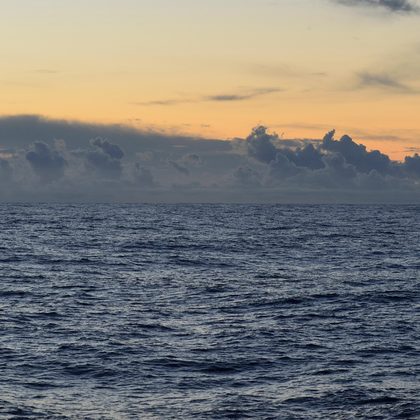 Pelagic water column A7
Golf van Biskaje, Atlantische Oceaan
56 species
Pelagic water column A7
Golf van Biskaje, Atlantische Oceaan
56 species
The water itself, independent of seabed and shore: from coastal water and inlets to the ocean above the deep sea. EUNIS divides the pelagic water column by salinity, stratification and depth, from the lit surface layer down to the abyssopelagic zone, and notes that the same place falls under a different type at different times of year, because the stratification shifts with the seasons. In Europe this means the North Sea and the Baltic, the Bay of Biscay, the shelf edge and the deep Atlantic water around the Azores and Madeira. Birds live here on fish, squid and plankton and come ashore only to breed: Northern fulmar, Northern gannet, Cory's shearwater and European storm-petrel.
-
 Ice-associated marine habitats A8
Drijfijs op zee bij Spitsbergen, Svalbard
5 species
Ice-associated marine habitats A8
Drijfijs op zee bij Spitsbergen, Svalbard
5 species
Sea ice, icebergs and everything that goes with them: drifting pack ice, loose floes, the underside of the ice and the open leads between the plates. It is the ice as a habitat that is meant, not the water column or the seabed below it. In Europe it lies around Svalbard, Franz Josef Land and Novaya Zemlya and along the east coast of Greenland, and every winter in the northern Baltic and the White Sea as well; the edge withdraws northward in summer and comes back down in winter. Algae grow on the underside of the ice and feed krill and amphipods, and through them fish as well. Along the ice edge and in the leads birds find that food: Ivory gull, Glaucous gull and Thick-billed murre.
Coastal habitats B
Everything above the spring high tide line that owes its character to the sea nearby: dunes and wooded dunes, sandy beaches, shingle banks, sea cliffs and rocky shores, including the strip reached only by spray. Strandlines and damp dune slacks belong here; supralittoral rock pools and ground near the sea that gets no salt do not. EUNIS divides the group by substrate: sand, shingle or solid rock. For birds it is above all breeding ground, open, hard to reach, and close to food at sea.
-
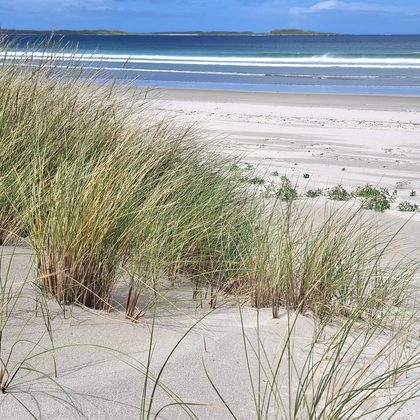 Coastal dunes and sandy shores B1
Tràigh Baile Aonghais, Isle of Harris, Schotland
75 species
Coastal dunes and sandy shores B1
Tràigh Baile Aonghais, Isle of Harris, Schotland
75 species
Coastal dunes and sandy shores cover the sand above the driftline and the whole dune system behind it: embryonic and white dunes, fixed grey dunes, damp dune slacks, and the heath, scrub and woodland that develop on older sand. Below the driftline the tidal shore takes over; where the beach is pebbles it becomes coastal shingle, and where it is solid rock, cliff and rocky shore. Inland dunes are excluded. The belt runs from Norway to the Black Sea, marram binding the young dunes, moss, lichen and thin grassland covering the grey ones. Bare sand gives nesting room to Kentish plover and Little tern, the herb-rich slopes to Tawny pipit and Northern wheatear.
-
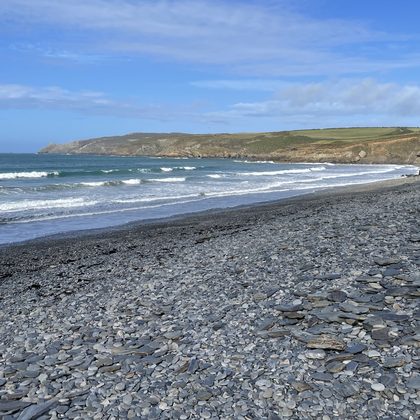 Coastal shingle B2
Aber Mawr, Pembrokeshire, Wales
6 species
Coastal shingle B2
Aber Mawr, Pembrokeshire, Wales
6 species
Coastal shingle consists of beaches built of pebbles, sometimes of larger boulders, thrown up by wave action along open coasts, enclosed seas and coastal lagoons. Grain size is what separates it from a sandy shore: shingle holds no water and does not blow, so no dune forms behind it. Unlike rocky shore, the material lies loose. The largest European examples are the shingle ridges of southern England and the Channel, the gravel beaches of the Baltic, Iceland and the northern fjords, and the steep pebble beaches of the Mediterranean. Plant cover is thin: sea kale, yellow horned-poppy, sea pea. Birds nest on the open stones, where the eggs are hard to see: Common ringed plover, Little tern, Sandwich tern and locally Roseate tern.
-
 Rock cliffs, ledges and shores B3
Handa Island, Sutherland, Schotland
56 species
Rock cliffs, ledges and shores B3
Handa Island, Sutherland, Schotland
56 species
Rock cliffs, ledges and shores take in cliff faces, ledges, caves and rock platforms at the sea's edge or set just back from it, above the spring high tide line. Below that line lies littoral rock, which EUNIS calls marine; loose pebbles belong to coastal shingle. Bare cliffs and rocky islets are included, as are cliffs with salt-tolerant vegetation and soft cliffs of clay and till. The zone runs from Svalbard and Iceland through Norway and Brittany to the limestone cliffs of the Mediterranean and the volcanic coasts of Macaronesia, with lichens, thrift and rock samphire along the rim. It is Europe's chief seabird breeding ground: Black-legged kittiwake and Common murre on the ledges, Atlantic puffin and European storm-petrel in burrows and crevices, Eleonora's falcon on southern islets.
Inland surface waters C
All above-ground open water inland: rivers, streams, lakes, ponds, pools and springs, together with the banks that flood often enough to stop closed terrestrial vegetation from forming. Fresh and brackish water both count, and so do dug waterbodies — canals, reservoirs, ponds — once they hold a semi-natural community. Permanent snow and ice fall outside it. EUNIS divides the group into surface standing waters, surface running waters and the littoral zone between them. For birds it comes down to this: many species breed, moult and winter here.
-
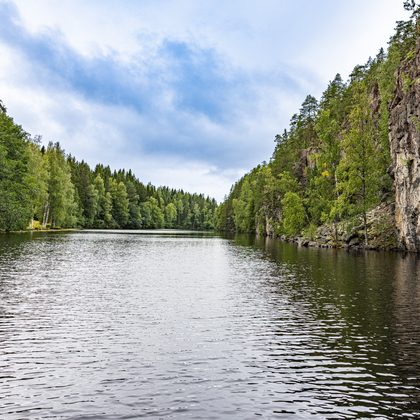 Surface standing waters C1
Torisevan rotkojärvi, Virrat, Finland
126 species
Surface standing waters C1
Torisevan rotkojärvi, Virrat, Finland
126 species
Lakes, ponds and pools with an open water surface, fresh, brackish or salt, formed naturally or dug — canals, reservoirs and ponds count as surface standing waters once they carry a semi-natural community. What separates them from running waters is movement: here the water stands, or moves too slowly to matter. The vegetated fringe itself belongs to the littoral zone. In Europe the range runs from glacial lakes in Scandinavia and the Alps to lowland peat pools and brackish steppe lakes in southern Russia; depth, lime content and nutrient level decide what grows. Birds find fish, water plants and bottom fauna, and a surface that is safe at night: Great crested grebe, Common pochard, Smew and, in the southeast, Dalmatian pelican.
-
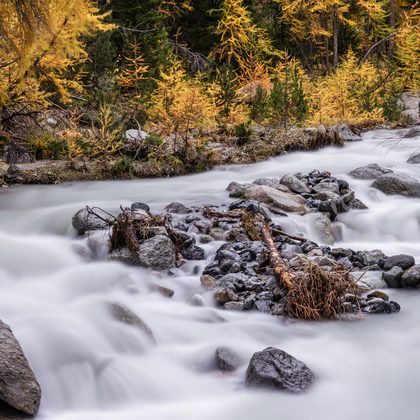 Surface running waters C2
Clemgia bij S-charl, Engadin, Zwitserland
36 species
Surface running waters C2
Clemgia bij S-charl, Engadin, Zwitserland
36 species
Running water in all its forms: springs, streams, rivers and watercourses that carry water only after rain or snowmelt. What sets surface running waters apart is the current itself — once the water stands, or is held behind a dam as a reservoir, it belongs with standing waters, while the gravel bars and the fringing vegetation fall to the littoral zone. In Europe the series runs from steep boulder-strewn mountain becks with white water through braided gravel rivers to slow, silt-bedded lowland rivers. Birds follow that series: White-throated dipper and Gray wagtail on fast headwaters, Harlequin duck on Icelandic rivers, Little ringed plover on fresh gravel and Common kingfisher along sheltered, clear lower reaches.
-
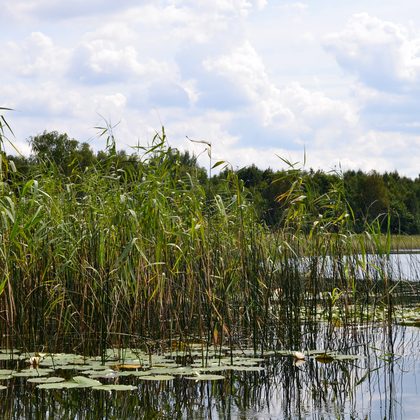 Littoral zone of inland surface waterbodies C3
Oezero Dobre, Wolynië, Oekraïne
149 species
Littoral zone of inland surface waterbodies C3
Oezero Dobre, Wolynië, Oekraïne
149 species
The strip that floods often enough to keep closed terrestrial vegetation from forming: reedbeds and other water-fringing growth along lakes, rivers and streams, the exposed bottoms of dried-up rivers and lakes, and the rock, gravel, sand and mud in and beside the bed. It is the transition between open water and the land behind it, and it ends where scrub or grassland closes over. In Europe it ranges from broad delta reed marshes to narrow rush fringes, bare mud margins of drawn-down reservoirs and gravelly river beaches. Reed gives cover and nest sites, bare mud gives food: Eurasian bittern, Great reed warbler and Bearded reedling in the reed, Little ringed plover and Bank swallow on the open margins.
Mires, bogs and fens D
Wet ground where the water table stands at or above the surface for at least half the year and where herbs, sedges or dwarf shrubs dominate; open water, woodland and scrub are excluded. The subdivisions follow where the water comes from: peat fed by rain alone, peat fed by groundwater or seepage, the patterned mires of the far north, sedge and reedbeds, and saline marshes far from any coast. For birds these are open, waterlogged places with soft ground and little cover.
-
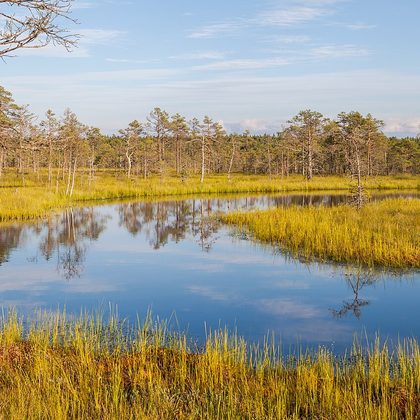 Raised and blanket bogs D1
Viru raba, Nationaal Park Lahemaa, Estland
26 species
Raised and blanket bogs D1
Viru raba, Nationaal Park Lahemaa, Estland
26 species
Peat fed by rainfall rather than by water draining in from higher ground: that is what separates raised and blanket bogs in EUNIS from fens and transition mires. The peat is acid and nutrient-poor, and the code covers bogs that have stopped growing too. In the lowlands of Ireland, the Baltic states, Poland and Fennoscandia they rise as domes above the surrounding land; in the wet west of Ireland, Scotland and Norway the peat lies like a blanket over whole hillsides. Sphagnum, cross-leaved heath, cotton-grass and bog rosemary grow there, with hummocks, hollows and peat pools between. Birds get open, treeless breeding ground: European golden-plover, Whimbrel and Common crane nest on it, and Red grouse nests both on it and on the heather moors beside it.
-
 Valley mires, poor fens and transition mires D2
Holmtjärnen, natuurreservaat Stockholmsgata, Ångermanland, Zweden
7 species
Valley mires, poor fens and transition mires D2
Holmtjärnen, natuurreservaat Stockholmsgata, Ångermanland, Zweden
7 species
Weakly to strongly acid peatland that, unlike a raised bog, does receive water from the land around it: seepage off a slope, drainage in a valley bottom, or the margin between land and open water. EUNIS also places quaking bogs and non-calcareous spring mires here; where the incoming water is lime-rich the ground belongs with the base-rich fens instead. These are small wet hollows in valleys and infilling lakes, with Sphagnum, cotton-grass, sedges and marsh cinquefoil on mats that give way underfoot. For birds that means cover, a high water table and hard walking: Great snipe, Spotted crake and Jack snipe belong here.
-
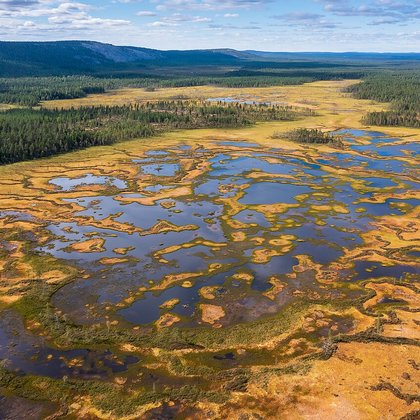 Aapa, palsa and polygon mires D3
Joutsenenpesäaapa bij Sodankylä, Fins Lapland
6 species
Aapa, palsa and polygon mires D3
Joutsenenpesäaapa bij Sodankylä, Fins Lapland
6 species
Patterned mire complexes of the arctic, subarctic and northern boreal zone. What sets aapa, palsa and polygon mires apart from ordinary bog is the pattern frost and slow-moving water impose on the surface: in aapa mires long peat ridges across the slope with wet flarks between, in palsa mires mounds a few metres high with an ice core that cracks and collapses, and on the tundra polygon mires. They lie in northern Fennoscandia and Russia, with dwarf birch and cotton-grass on the dry parts and sedges in the wet. The flarks are thick with mosquito and midge larvae and draw waders: Broad-billed sandpiper and Red-throated pipit breed there, Willow ptarmigan feeds in the scrub, and Great grey owl hunts from the edges.
-
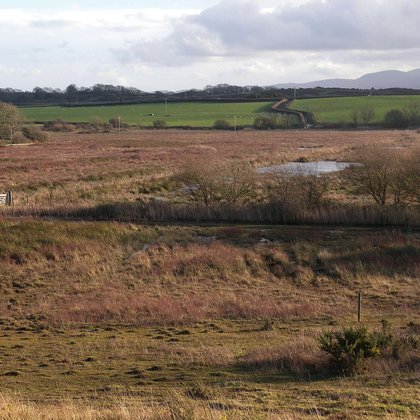 Base-rich fens and calcareous spring mires D4
Cors Bodeilio, Anglesey, Wales
1 species
Base-rich fens and calcareous spring mires D4
Cors Bodeilio, Anglesey, Wales
1 species
Peatland, flushes and vegetated springs where the ground water is calcareous or nutrient-rich, in river valleys, on alluvial plains and on hillsides where water emerges. The table stands at or just below the surface, and peat stops forming as soon as it drops. It is the base-rich water that separates these fens from acid transition mire; reedbeds are excluded. In Europe they are small, low-growing patches with black bog-rush, grass-of-Parnassus, orchids and brown mosses, along with tufa springs; drainage and fertiliser have cut the area back sharply. Few birds breed on them, because the patches are small and tall cover is scarce, though Moustached warbler occurs where sedge and reed stand side by side.
-
 Sedge and reedbeds without free-standing water D5
Federsee, Bad Buchau, Baden-Württemberg, Duitsland
81 species
Sedge and reedbeds without free-standing water D5
Federsee, Bad Buchau, Baden-Württemberg, Duitsland
81 species
Stands of reed, reedmace, club-rush and large sedges on wet, often peaty ground that normally carries no standing water. That last point is the boundary: where the same stems rise out of open water along a lake or river, EUNIS treats them as fringing vegetation instead. Such marshes occupy infilling lakes, old river courses, polders and deltas — the Danube delta, the Biebrza, Lake Neusiedl, the Dutch and Baltic peat districts — often over many square kilometres at a stretch, with tall herbs and willow scrub along the drier edges. For marsh birds this is the core: Eurasian bittern, Great reed warbler and Bearded reedling nest in the reed itself, and Western marsh harrier quarters low above it.
-
 Inland saline and brackish marshes and reedbeds D6
Nationalpark Neusiedler See-Seewinkel, Burgenland, Oostenrijk
25 species
Inland saline and brackish marshes and reedbeds D6
Nationalpark Neusiedler See-Seewinkel, Burgenland, Oostenrijk
25 species
Saline and brackish marshes well away from the sea: the inland counterpart of coastal saltmarsh and saline reedbed. The vegetation may be closed or open, but the ground has to stay wet; once it dries out EUNIS calls it inland salt steppe or saline scrub. They form where salt lies in the subsoil and evaporation outruns rainfall: the Pannonian plain, the lagoons of La Mancha and the Ebro valley, the steppe lakes of Anatolia and the Caspian lowland. Glasswort, sea-blite and saltmarsh grass grow in patches, with salt crusting on the bare ground between them. The shallows are thick with brine shrimps, mosquito and midge larvae, and that draws Greater flamingo, Pied avocet, Black-winged stilt and Collared pratincole.
Grasslands E
All non-coastal land that is dry, or wet for only part of the year, carrying more than thirty per cent vegetation cover of grasses, herbs, sedges, ferns, mosses and lichens. Tilled arable land is excluded. The subdivisions run from dry and mesic grasslands through wet meadows and alpine swards to woodland fringes, inland salt steppes and sparsely wooded grasslands. For birds this is open, low country, where nesting and feeding happen on the ground and management decides what survives.
-
 Dry grasslands E1
Dreisbach bij Ehringshausen, Lahn-Dill-Kreis, Hessen, Duitsland
132 species
Dry grasslands E1
Dreisbach bij Ehringshausen, Lahn-Dill-Kreis, Hessen, Duitsland
132 species
Well-drained or dry ground carrying grasses and herbs, usually unfertilised and of low productivity, wormwood steppe included. The limit is set by shrubs: on dry Mediterranean ground, once scrub of other genera covers more than a tenth EUNIS calls it garrigue, and where the soil turns damper and richer the mesic grasslands begin. In Europe these are limestone slopes with thyme and fescue, the Pannonian sand steppes and the open steppe plains of Iberia and Anatolia. Low, open vegetation gives cover at ground level and carries insects in quantity: Little bustard, Eurasian thick-knee, Calandra lark and Dupont's lark all breed here.
-
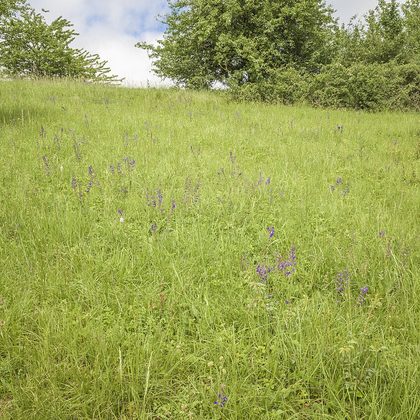 Mesic grasslands E2
Spitzberg bij Limbach, Odenwald, Duitsland
83 species
Mesic grasslands E2
Spitzberg bij Limbach, Odenwald, Duitsland
83 species
Pastures and hay meadows of lowland and mountain, on moderately to highly fertile soils that are not wet all year, in the boreal, nemoral, warm-temperate humid and Mediterranean zones. They are richer than dry grasslands and drier than the wet ones; reseeded and heavily fertilised fields, sports pitches and lawns belong here too. In Europe this is ordinary farmland: grazed swards, hay meadows with buttercup and oxeye daisy, and the ryegrass leys that have replaced them. Worms, leatherjackets and insects make it worth working, though the mowing date decides breeding success. Northern lapwing and Eurasian skylark breed here and White stork walks the fields for frogs and mice; Greater white-fronted goose and Fieldfare feed on the same fields in winter.
-
 Seasonally wet and wet grasslands E3
Attenborough Nature Reserve, Nottinghamshire, Engeland
81 species
Seasonally wet and wet grasslands E3
Attenborough Nature Reserve, Nottinghamshire, Engeland
81 species
Unimproved or lightly improved wet meadows and tall herb stands on ground that lies waterlogged or flooded through winter and spring, from the boreal zone to the Mediterranean and the steppes. The water table is what separates them from mesic grasslands; where the water stands all year the habitat passes into marsh and reedbed. In Europe they are washlands and polders, marsh-marigold and purple moor-grass meadows, and the seasonally flooded plains of the Pannonian and Iberian basins. Soft, saturated soil is easy to probe and full of worms and larvae: Black-tailed godwit, Common redshank, Ruff and Common snipe feed there and nest on the higher tussocks.
-
 Alpine and subalpine grasslands E4
Lac Noir, Sainte-Foy-Tarentaise, Savoie, Frankrijk
30 species
Alpine and subalpine grasslands E4
Lac Noir, Sainte-Foy-Tarentaise, Savoie, Frankrijk
30 species
Grass and sedge swards of the alpine and subalpine belt of the European mountains, the Caucasus and Anatolia, covering both the natural swards above the treeline and the pastures kept open just below it by centuries of grazing. Where the cover thins out and rock and scree take over, the formation ends. They are short, flower-rich turfs of fescue and sedge, broken by snowbeds and boulder fields, in the Alps, Pyrenees, Carpathians, the Scandinavian fjell and the Balkans. For birds it is the summer flush of insects and the lack of cover that count: Eurasian dotterel, Rock ptarmigan, Water pipit and White-winged snowfinch nest here, and the Alpine chough comes down to feed.
-
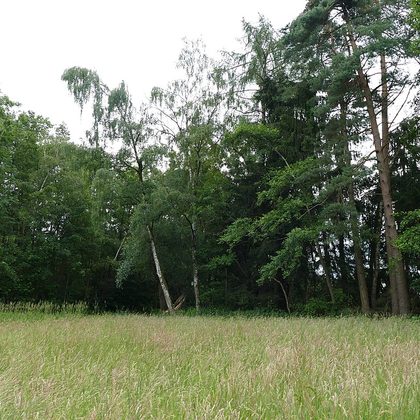 Woodland fringes, clearings and tall forb stands E5
Emmeringer Leite bij Emmering, Opper-Beieren, Duitsland
41 species
Woodland fringes, clearings and tall forb stands E5
Emmeringer Leite bij Emmering, Opper-Beieren, Duitsland
41 species
The herbaceous seam between woodland and open country: forest edges, glades and felled patches, and the stands of tall herbs and ferns that come up there and along streams. Scrub and closed woodland fall outside it, and so does mown grassland; what is meant is the narrow, yearly shifting transition. In Europe it means bracken and bramble on clear-fells, fringes of rosebay willowherb and woodland herbs, damp stands of meadowsweet, and subalpine tall-forb fields with monkshood. Cover at ground level with song posts above it suits passerines: Greater whitethroat, Tree pipit, Common grasshopper-warbler, Garden warbler and Common rosefinch breed here.
-
 Inland salt steppes E6
Zoutkorst in de Seewinkel, Nationaal Park Neusiedler See, Burgenland, Oostenrijk
26 species
Inland salt steppes E6
Zoutkorst in de Seewinkel, Nationaal Park Neusiedler See, Burgenland, Oostenrijk
26 species
Inland grasslands and steppes on saline or gypsum-rich soils, where evaporation brings the salt to the surface as a crust. Unlike coastal saltmarsh the salt here comes from climate and subsoil rather than from the tide, and unlike ordinary dry steppe the sward is thin and broken by bare patches. In Europe this means the Hungarian szik puszta, the Ponto-Sarmatic plains north of the Black Sea, and the salt basins of Los Monegros and La Mancha, with glasswort, saltmarsh grass and sea lavender around shallow lakes that dry out in summer. Bare ground and insects draw Collared pratincole, Calandra lark, Black-bellied sandgrouse and Dupont's lark.
-
 Sparsely wooded grasslands E7
Dehesa in Extremadura, Spanje
49 species
Sparsely wooded grasslands E7
Dehesa in Extremadura, Spanje
49 species
Grassland with a scattered tree layer that normally covers less than a tenth of the ground. Let the canopy close further and it becomes woodland; take the trees away and ordinary grassland is left. The best-known example is the Iberian dehesa or montado: old holm oaks and cork oaks standing well apart over a grazed sward, with cattle, sheep and pigs beneath them. The old parklands of England and southern Sweden and the wood pastures of central Europe belong here as well. Open hunting ground with hollow trees above it suits many birds: Spanish eagle, Iberian magpie, Eurasian hoopoe and European roller breed here, and in winter the Common crane comes for the acorns.
Heathland, scrub and tundra F
Non-coastal land that is dry, or under water for only part of the year, with more than thirty per cent cover of shrubs, dwarf shrubs or tundra vegetation; the woody plants stay below five metres. It runs from tundra over permafrost through arctic, alpine and temperate scrub and heathland to the Mediterranean forms, maquis, garrigue and phrygana, and on to riverine scrub, hedgerows and shrub plantations. For birds it means cover and nest sites close to the ground, in open country without woodland.
-
 Tundra F1
Hardangervidda, Noorwegen
48 species
Tundra F1
Hardangervidda, Noorwegen
48 species
Vegetated ground lying over permafrost: grasses and sedges, dwarf shrubs, mosses and macrolichens. In Europe that is limited to Spitsbergen and northern Russia. Where the same plants grow without permafrost, on boreal mountains and in Fennoscandia and Iceland, the ground counts as alpine grassland or as arctic scrub. The picture is low and open: peat mounds, wet hollows, thousands of pools and small lakes, and a growing season of ten weeks at most. That short insect-rich summer is what draws breeding birds. Dunlin, Bar-tailed godwit and Lapland longspur nest at densities found nowhere further south; Snowy owl and Long-tailed jaeger follow the lemmings.
-
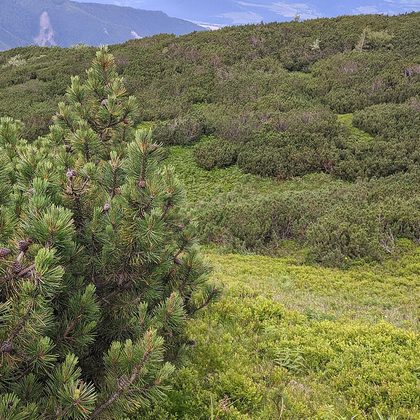 Arctic, alpine and subalpine scrub F2
Malá Fatra, Slowakije
31 species
Arctic, alpine and subalpine scrub F2
Malá Fatra, Slowakije
31 species
Scrub above or north of the climatic tree line but outside the permafrost zone, together with scrub just below that line where trees are held back by late-lying snow, wind or repeated browsing. That climatic limit is what separates it from temperate scrub F3. In Fennoscandia it takes the form of belts of dwarf birch, willow and juniper beyond the mountain birch zone; in the Alps, the Pyrenees and the Caucasus of alpenrose, bilberry and creeping mountain pine. The shrub layer is dense enough to hide a nest and low enough to see over. Willow ptarmigan, Bluethroat, Common redpoll and Ring ouzel breed here, and Black grouse displays in the openings.
-
 Temperate and mediterranean-montane scrub F3
Eselsburger Tal bij Herbrechtingen, Schwäbische Alb, Duitsland
56 species
Temperate and mediterranean-montane scrub F3
Eselsburger Tal bij Herbrechtingen, Schwäbische Alb, Duitsland
56 species
Scrub of the nemoral zone and of the submediterranean and supramediterranean mountains: deciduous and evergreen shrubs on ground where woodland has gone or has not yet returned. EUNIS keeps out heaths dominated by Ericaceae (F4) and the Mediterranean maquis, garrigue and phrygana. What is left is blackthorn and hawthorn along field edges, bramble and rose thickets on abandoned arable land, hazel and juniper on limestone slopes, and dense woodland margins. Thorny cover, open patches and a good insect supply put nest and food close together. Greater whitethroat, Red-backed shrike, Barred warbler and Common nightingale are characteristic, and European turtle dove comes for the seed.
-
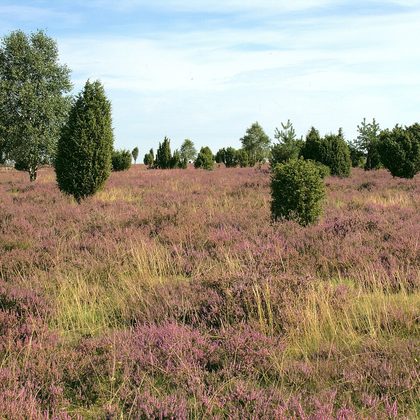 Temperate shrub heathland F4
Lüneburger Heide, Nedersaksen, Duitsland
34 species
Temperate shrub heathland F4
Lüneburger Heide, Nedersaksen, Duitsland
34 species
Heathland in the strict sense: shrub communities in which Ericaceae dominate, on acid, nutrient-poor soil. The core lies in the Atlantic and sub-Atlantic zone, from Ireland and Scotland through the Netherlands and northern Germany to Denmark, with outliers in the Iberian and French mountains. That marks it off from the thorn scrub of F3, where heathers are absent; from arctic and alpine scrub F2, which carries heathers as well, it is separated not by the plants but by lying above or north of the tree limit. Dry heather, wet cross-leaved heath and bog myrtle alternate, usually kept open by grazing, cutting or burning. Eurasian nightjar and Wood lark nest on the bare patches and Dartford warbler in the low bushes; Hen harrier and Red grouse belong to the wide northern moors.
-
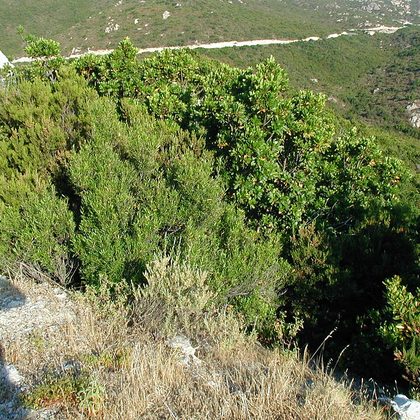 Maquis, arborescent matorral and thermo-Mediterranean brush F5
Noordwest-Corsica, Frankrijk
52 species
Maquis, arborescent matorral and thermo-Mediterranean brush F5
Noordwest-Corsica, Frankrijk
52 species
Tall, closed sclerophyllous scrub of the Mediterranean lowlands: strawberry tree, mastic, phillyrea, myrtle, kermes oak and broom stand so thick that the ground is almost wholly covered, with scattered trees above. That height and closed canopy are what separate maquis from the open, low garrigue F6. It clothes slopes too dry, too stony or too often burnt for woodland, from Portugal to the Levant. Birds find cover here all year and berries in late summer. Sardinian warbler and Western subalpine warbler breed in numbers, Olive-tree warbler in the tallest growth, and Bonelli's eagle hunts pigeons and partridges over it.
-
 Garrigue F6
Pinet, Hérault, Frankrijk
35 species
Garrigue F6
Pinet, Hérault, Frankrijk
35 species
Open sclerophyllous scrub with bare ground between the bushes: low cistus, lavender, rosemary and thyme, many winter annuals and spring geophytes, and here and there a larger shrub or a scattered tree. That open structure is what separates garrigue from closed maquis F5. It appears where evergreen forest has been cleared, grazed or burnt, mostly on limestone, and runs from Iberia and southern France to the Pontic coast and Anatolia. Low bushes, stones and open ground side by side give song posts and nest sites with a clear view. Dartford warbler and Spectacled warbler keep to the lowest bushes, Thekla's lark to the bare ground, Woodchat shrike and Western black-eared wheatear to the lookouts.
-
 Spiny Mediterranean heaths F7
Bij Elafonisi, zuidwesten van Kreta, Griekenland
16 species
Spiny Mediterranean heaths F7
Bij Elafonisi, zuidwesten van Kreta, Griekenland
16 species
Low spiny shrubs and cushion-forming dwarf shrubs on summer-dry ground, from the coast to high on dry mountains in the Mediterranean and Anatolian regions. The spines and the cushion shape are what separate it from garrigue F6, where cistus and labiates set the tone. Hard cushions of Sarcopoterium and Astragalus are typical, flowering in spring and drying off by July, and almost all this ground has been grazed for centuries. For birds what counts is cover just above the soil, among sharp twigs. Cretzschmar's bunting, Rüppell's warbler and Spectacled warbler breed here; on Cyprus the resident species is Cyprus warbler.
-
 Thermo-Atlantic xerophytic scrub F8
Tussen Tasarte en El Hoyo, Gran Canaria, Canarische Eilanden
8 species
Thermo-Atlantic xerophytic scrub F8
Tussen Tasarte en El Hoyo, Gran Canaria, Canarische Eilanden
8 species
Xerophytic scrub on the low, dry slopes of the Canary Islands and Madeira, rich in succulents: candelabra-shaped spurges, rosette-forming Aeonium and woody composites. Above it the moister laurel forest begins and below it lies the coast, so the formation is sharply bounded and confined to Macaronesia. The vegetation is low and open, often on lava fields and weathered slopes, and stays green in a climate with little rain. Few species live here, but some occur nowhere else. Berthelot's pipit is common throughout, Canary Islands stonechat is confined to Fuerteventura, and Trumpeter finch and African houbara belong to the driest, most open ground.
-
 Riverine and fen scrub F9
Kerspetal, Bergisches Land, Duitsland
87 species
Riverine and fen scrub F9
Kerspetal, Bergisches Land, Duitsland
87 species
Woody vegetation under five metres along rivers and lakes, in fens and on marshy floodplains. Height sets the limit: once it becomes woodland it falls under group G, and where reed and sedge take over without shrubs the mires of group D begin. The picture is irregular: willow beds and bog-myrtle scrub in the north, fringes of tamarisk and oleander along Mediterranean beds that run dry in summer, and dense thickets on gravel bars that shift with every flood. Bushes, water and reed lie immediately next to one another. Cetti's warbler, Marsh warbler and Eurasian penduline-tit breed here, Bluethroat in the wet hollows and Common rosefinch in the eastern riverside scrub.
-
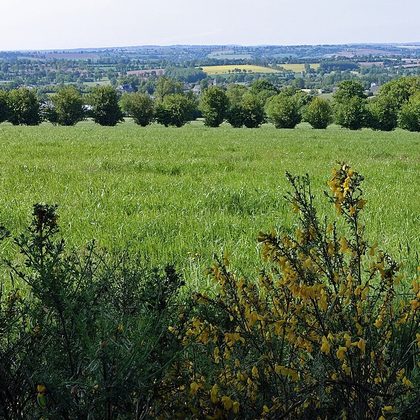 Hedgerows FA
Le Bény-Bocage, Normandië, Frankrijk
56 species
Hedgerows FA
Le Bény-Bocage, Normandië, Frankrijk
56 species
Strips of woody vegetation within a matrix of fields, grassland and roads, planted to control livestock, mark boundaries or give shelter. They differ from lines of trees (G5.1) in being made up of shrub species or, where tree species are used, in being cut back regularly to under five metres. In Europe they run from the bocage of Normandy and Brittany through British and Irish hedges to the banked hedgerows of the sandy soils. Often they are the only woody element in open arable land, serving both as a nest site and as a line to move along. Yellowhammer, Greater whitethroat and Lesser whitethroat breed in them, Red-backed shrike hunts from the tops, and European turtle dove takes cover there.
-
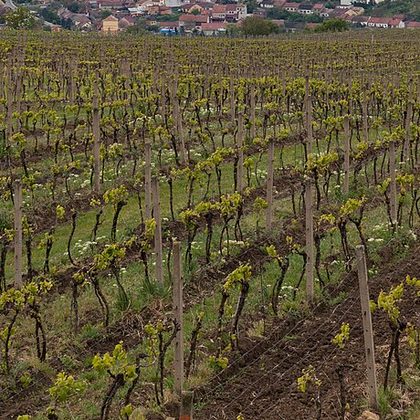 Shrub plantations FB
Bořetice, Zuid-Moravië, Tsjechië
23 species
Shrub plantations FB
Bořetice, Zuid-Moravië, Tsjechië
23 species
Plantations of dwarf trees, shrubs, espaliers and perennial woody climbers, mostly grown for fruit or flowers, either meant to keep a permanent woody cover when mature or harvested whole on a regular cycle. Vineyards make up the bulk of it, along with bush orchards and nurseries. What separates it from hedgerows (FA) is that the crop covers the whole surface instead of forming a strip. How many birds it holds depends on management: old vineyards with herbs between the rows and dry stone walls carry far more than clean-sprayed blocks. European serin and Cirl bunting sing from the wires, Woodchat shrike and Eurasian hoopoe hunt insects, and Ortolan bunting nests along the open edges.
Woodland and forest G
All vegetation in which trees set the canopy: at least ten per cent cover by woody plants that can reach five metres at maturity. Recently felled or burnt ground belongs here too, as long as woodland will return. EUNIS divides the group by leaf type — broadleaved deciduous, broadleaved evergreen, coniferous and mixed woodland — and keeps lines of trees, small woods and young growth apart. Canopy, understorey and dead wood each hold their own birds, and it is that layering that makes woodland rich in breeding species.
-
 Broadleaved deciduous woodland G1
Berg Pangaion, Macedonië, Griekenland
113 species
Broadleaved deciduous woodland G1
Berg Pangaion, Macedonië, Griekenland
113 species
Woodland of summer-green broadleaved trees that shed their leaves in winter. Evergreen broadleaves may be mixed in as long as the deciduous cover is the greater; once conifers take more than a quarter of the crown cover, EUNIS treats the stand as mixed woodland. Broadleaved deciduous woodland covers much of lowland and hill-country Europe: oak and beech, hornbeam and lime, birch towards the north, and alder, willow and poplar along the rivers. The canopy closes only in May, so the ground flora flowers in spring. Old trunks provide holes and the caterpillar peak coincides with the breeding season: Middle spotted woodpecker, Wood warbler, Collared flycatcher and Hawfinch.
-
 Broadleaved evergreen woodland G2
Fanal, Madeira, Portugal
28 species
Broadleaved evergreen woodland G2
Fanal, Madeira, Portugal
28 species
Woodland of broadleaved trees that keep their leaves all year: hard-leaved species such as holm oak and cork oak around the Mediterranean, and laurel-leaved trees in the humid warm-temperate zone. That separates broadleaved evergreen woodland from deciduous woodland, where the leaves fall in winter, and from coniferous stands. On the mainland it means dark, closely shaded oak woods with a thin understorey of mastic and phillyrea; on Madeira, the Azores and the Canaries it means laurel forest in the cloud belt, with epiphytes and ferns. Acorns and laurel fruit hold birds through the winter and old crowns provide nest sites: Iberian magpie and Spanish eagle in the south-western oak woods, Bolle's pigeon and Trocaz pigeon in the laurel forest.
-
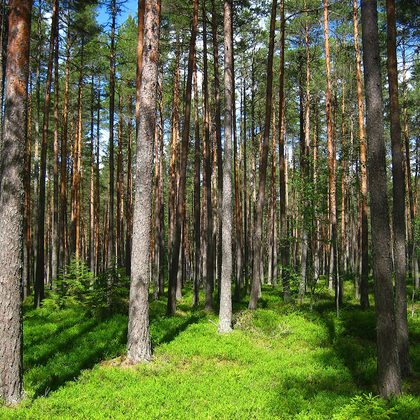 Coniferous woodland G3
Satakunta, Finland
95 species
Coniferous woodland G3
Satakunta, Finland
95 species
Woodland in which conifers hold the canopy: spruce, pine, fir, cedar, juniper and yew, together with deciduous larch. Where broadleaves take more than a quarter of the crown cover, the stand becomes mixed woodland. Coniferous woodland runs from the taiga of Fennoscandia and Russia, where Norway spruce and Scots pine stand unbroken for kilometres, to islands of silver fir and black pine, the Corsican among them, in the Alps, the Pyrenees, the Balkans and the mountains of the Mediterranean. Soils are acid and the ground carries moss, bilberry and heather. Cone seed, standing dead wood and dense cover shape the bird life: Red crossbill, Crested tit, Eurasian three-toed woodpecker and Western capercaillie.
-
 Mixed deciduous and coniferous woodland G4
Massief van de Śnieżnik, Sudeten, Polen
78 species
Mixed deciduous and coniferous woodland G4
Massief van de Śnieżnik, Sudeten, Polen
78 species
Woodland in which conifers and broadleaves share the canopy, with neither group above three quarters of the cover. If conifers stay under a quarter, the stand counts as broadleaved deciduous woodland; if broadleaves do, as coniferous woodland. Its heartland is the boreonemoral belt between taiga and temperate deciduous forest — southern Scandinavia, the Baltic states, Belarus and central Russia — and beyond that the mountains of central and southern Europe, where beech, silver fir and spruce grow on one slope. The mixture supplies holes in old broadleaves and cover in dense conifer crowns at the same time: Ural owl, Hazel grouse, White-backed woodpecker and Red-breasted flycatcher.
-
 Lines of trees, small woods, felled and early-stage woodland G5
Bij Kilby, Leicestershire, Engeland
97 species
Lines of trees, small woods, felled and early-stage woodland G5
Bij Kilby, Leicestershire, Engeland
97 species
Narrow strips and small patches of woodland: lines of trees along roads, ditches and fields, wooded banks with standard trees, copses and plantations of less than half a hectare, and alongside them ground recently felled, coppice, and young regrowth that will become woodland again. Parkland with widely spaced trees is not included; that sits with the grasslands. This is the wood of the farmed landscape, present all over Europe and almost always managed. The edge matters more than the interior here: much margin, much light, many insects, old pollards with holes. Clearings and young growth have birds of their own: Eurasian wryneck, Wood lark, Eurasian nightjar and Little owl.
Inland unvegetated or sparsely vegetated habitats H
Land without a closed plant cover: less than thirty per cent of the ground is vegetated, and it is dry or wet for only part of the year. The subdivisions follow the substrate and the way it was formed: screes, inland cliffs and rock pavements, snow and ice, other bare ground and drifting sand, and terrain of recent volcanic origin. For birds it means little food and little cover, but quiet, open views, and nest sites that ground predators struggle to reach.
-
 Screes H2
Serra de Rius, Catalaanse Pyreneeën, Spanje
55 species
Screes H2
Serra de Rius, Catalaanse Pyreneeën, Spanje
55 species
Slopes of rock debris, gravel and blocks that collect below cliffs and keep moving under frost and gravity. EUNIS separates screes from the rock face itself, where the rock is in place, and from stable block fields, moraine and inland sand, which belong to H5. In Europe they lie mainly in the high mountains — Alps, Pyrenees, Carpathians, Balkans, Scandinavia — and in the limestone ranges around the Mediterranean, with material from fine grit to metre-wide blocks. The vegetation is sparse: plants with long rootstocks grow up through the shifting stone. For birds the cavities between the stones are what count. White-winged snowfinch and Alpine accentor nest deep in such crevices, Rock ptarmigan takes cover among the blocks and Alpine chough feeds over them.
-
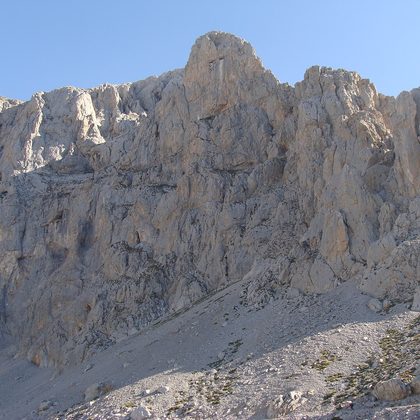 Inland cliffs, rock pavements and outcrops H3
Vega de Liordes, Picos de Europa, Spanje
81 species
Inland cliffs, rock pavements and outcrops H3
Vega de Liordes, Picos de Europa, Spanje
81 species
Cliffs, rock faces and bare rock pavements away from the coast: rock that is in place, unvegetated or carrying no more than lichens, mosses and plants rooted in the crevices. That is what separates inland cliffs, rock pavements and outcrops from scree, where the rock has broken away and moved downhill. Parts of sea cliffs beyond the reach of salt spray are included; recent volcanic rock is not. In Europe it takes in limestone gorges and karst pavements, granite tors, canyon walls and high mountain faces. What matters to birds is the nest site: ledges and holes unreachable from the ground. Griffon vulture, Peregrine falcon and Alpine swift breed on the ledges, while Wallcreeper and Blue rock-thrush feed on the face itself.
-
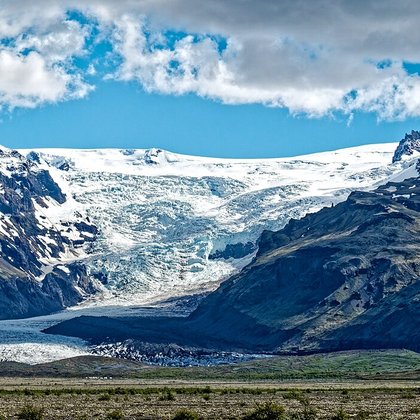 Snow or ice-dominated habitats H4
Gletsjertong van de Vatnajökull, IJsland
3 species
Snow or ice-dominated habitats H4
Gletsjertong van de Vatnajökull, IJsland
3 species
Ground that lies under snow or ice the year round: glaciers, ice caps and snowfields that do not melt out in summer. That is the boundary with the bare rock and scree around them, which do clear in summer; sea ice falls outside the group. In Europe this means the Alps and the Caucasus, the ice caps of Iceland and Norway, Svalbard and Novaya Zemlya. Nothing grows there, though algae live in the snow and insects are blown onto the ice by the wind. Hardly anything breeds on it, though Ivory gull nests on nunataks and rocks among the glaciers, and White-winged snowfinch and Caucasian snowcock feed at the edge of melting snowfields.
-
 Miscellaneous inland habitats with sparse or no vegetation H5
Castildetierra, Bardenas Reales, Navarra, Spanje
79 species
Miscellaneous inland habitats with sparse or no vegetation H5
Castildetierra, Bardenas Reales, Navarra, Spanje
79 species
The catch-all of the group: bare or nearly bare inland ground that is not cliff, scree, snowfield or fresh volcanic terrain. Miscellaneous inland habitats with sparse or no vegetation take in inland dunes and drifting sand, moraines and block fields, stony desert and bare steppe soil, burnt ground and trampled patches; sealed urban surfaces belong to group J. In Europe this runs from the sand plains and sandar of Iceland to the hammada and reg of the Levant, with the bare sand and gravel steppes of Iberia, Anatolia and the Pannonian plain in between. Birds find little cover and nest on the ground, usually well camouflaged. Cream-colored courser, Greater hoopoe-lark and Black-bellied sandgrouse live in such country year-round.
-
 Recent volcanic features H6
Lavaveld en sintelkegels in Timanfaya, Lanzarote, Canarische Eilanden
2 species
Recent volcanic features H6
Lavaveld en sintelkegels in Timanfaya, Lanzarote, Canarische Eilanden
2 species
Rock surfaces, block fields, ash and loose deposits produced by recent or continuing volcanic activity, bare or carrying lichens, mosses and a thin cover of herbs and shrubs. Origin is the criterion here: the same blocks would count as scree or as inland cliff if they were not freshly volcanic. In Europe this means the lava fields and ash plains of Iceland, the slopes of Etna and Vesuvius, Santorini and Nisyros, and the malpaís of the Canaries. The ground is porous and holds little water, so the vegetation stays open for decades. Berthelot's pipit breeds on such terrain and the Cream-colored courser works the flat ash fields.
Cultivated agricultural, horticultural and domestic habitats I
Everything kept open by regular tilling, together with ground that has only recently gone out of cultivation: arable fields, kitchen gardens, ornamental gardens and parks. Cropland that is flooded, such as rice fields, is included. Orchards, tree nurseries and tree-crop plantations fall outside it, as do lawns and sports fields. EUNIS divides the group into two formations: arable land and market gardens, and cultivated areas of gardens and parks. These are man-made habitats, and what they are worth to birds depends above all on how intensively they are worked.
-
 Arable land and market gardens I1
Bij Trendelburg, Hessen, Duitsland
221 species
Arable land and market gardens I1
Bij Trendelburg, Hessen, Duitsland
221 species
Land sown with crops that are harvested annually or at regular intervals and that carry no trees or shrubs: cereals, sunflower and other oilseeds, beet, potatoes, legumes and fodder. Orchards and permanent grassland fall outside arable land and market gardens; bare tilled and fallow fields belong to it, and so do wet crops such as the rice fields of the Po plain and the Guadalquivir. Scale ranges from blocks of tens of hectares to narrow strips with weedy margins and hedges, and those margins decide which birds are there. Eurasian skylark and Corn bunting nest in the crop itself, Montagu's harrier hunts and nests in cereals, and in winter Greater white-fronted goose and Common crane feed on the stubble.
-
 Cultivated areas of gardens and parks I2
Oosterpark, Amsterdam, Nederland
123 species
Cultivated areas of gardens and parks I2
Oosterpark, Amsterdam, Nederland
123 species
Cultivated ground in gardens and parks: kitchen gardens, ornamental gardens, planted squares in towns and larger laid-out parks. EUNIS places allotment gardens with arable land rather than here, and lawns and sports fields belong to the grasslands. What is left is a mixture of mown grass, borders, hedges, ornamental shrubs and planted trees, often exotic, with heavy trunks, cavities and dead wood in old town parks. For birds this works as woodland edge: cover at several heights, nest sites, and food all year from berrying shrubs and feeders. Common blackbird breeds at higher densities than in woodland and Eurasian blackcap and Eurasian blue tit at densities comparable to it, Great spotted woodpecker works the old trees, and in hard winters Bohemian waxwing comes to the berries.
Constructed, industrial and other artificial habitats J
Everything built or laid out by people: towns and villages, scattered rural buildings, quarries and mines, roads, railways and other hard-surfaced ground, artificial waters with constructed beds or heavily polluted water, and waste tips. Disused underground mines are not included; EUNIS places those with caves. The group is divided into six formations, J1 to J6, running from dense urban building to landfill. For birds these places work mainly as substitutes for rock, cliff and bare ground, and as a source of food.
-
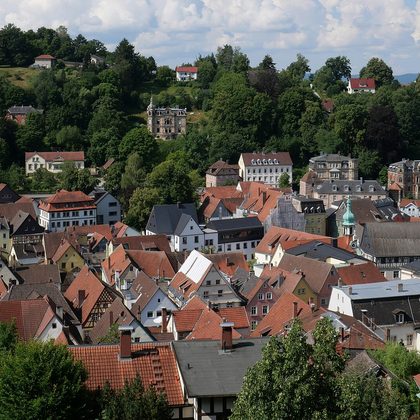 Buildings of cities, towns and villages J1
Kulmbach, Beieren, Duitsland
63 species
Buildings of cities, towns and villages J1
Kulmbach, Beieren, Duitsland
63 species
The dense building of cities, towns and suburbs: houses, offices, churches, factory sheds, walls, roofs and building sites, with the paving between them. Density is what separates it from low-density buildings: where field or pasture still dominates between the houses, the ground belongs there instead. Gardens and parks are counted separately. What buildings do for birds is imitate rock — niches, eaves, cavity walls, chimneys and tiled roofs serve as nest holes and ledges. Common swift and House sparrow breed under roofs, Black redstart on flat roofs and building sites, Peregrine falcon on church towers and tower blocks, and on the North Sea coast Black-legged kittiwake nests on warehouse window ledges.
-
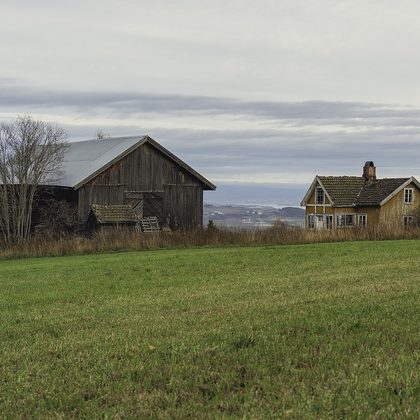 Low density buildings J2
Holmstadengen, Østre Toten, Noorwegen
41 species
Low density buildings J2
Holmstadengen, Østre Toten, Noorwegen
41 species
Scattered building in the countryside: farms, barns, byres, chapels, isolated houses and the walls and fences around them. The difference from dense urban building lies not in the building but in what surrounds it — here land, yard or orchard keeps the upper hand and the buildings stand apart. In Europe this runs from mixed farms in the north-west to stone hamlets around the Mediterranean. Open byres, undisturbed lofts and insects over the yard give nest sites the city lacks: Barn swallow and Common house-martin under the eaves, Western barn owl and Little owl in shed and pollard willow, and White stork on the farmhouse roof.
-
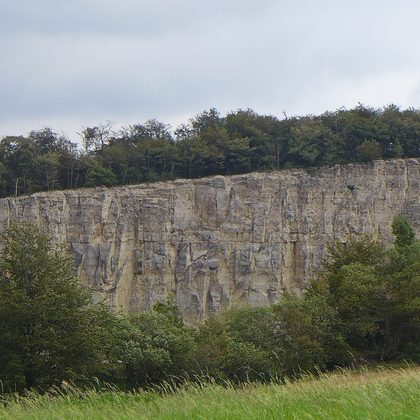 Extractive industrial sites J3
Duinger Berg bij Marienhagen, Nedersaksen, Duitsland
10 species
Extractive industrial sites J3
Duinger Berg bij Marienhagen, Nedersaksen, Duitsland
10 species
Quarries and mines in use or recently abandoned: stone quarries, sand and gravel pits, opencast workings, spoil heaps and the ground around them. Once a pit grows over or fills with water it passes into the corresponding natural type, and disused underground mines are placed with caves. What is there is bare and steep: fresh faces of limestone, loam or sand, scree slopes, pools on the floor and little vegetation. That steepness draws birds that elsewhere breed on cliffs and river banks. Bank swallow digs into sand faces, European bee-eater into loamy banks, Little ringed plover nests on bare gravel and Eurasian eagle-Owl on a ledge in the wall.
-
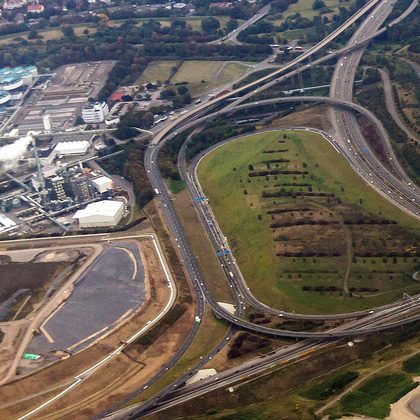 Transport networks and other hard-surfaced areas J4
Autobahnkreuz Leverkusen-West, Duitsland
18 species
Transport networks and other hard-surfaced areas J4
Autobahnkreuz Leverkusen-West, Duitsland
18 species
The hard surface itself: roads, car parks, railways, paved paths and the runways and aprons of airports, ports and recreation grounds. Verges, embankments and other vegetated edges belong with grassland or tall-herb ground, not here; this is asphalt, concrete, setts and ballast. Such surfaces are warm, open and sparsely vegetated, which makes them resemble steppe or shingle. Crested lark breeds on industrial estates and along railway lines, Black redstart sings from lamp posts and roofs, Common kestrel hunts over road verges, and Ruddy turnstone works the strandline along quays and piers.
-
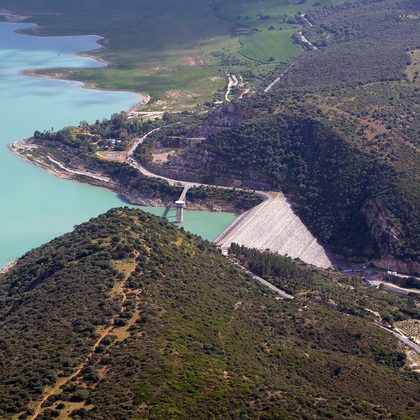 Highly artificial man-made waters J5
Embalse de Guadalcacín, Cádiz, Spanje
102 species
Highly artificial man-made waters J5
Embalse de Guadalcacín, Cádiz, Spanje
102 species
Inland waters with a wholly constructed bed or heavily polluted water, together with the conduits, basins and tanks that go with them; coastal saltworks are included. Man-made waters that behave as semi-natural — pools, ponds and canals with a bed of sand or peat — stay with the standing and running waters of group C. So this means concrete reservoirs, settling basins, fish farms and the pans of salinas. Shallow, saline, nutrient-rich water produces worms and brine shrimps in quantity, and that draws waders and terns: Greater flamingo, Black-winged stilt, Kentish plover and Little tern in the saltpans, White-headed duck on old settling ponds.
-
 Waste deposits J6
Vuilstort bij Thessaloniki, Griekenland
16 species
Waste deposits J6
Vuilstort bij Thessaloniki, Griekenland
16 species
The dumped material itself: tips, landfill sites, sludge lagoons and heaps of residue from households, industry and farming. It is not the works that produce the waste that counts but the place where it comes to rest; once an old tip grows over it passes into tall-herb ground or scrub. In Europe this ranges from capped, gas-managed landfills in the north-west to open tips beside cities in the south and south-east. For scavengers and opportunists such a site is a steady food supply available all year, and they gather in hundreds. European herring gull and Yellow-legged gull dominate, with Black kite, Northern raven and, in the south, Egyptian vulture among them.
Classification: EUNIS Habitat Classification (European Environment Agency), the A–J version. The English names are those of EUNIS; the Dutch and Spanish names were translated for this guide. The descriptions were written for this guide from the EUNIS factsheets, which are linked for each habitat.