All species › Birds of prey › Hawks, eagles and kites › Common buzzard
Common buzzard | Buteo buteo
Buizerd | Busardo ratonero
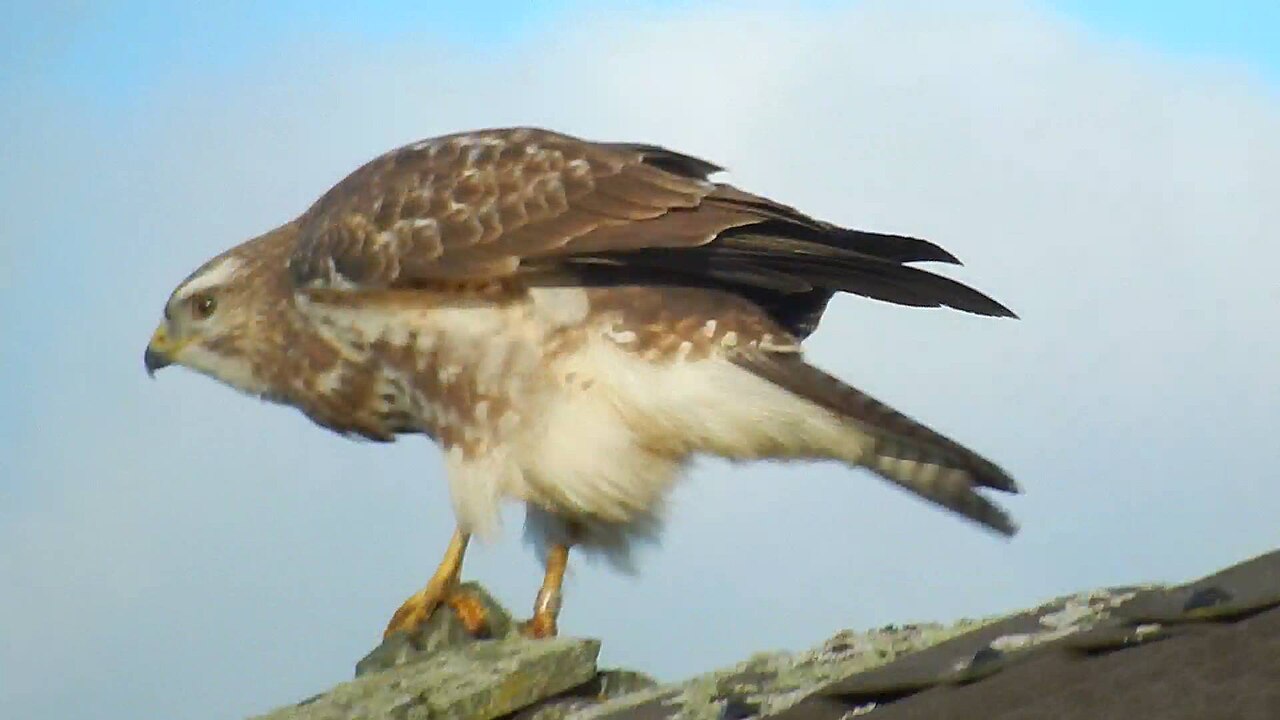
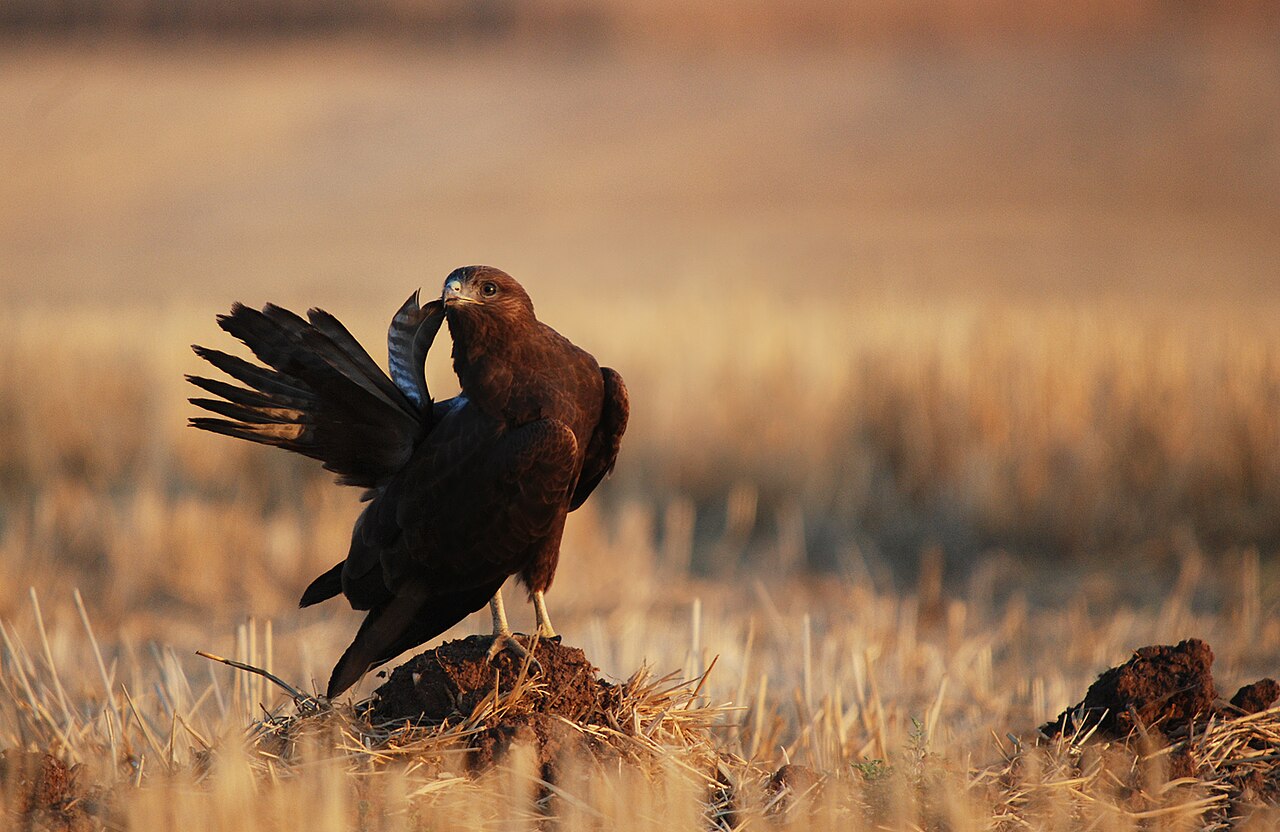
The common buzzard is the raptor on the fencepost and the yardstick against which every other one is judged in the field. No other raptor is as variable, from almost white to chocolate brown, which means it is often taken for another species.
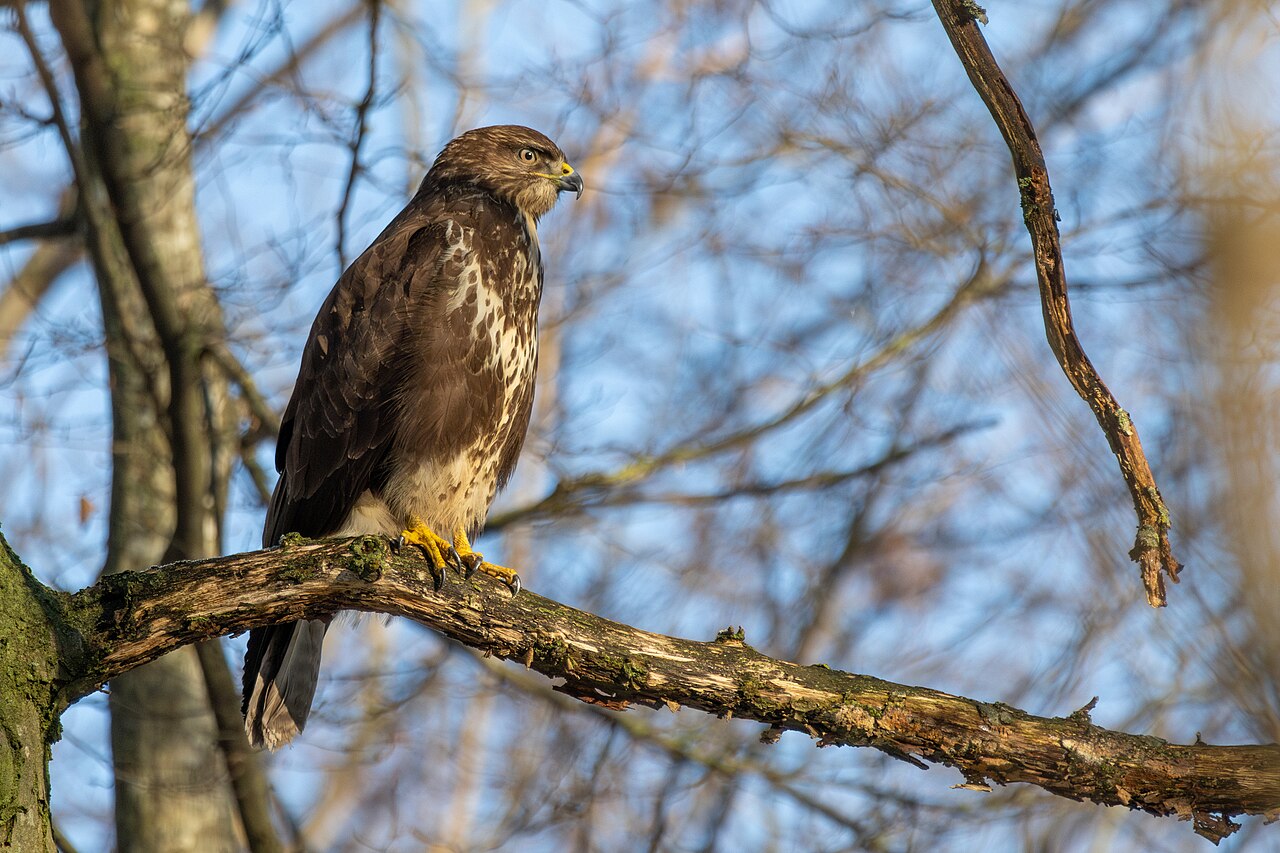
Colour forms
Voice
A far-carrying, plaintive mew: peee-yow, drawn out and falling away at the end, usually given while circling high. Heard all year but most persistently from February to May during display. Starlings and jays imitate it closely.
Recording: Benoît Van Hecke — CC BY-SA 4.0 · Wikimedia Commons
Identification
Compact, with broad rounded wings, a short broad tail and a head that hardly projects. Soars with wings in a shallow V. Plumage varies enormously, but most birds show dark carpal patches, a pale U-shaped band across the breast, a dark trailing edge to the wing and a dark terminal tail band. Juveniles lack that broad tail band and are streaked, not barred, below.
Confusion species
Honey Buzzard has a smaller head on a longer neck, a longer tail with two narrow basal bars and one broad terminal band, and soars on flat or drooped wings. Rough-legged Buzzard shows a white tail with a black band, a black belly, and hovers regularly. On the Iberian Peninsula pale-morph booted eagle often causes confusion: it is more slender and glides on straight wings.
Habitat
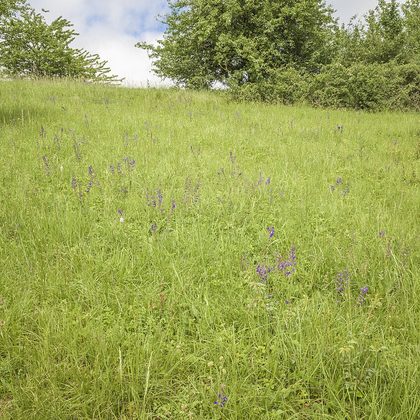
Half-open farmland with copses, hedgebanks and woodland edges, and any broad motorway verge holding voles. Hunts patiently from low perches, fenceposts and molehills, and will even walk about wet pasture after earthworms. Nests in a tree at the edge of a wood, often in the same spot for years.
Where the bird is most at home, classified with EUNIS — the European standard for habitats.



Range and movements
Almost all of Europe, into Turkey and the Maghreb. In north-west Europe numerous year-round, with northern birds passing through in October and November. In the Mediterranean resident in northern Iberia and wooded hills, scarcer in the dry south, where it appears mainly in winter.
- Resident
- Breeding (summer)
- Winter
- Passage
- dark = core range, pale = thinly spread
How and when to look
February and March around midday on the first warm days, when pairs perform their undulating sky-dance over the territory. In winter it pays to drive a country lane scanning fenceposts and molehills, especially just after rain when worms come to the surface.
Conservation status
Recovered from persecution and the pesticide era, and now common almost everywhere. Even so, poisoning, illegal shooting and road casualties on fast roads remain substantial, and spring forestry work at nest trees costs broods every year.
Scientific name
Buteo buteo | (Linnaeus, 1758)
Linnaeus described the species in 1758 as Falco buteo; because it was later moved to another genus, the author and year stand in brackets. The genus Buteo was introduced in 1799 by De Lacépède. Buteo is the Latin word for a buzzard. The specific name repeats the genus name: the genus was established by tautonymy with this species. The specimen the first description was based on came from Sweden.