All species › Waders, gulls and terns › Plovers and lapwings › European golden-plover
European golden-plover | Pluvialis apricaria
Goudplevier | Chorlito dorado europeo
A compact plover spangled with gold above that dissolves completely into a ploughed field. Only when the whole flock lifts at once do you realise how many thousands were standing there.
Voice
A clear, mournful single-note whistle, tloo, that carries far across a bare field and usually announces the bird before the eye finds it. In winter, rising flocks call persistently and out of step with one another. Over the breeding grounds the display flight brings a sad, endlessly repeated per-pee-oo.
Recording: Mikko Heikkinen — CC BY-SA 4.0 · Wikimedia Commons
Identification
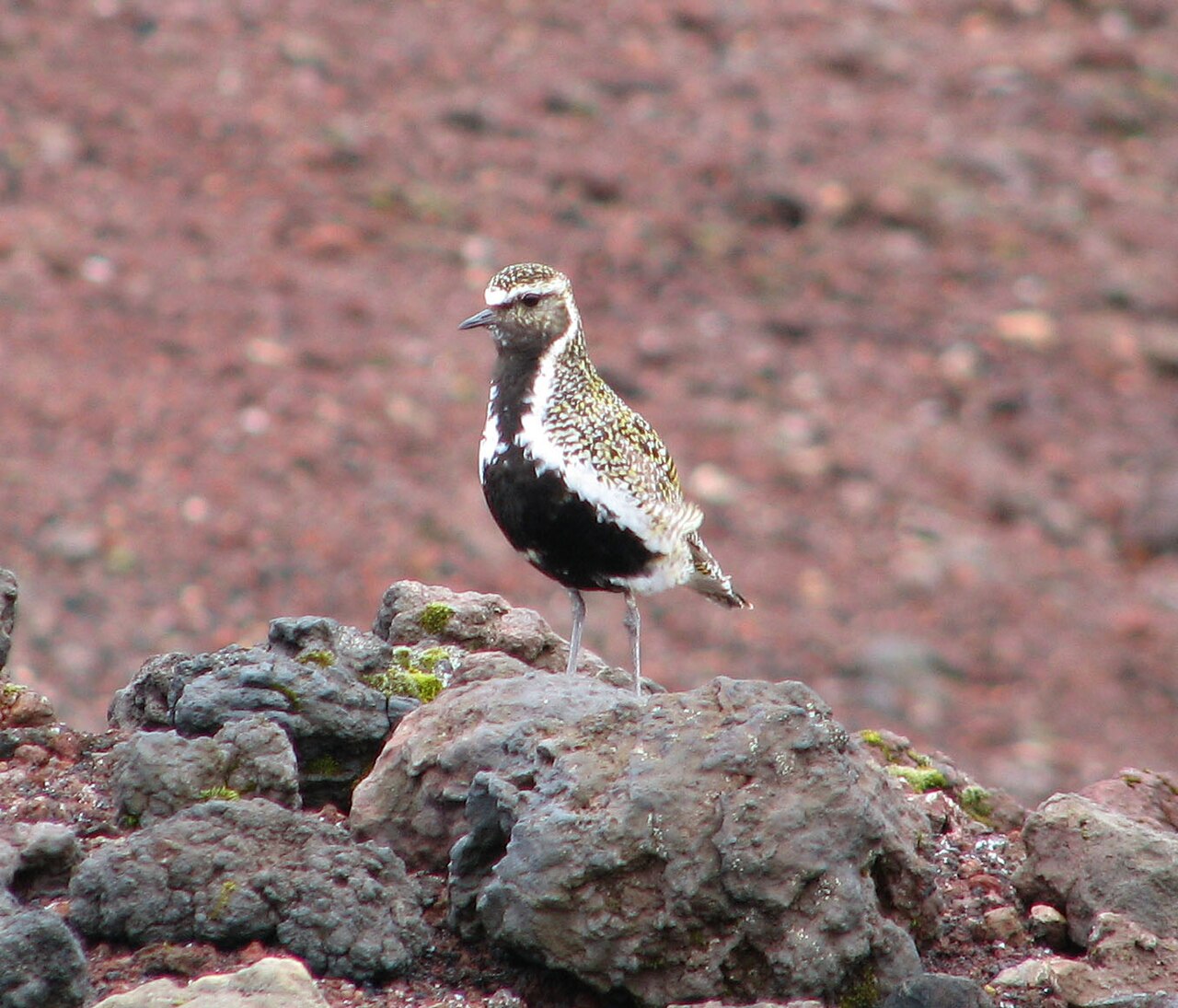
Short black bill and a large dark eye in an otherwise plain face. Breeding birds are spangled gold and black above, with black face and belly broadly bordered white in northern birds; southern breeders show only a blotchy black belly. In winter it is spangled golden-buff with a dirty-white belly. In flight, a narrow faint wingbar, no white rump, and a clean white underwing with white axillaries.
Confusion species
Grey Plover is bigger, greyer and heavier-billed and never looks golden. In flight the difference is absolute: Grey Plover shows black axillaries, a white rump and a broad white wingbar, while Golden Plover has an entirely white underwing with no black and a dark rump. Pacific and American Golden Plovers are slimmer and longer-legged, with grey axillaries.
Habitat
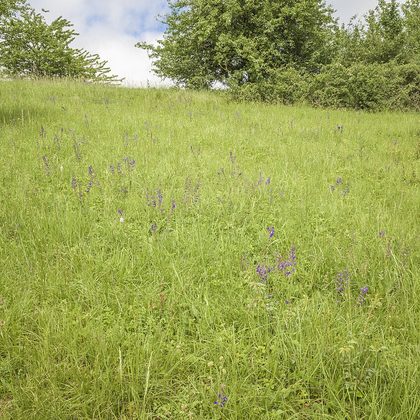
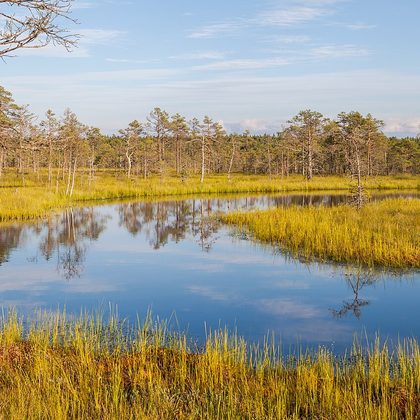
Breeds on blanket bog, bare moorland and northern tundra. Outside the breeding season it is tied to open farmland: large grass fields, winter wheat, ploughed land and stubbles, with saltmarsh and mudflats as a fallback in frost or disturbance. It often roosts on the tidal flats and feeds far inland by day.
Where the bird is most at home, classified with EUNIS — the European standard for habitats.



Range and movements
A breeder of Iceland, the Faroes, Ireland, Scotland, Scandinavia and the Russian tundra; as a breeding bird of the raised bogs of the Low Countries it has been lost. In the winter half of the year enormous numbers gather in the polders and along the Wadden Sea and North Sea coasts of north-western Europe and across the British Isles; central Europe and the Baltic states see mainly passage. Iberia holds large flocks on the dehesas of Extremadura and the cereal plains of Castile, and it winters around the Mediterranean as far as North Africa and the Levant.
- Resident
- Breeding (summer)
- Winter
- Passage
- dark = core range, pale = thinly spread
How and when to look
Drive the open arable and polders behind the North Sea coast in November and December, or the dehesas and cereal plains of Iberia, and look for motionless groups standing like clods in the furrows. Come in the last hour before sunset, when the birds become active and lift noisily. Lapwings do the work for you: where a Lapwing flock stands, Golden plovers are almost always mixed in.
Conservation status
As a breeder in western Europe it is in decline through drainage, afforestation and bog damage, and it has long since gone as a Dutch breeding bird. As a winter visitor it stays numerous, though mild winters shift the centre of gravity northwards. Arable intensification, fewer winter stubbles and disturbance at roosts all press on numbers.
Scientific name
Pluvialis apricaria | (Linnaeus, 1758)
Linnaeus described the species in 1758 as Charadrius apricarius; because it was later moved to another genus, the author and year stand in brackets. The genus Pluvialis was introduced in 1760 by Brisson. Pluvialis is Latin for 'relating to rain', from pluvia 'rain', from the old belief that these plovers flocked when rain was imminent. apricaria is Latin, from apricari 'to bask in the sun', from apricus 'sunny'. The specimen the first description was based on came from Lapland.