All species › Jacamars and puffbirds › Jacamars
Jacamars | Galbulidae
Glansvogels | Jacamares | Arirambas
Sixteen species in five genera occur in this guide; they live mainly in humid lowland forest of Amazonia and the Guianas, along forest edges, riverbanks and in várzea, where among others the Paradise Jacamar, the Green-tailed Jacamar and the Great Jacamar (Jacamerops) occur, and Galbalcyrhynchus is confined to western Amazonia. The Rufous-tailed Jacamar (Galbula ruficauda) reaches furthest, into the gallery forests of the Cerrado and the Atlantic Forest, the Brown Jacamar (Brachygalba lugubris) lives along forest edges and in semi-open country, and the Three-toed Jacamar (Jacamaralcyon) is confined to the Atlantic Forest of eastern Brazil; in that species the first toe is missing. Jacamars are slender birds with a long, straight, needle-sharp bill, short legs with, in most species, two toes forward and two back, and in most species a long tail. The upperparts gleam metallic green or bronze, while the belly is rufous or dark. They sit upright and still for long periods on an open branch, sallying out after flying insects, especially butterflies, dragonflies, wasps and bees. Back on the perch the prey is beaten against the wood to remove wings and sting. The calls are high, clear whistles and trills; the Great Jacamar gives a long, plaintive whistle. The nest is a tunnel dug by the birds into an earth bank, a riverbank or a termite nest, unlined, holding two to four glossy white eggs. Both parents incubate and feed the young. Together with the puffbirds, the jacamars form an order of their own.
Native species 16 species
Species that occur here by nature: breeding birds, winter visitors and passage migrants. They are arranged by genus, in the sequence of the list.
Jacamaralcyon 1 species



Brachygalba 3 species
-

White-throated Jacamar
Brachygalba albogularis Várzea (whitewater flooded forest)
 Floating meadows and river islands
 Secondary forest and forest edge
 Bamboo and liana forest
-

Brown Jacamar
Brachygalba lugubris- Secondary forest and forest edge
 Veredas and gallery forest
 Savannas of the Guianas
 White-sand forest and campina
 Cerradão and dry woodland
 Llanos savanna
-
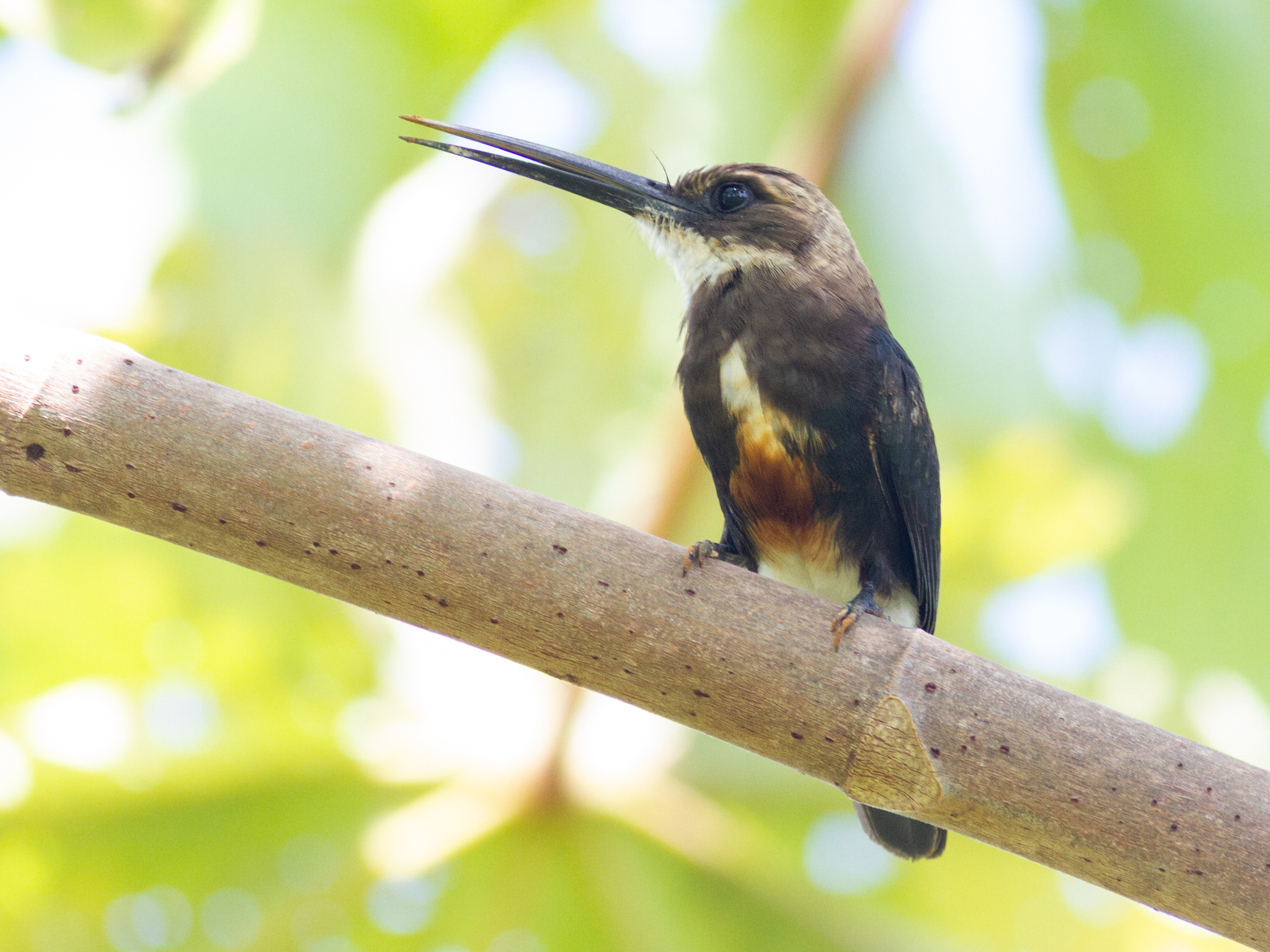
Pale-headed Jacamar
Brachygalba goeringi- Llanos savanna
 Dry forest and thorn scrub of northern Venezuela
 Flooded Llanos and esteros
Jacamerops 1 species

Galbalcyrhynchus 2 species


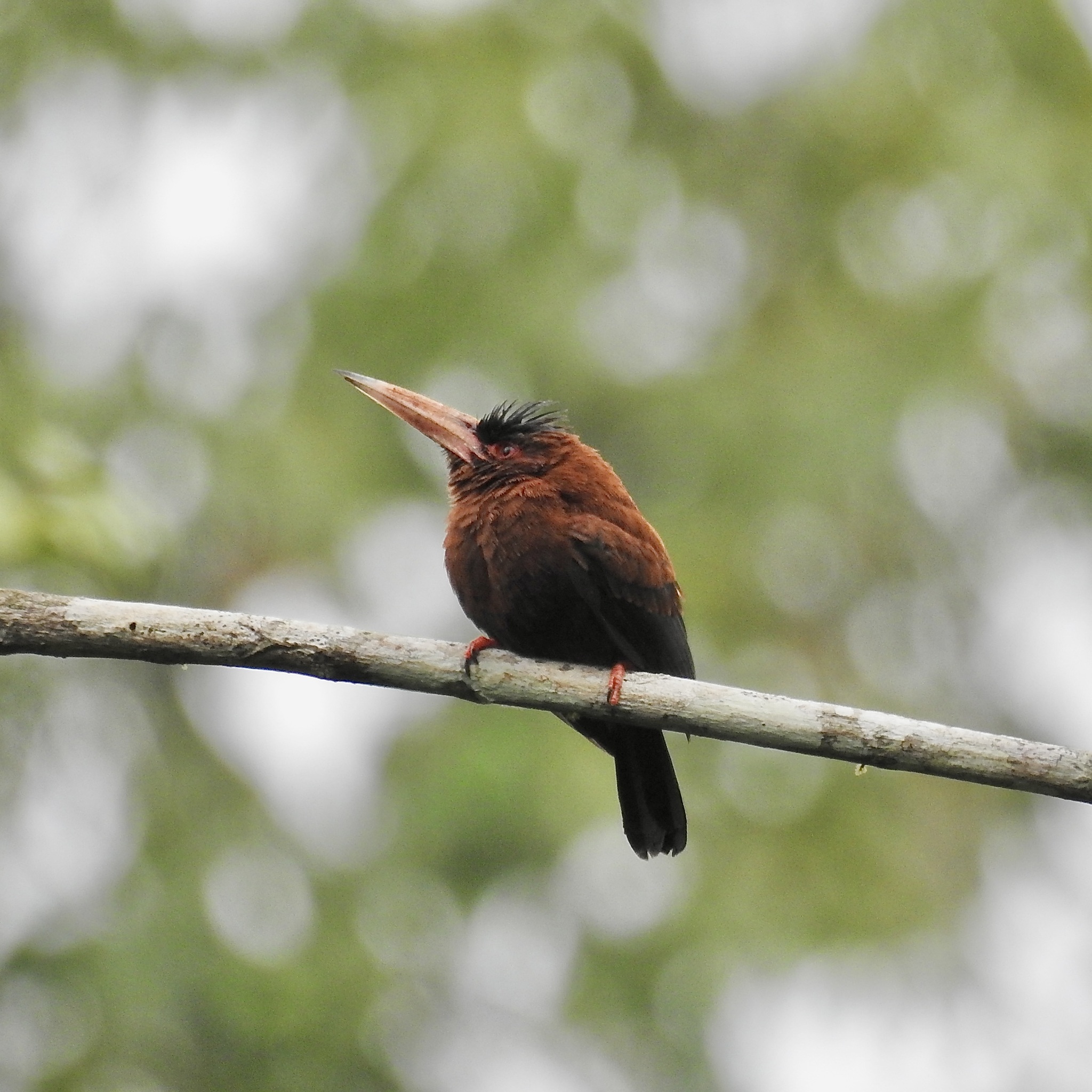
Galbula 9 species
-

Yellow-billed Jacamar
Galbula albirostris Tall terra firme forest
- White-sand forest and campina
- Secondary forest and forest edge
 Highland forest of the Guiana Shield
-

Blue-necked Jacamar
Galbula cyanicollis- Tall terra firme forest
- Bamboo and liana forest
- Secondary forest and forest edge
-

Rufous-tailed Jacamar
Galbula ruficauda- Secondary forest and forest edge
- Veredas and gallery forest
- Cerradão and dry woodland
 Interior semi-deciduous forest
 Dry forest of the north-east
- Dry forest and thorn scrub of northern Venezuela
-

Green-tailed Jacamar
Galbula galbula- Secondary forest and forest edge
- Várzea (whitewater flooded forest)
 Igapó (blackwater flooded forest)
- White-sand forest and campina
 Blackwater rivers and small streams
-

White-chinned Jacamar
Galbula tombacea- Várzea (whitewater flooded forest)
- Blackwater rivers and small streams
 Palm swamps
- Secondary forest and forest edge
- Tall terra firme forest
-

Bluish-fronted Jacamar
Galbula cyanescens- Secondary forest and forest edge
- Várzea (whitewater flooded forest)
- Bamboo and liana forest
- Tall terra firme forest
-

Purplish Jacamar
Galbula chalcothorax- Tall terra firme forest
- Secondary forest and forest edge
- Blackwater rivers and small streams
- Várzea (whitewater flooded forest)
-

Bronzy Jacamar
Galbula leucogastra- White-sand forest and campina
- Secondary forest and forest edge
- Savannas of the Guianas
- Tall terra firme forest
-

Paradise Jacamar
Galbula dea- Tall terra firme forest
- Igapó (blackwater flooded forest)
- Várzea (whitewater flooded forest)
- Secondary forest and forest edge
- White-sand forest and campina