All species › Waders, gulls and terns › Skimmers, noddies, terns and gulls
Skimmers, noddies, terns and gulls | Laridae
Meeuwen, sterns en schaarbekken | Gaviotas, charranes y rayadores | Talha-mares, trinta-réis-escuros, trinta-réis e gaivotas
Webbed front toes and a small, raised hind toe: these birds can rest on the water, and salt glands above the eyes let them drink sea water as well. Forty-one species in eighteen genera occur in this guide, sixteen of them as vagrants. Black Skimmer, Large-billed Tern and Yellow-billed Tern fish along the great rivers of Amazonia, the Orinoco and the Pantanal and breed on sandbars exposed at low water; along the Atlantic coast live among others Royal Tern, Sandwich Tern and Laughing Gull, Kelp Gull breeds on the coast of southern Brazil, and on islands in the Atlantic off the Brazilian coast noddies (Anous), Sooty Tern and White Tern (Gygis) breed. Two builds stand side by side within the family: heavier birds with a stout, slightly hooked bill that will eat almost anything they can get hold of, and slighter birds with a thin, pointed bill held downwards while hovering, before they drop into the water. They nest almost always in ground colonies, with one to three blotched eggs; the downy chicks stay at the nest and are fed by both parents, unlike the self-feeding young of the waders. Most species moult twice a year and show a different head pattern in winter, and in the largest species it takes two to four years before the adult plumage is complete.
Native species 25 species
Species that occur here by nature: breeding birds, winter visitors and passage migrants. They are arranged by genus, in the sequence of the list.
Rynchops 1 species


Anous 2 species


Onychoprion 2 species


Sternula 2 species
-

Yellow-billed Tern
Sternula superciliaris Large rivers and sandbars
 Lakes and reservoirs
 Lakes, baías and aquatic vegetation
 Floating meadows and river islands
 Mudflats, lagoons and salt flats
-

Least Tern
Sternula antillarum Sandy beaches and dunes
- Mudflats, lagoons and salt flats
 Inshore waters and continental shelf
- Large rivers and sandbars


Hydroprogne 1 species

Gelochelidon 1 species

Chlidonias 1 species

Thalasseus 2 species
-

Sandwich Tern
Thalasseus sandvicensis- Inshore waters and continental shelf
- Sandy beaches and dunes
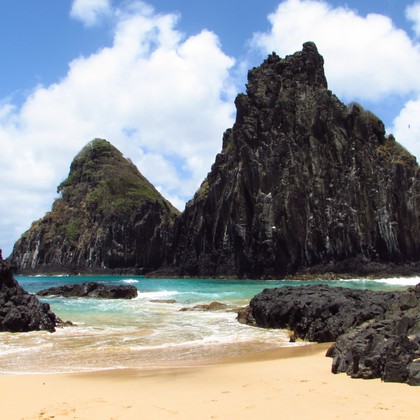 Oceanic islands and rocks
- Mudflats, lagoons and salt flats
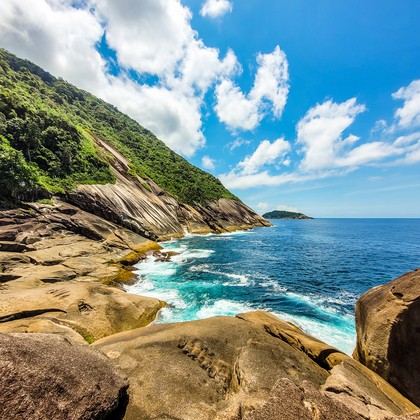 Rocky shores and cliffs
-

Royal Tern
Thalasseus maximus- Inshore waters and continental shelf
- Sandy beaches and dunes
- Mudflats, lagoons and salt flats
- Oceanic islands and rocks
 Mangroves
Sterna 5 species
-

Snowy-crowned Tern
Sterna trudeaui Southern marshes and lagoons
- Mudflats, lagoons and salt flats
- Sandy beaches and dunes
- Inshore waters and continental shelf
-

Arctic Tern
Sterna paradisaea Open Atlantic Ocean
- Inshore waters and continental shelf
- Sandy beaches and dunes
-

South American Tern
Sterna hirundinacea- Inshore waters and continental shelf
- Rocky shores and cliffs
- Oceanic islands and rocks
- Sandy beaches and dunes
- Mudflats, lagoons and salt flats
-

Common Tern
Sterna hirundo- Sandy beaches and dunes
- Mudflats, lagoons and salt flats
- Inshore waters and continental shelf
-

Roseate Tern
Sterna dougallii- Inshore waters and continental shelf
- Sandy beaches and dunes
- Rocky shores and cliffs
Chroicocephalus 2 species
-

Grey-Headed Gull
Chroicocephalus cirrocephalus- Mudflats, lagoons and salt flats
- Sandy beaches and dunes
- Southern marshes and lagoons
- Lakes and reservoirs
-

Brown-hooded Gull
Chroicocephalus maculipennis- Southern marshes and lagoons
- Mudflats, lagoons and salt flats
- Sandy beaches and dunes
 Pasture and arable land
Leucophaeus 1 species

Larus 3 species
-
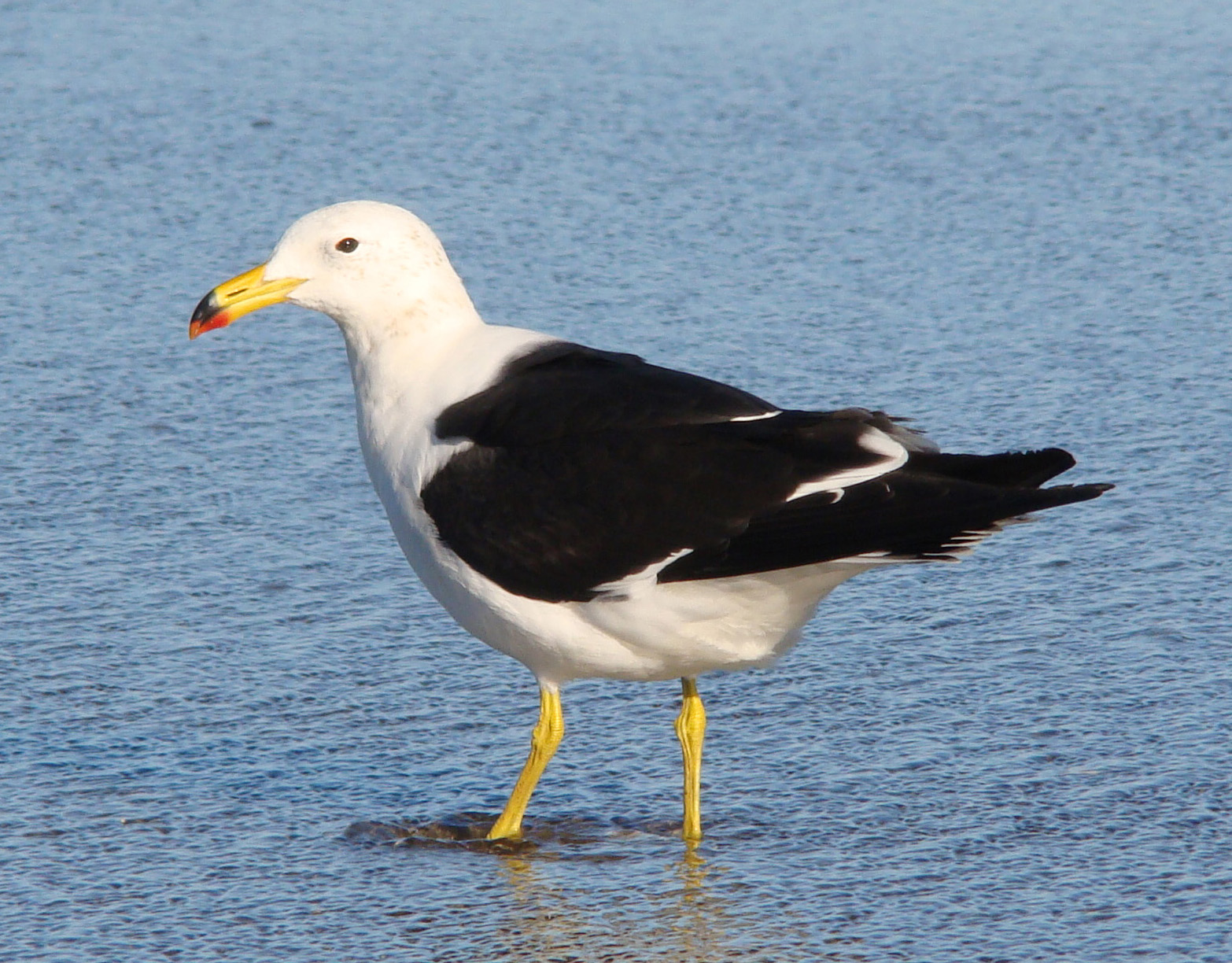
Olrog's Gull
Larus atlanticus- Mudflats, lagoons and salt flats
- Sandy beaches and dunes
- Inshore waters and continental shelf
-

Kelp Gull
Larus dominicanus- Sandy beaches and dunes
- Rocky shores and cliffs
- Mudflats, lagoons and salt flats
- Inshore waters and continental shelf
 Towns, cities and gardens
-

Lesser Black-Backed Gull
Larus fuscus- Sandy beaches and dunes
- Mudflats, lagoons and salt flats
- Inshore waters and continental shelf
- Towns, cities and gardens
Vagrants 16 species
Birds blown in from other continents. They have no range here, and so no distribution map.
-

Little Tern
Sternula albifrons- Sandy beaches and dunes
- Mudflats, lagoons and salt flats
-

White-Winged Tern
Chlidonias leucopterus- Lakes and reservoirs
- Mudflats, lagoons and salt flats
- Pasture and arable land
- Large rivers and sandbars
-

Elegant Tern
Thalasseus elegans- Inshore waters and continental shelf
- Sandy beaches and dunes
- Mudflats, lagoons and salt flats
-

Antarctic Tern
Sterna vittata- Inshore waters and continental shelf
- Rocky shores and cliffs
- Open Atlantic Ocean
-

Little Gull
Hydrocoloeus minutus- Inshore waters and continental shelf
- Mudflats, lagoons and salt flats
-

Black-Legged Kittiwake
Rissa tridactyla- Open Atlantic Ocean
- Inshore waters and continental shelf
-

Sabine's Gull
Xema sabini- Open Atlantic Ocean
- Inshore waters and continental shelf
-

Bonaparte's Gull
Chroicocephalus philadelphia- Mudflats, lagoons and salt flats
- Inshore waters and continental shelf
-

Black-Headed Gull
Chroicocephalus ridibundus- Mudflats, lagoons and salt flats
- Sandy beaches and dunes
- Inshore waters and continental shelf
-

Dolphin Gull
Leucophaeus scoresbii- Rocky shores and cliffs
- Sandy beaches and dunes
- Inshore waters and continental shelf
-

Franklin's Gull
Leucophaeus pipixcan- Sandy beaches and dunes
- Mudflats, lagoons and salt flats
- Inshore waters and continental shelf
- Large rivers and sandbars
-

Audouin's Gull
Ichthyaetus audouinii- Inshore waters and continental shelf
- Sandy beaches and dunes
- Mudflats, lagoons and salt flats
-

Ring-Billed Gull
Larus delawarensis- Sandy beaches and dunes
- Mudflats, lagoons and salt flats
- Towns, cities and gardens
- Inshore waters and continental shelf
-

Common Gull
Larus canus- Sandy beaches and dunes
- Mudflats, lagoons and salt flats
- Inshore waters and continental shelf
-

American Herring Gull
Larus smithsonianus- Sandy beaches and dunes
- Mudflats, lagoons and salt flats
- Towns, cities and gardens
- Inshore waters and continental shelf
-

Great Black-Backed Gull
Larus marinus- Sandy beaches and dunes
- Mudflats, lagoons and salt flats
- Inshore waters and continental shelf