All species › Passerines › Wagtails and pipits
Wagtails and pipits | Motacillidae
Kwikstaarten en piepers | Lavanderas y bisbitas | Alvéolas e caminheiros
Slender, long-legged songbirds that walk rather than hop: the foot pushes off, the head nods with it, and the tail is pumped up and down from time to time. This guide covers eight species in two genera. Six are pipits of the genus Anthus, birds of open grassland: Yellowish Pipit in savannas and grasslands from the north to the south, Ochre-breasted, Short-billed, Hellmayr's and Correndera Pipits in the grasslands of the Cerrado and the Pampa in the south, and Paramo Pipit high in the Andes of Venezuela. White and Western Yellow Wagtails (Motacilla), breeding birds of the Old World, have been recorded as vagrants. The bill is thin, straight and pointed, made for picking insects off the ground; the leg is long and fine, and in the pipits the claw of the hind toe is greatly lengthened, in many species nearly as long as the toe itself, which gives purchase in grass and sedge. Pipits are brown and streaked and hard to tell apart; call, song and display flight, the pattern of the back feathers and the outer tail feathers are the best features. The nest is a cup on the ground, hidden under a tussock, and in most species the song is delivered in the air: up, sing, and down again on a parachuting descent. With the conversion of natural grassland into fields and pasture, the populations of several species in the south have declined.
Native species 6 species
Species that occur here by nature: breeding birds, winter visitors and passage migrants. They are arranged by genus, in the sequence of the list.
Anthus 6 species
-

Yellowish Pipit
Anthus chii Cerrado savanna
 Savannas of the Guianas
 Llanos savanna
 Pampa grassland
 Pasture and arable land
-

Short-billed Pipit
Anthus furcatus- Pampa grassland
- Pasture and arable land
-

Hellmayr's Pipit
Anthus hellmayri Araucaria forest
 Campo rupestre and mountain grassland
- Pampa grassland
- Pasture and arable land
-

Paramo Pipit
Anthus bogotensis Montane forest of the Venezuelan Andes and Perijá
- Pasture and arable land
-
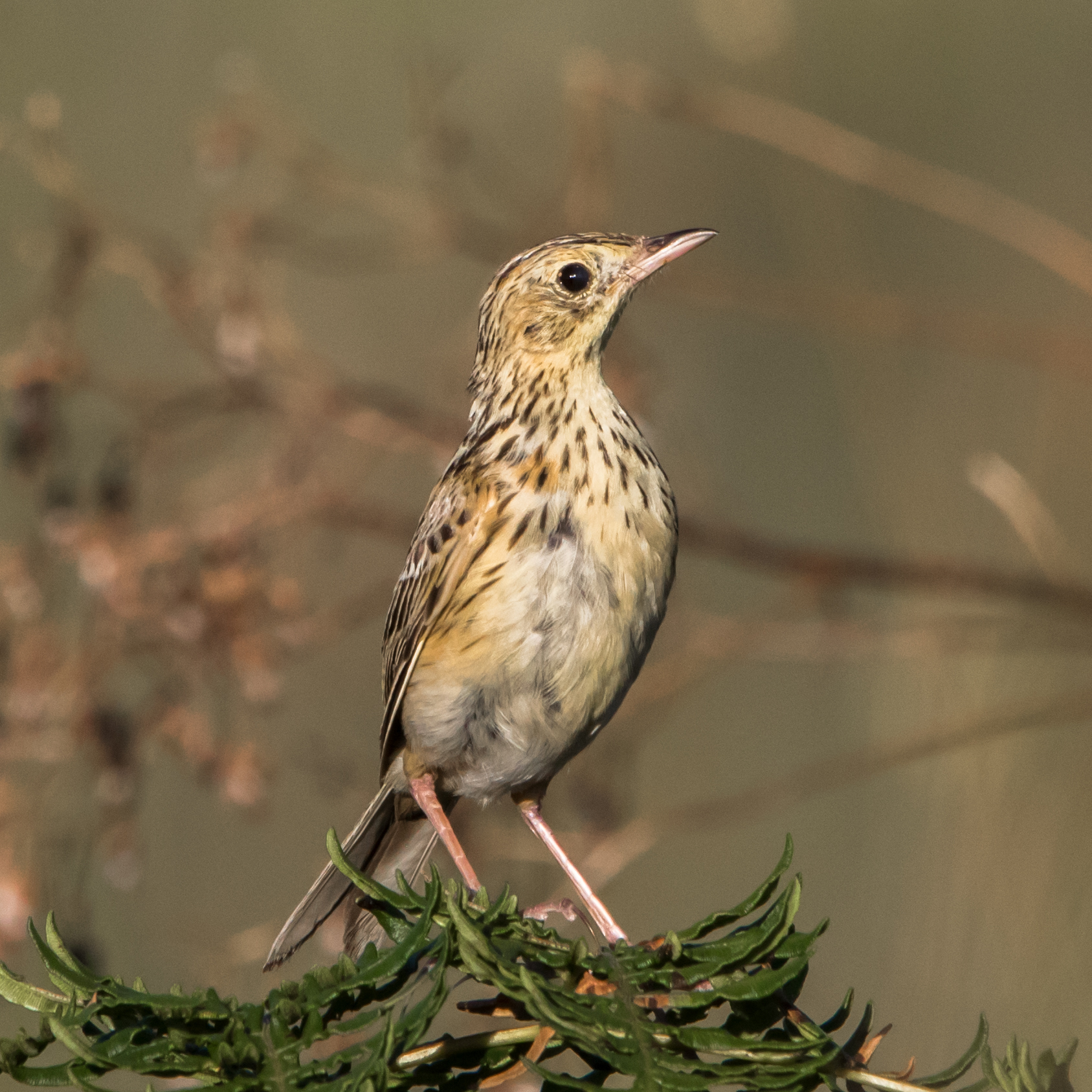
Ochre-breasted Pipit
Anthus nattereri- Pampa grassland
- Araucaria forest
- Campo rupestre and mountain grassland
-

Correndera Pipit
Anthus correndera- Pampa grassland
 Southern marshes and lagoons
- Pasture and arable land
Vagrants 2 species
Birds blown in from other continents. They have no range here, and so no distribution map.





