All species › Passerines › Tapaculos › Diamantina Tapaculo
Diamantina Tapaculo | Scytalopus diamantinensis
Diamantinatapaculo | Churrín de Diamantina | Tapaculo-da-chapada-diamantina
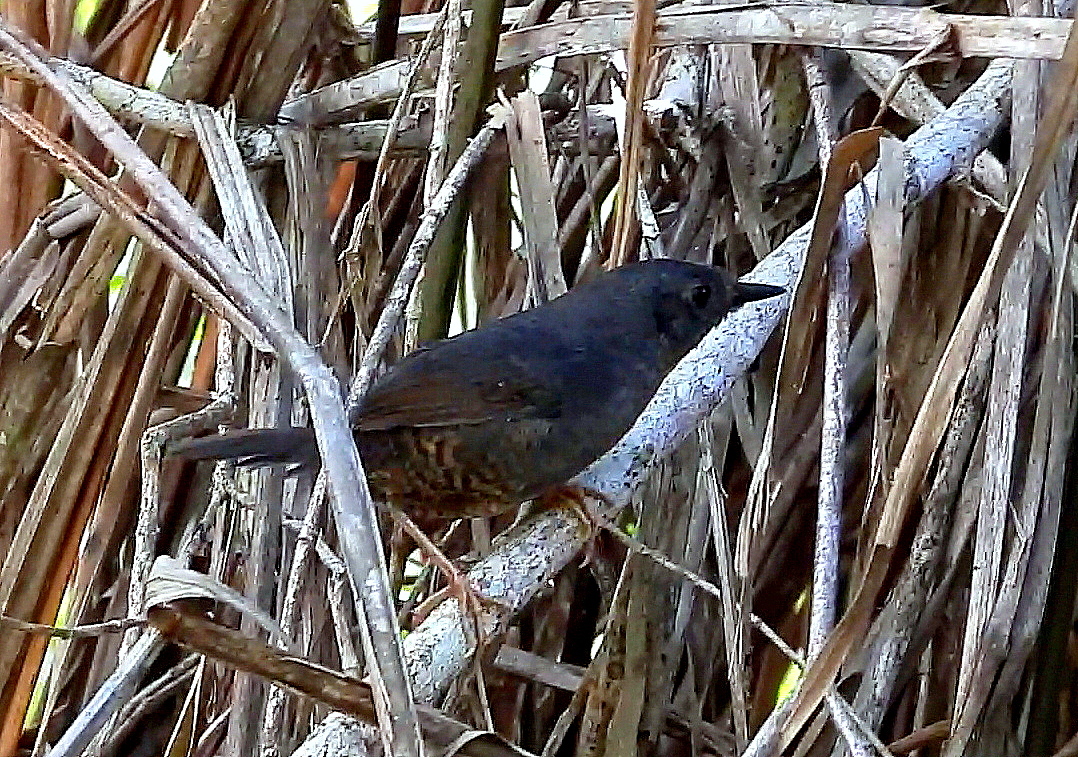
The Diamantina Tapaculo is a small, grey tapaculo found only in the Chapada Diamantina in the interior of Bahia. It was described as a new species in 2007 and lives in thickets and dense vegetation amid rocky montane grassland. Its position in the genus is still debated; it was first thought to be closely related to Planalto Tapaculo.
Voice
The song is a simple note repeated rapidly, often for more than a minute at a time. The call is a single cheep.
Recording: Ciro Albano — CC BY-NC-SA 4.0 · shortened to the first 60 s, mono · xeno-canto
Identification
11 cm, round, with a short tail. The male is dark grey above and paler grey below, with buff, dark-barred flanks and undertail coverts. The female is browner overall. The juvenile plumage is barely described.
Confusion species
Mouse-colored Tapaculo Scytalopus speluncae is very similar, but lacks the clearly barred buff flanks and does not occur in the Chapada Diamantina. Rock Tapaculo Scytalopus petrophilus lives farther south in the Serra do Espinhaço of Minas Gerais; there, range is the main distinction. Song helps with identification.
Habitat
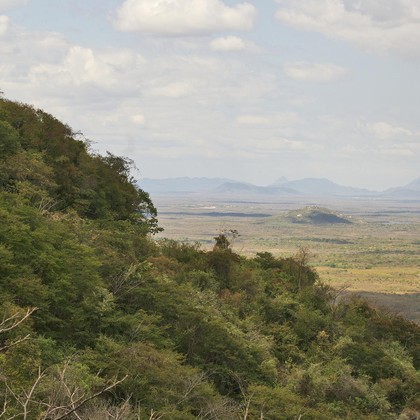
Patches of dense forest, scrub and gallery forest in gorges and along streams amid campo rupestre, between about 850 and 1600 m. It forages on and just above the ground in dense cover, probably for insects and other small invertebrates. Little is known about the nest.
Where the bird is most at home, classified by the vegetation units of Amazonia and the Guianas.


Range and movements
Endemic to Brazil: only in the Chapada Diamantina in central Bahia, at fewer than five known locations. Not in Amazonia, Venezuela or the Guianas.
- Resident
- dark = core range, pale = thinly spread
How and when to look
Search in and around Chapada Diamantina National Park, in dense thickets and gallery forest in the gorges. Listen for the long, rapid series of identical notes and wait low at the edge of the vegetation.
Conservation status
Endangered. The range is very small and consists of scattered patches of forest. Threats are the conversion of forest to coffee and banana plantations, the cutting of firewood for households and industry, wildfires and unregulated tourism. Part of the range lies within Chapada Diamantina National Park.
Scientific name
Scytalopus diamantinensis | Bornschein, Maurício, Belmonte-Lopes, Mata & Bonatto, 2007
Bornschein, Maurício, Belmonte-Lopes, Mata & Bonatto described the species in 2007 and placed it straight away in the genus where it still stands. The genus Scytalopus was introduced in 1837 by Gould. Scytalopus is Greek, from skutalē 'stick, cudgel' and pous 'foot', after the stout legs. diamantinensis refers to the Chapada Diamantina in Bahia (Brazil), the uplands where the species lives. The specimen the first description was based on came from Capão do Vale (Ibicoara), Bahia, Brazil.