All species › Passerines › Tapaculos › Marsh Tapaculo
Marsh Tapaculo | Scytalopus iraiensis
Moerastapaculo | Churrín palustre | Macuquinho-da-várzea
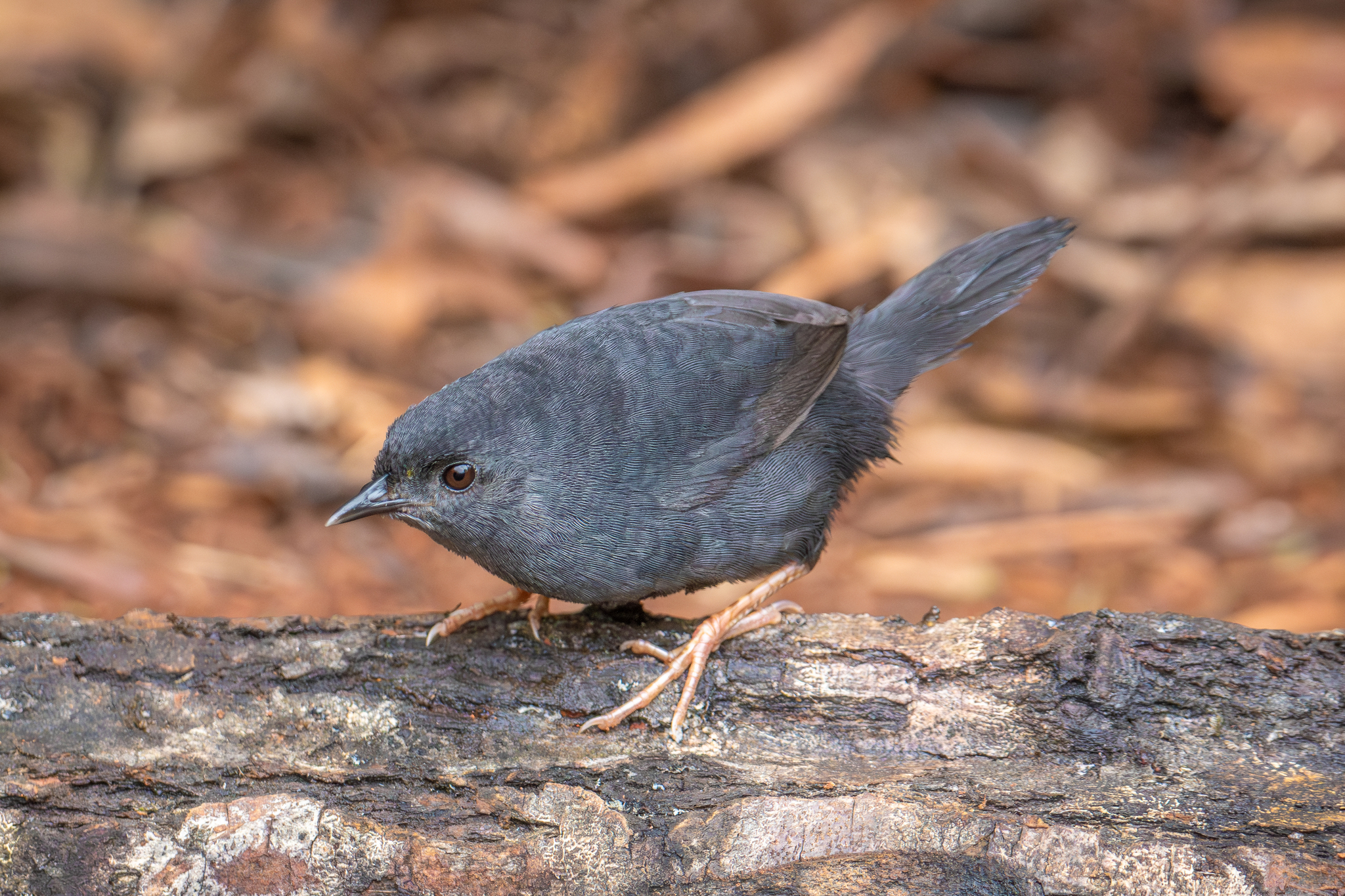
The Marsh Tapaculo is a small, dark tapaculo that, unlike almost all its relatives, lives not in forest but in marshy grassland. It was only discovered in 1997 in the marshes along the Iraí River near Curitiba and was described in 1998. Since then it has been found at a few dozen sites in southern and southeastern Brazil.
Voice
The song is a long series of short chek notes, sometimes kept up for a minute or more.
Recording: Douglas Meyer — CC BY-NC-SA 4.0 · xeno-canto
Identification
12 cm, dumpy, with a fairly broad tail and reddish-brown legs. Plain blackish above, dark grey below; the bill is dark. No clear difference between the sexes has been described. Young birds have flanks lightly barred with brown.
Confusion species
Mouse-colored Tapaculo Scytalopus speluncae and Planalto Tapaculo Scytalopus pachecoi resemble this species, but live in forest and forest edges rather than in open marsh; Planalto Tapaculo also has brown, barred flanks. Other small birds in the tall marsh grass are brown or streaked rather than plain dark.
Habitat
Seasonally flooded grassland in river floodplains on the highland plateaus, with dense vegetation 60 to 180 cm tall of spike-rushes (Eleocharis) and grasses. It forages on or just above the ground for small arthropods, mainly bugs and beetles. It runs quickly through the vegetation and makes only short flights when flushed. Little is known about the nest; breeding takes place in late spring (October–December).
Where the bird is most at home, classified by the vegetation units of Amazonia and the Guianas.


Range and movements
Endemic to Brazil: scattered in eastern Paraná, mainly around Curitiba, in northern Rio Grande do Sul and on the highland plateaus of Minas Gerais, far north of the first known sites. Not in Amazonia, Venezuela or the Guianas.
- Resident
- dark = core range, pale = thinly spread
How and when to look
Search marshy grassland in river floodplains around Curitiba in Paraná. Listen for the long series of chek notes from the tall grass; the bird almost always stays low in the vegetation.
Conservation status
Vulnerable. The population is estimated at about 11,000 mature individuals and is decreasing. The main threats are drainage, sand extraction, grassland burning and the flooding of marshes by dams; the site where the species was discovered has largely disappeared under the Iraí reservoir.
Scientific name
Scytalopus iraiensis | Bornschein, Reinert & Pichorim, 1998
Bornschein, Reinert & Pichorim described the species in 1998 and placed it straight away in the genus where it still stands. The genus Scytalopus was introduced in 1837 by Gould. Scytalopus is Greek, from skutalē 'stick, cudgel' and pous 'foot', after the stout legs. iraiensis refers to the Rio Iraí in Paraná (Brazil), where the species was discovered. The specimen the first description was based on came from Rio Iraí near Quatro Barras, Paraná, Brazil.