All species › Passerines › Tyrant flycatchers and allies › Great Elaenia
Great Elaenia | Elaenia dayi
Duida-elenia | Fiofío de Day | Guaracava-dos-tepuis
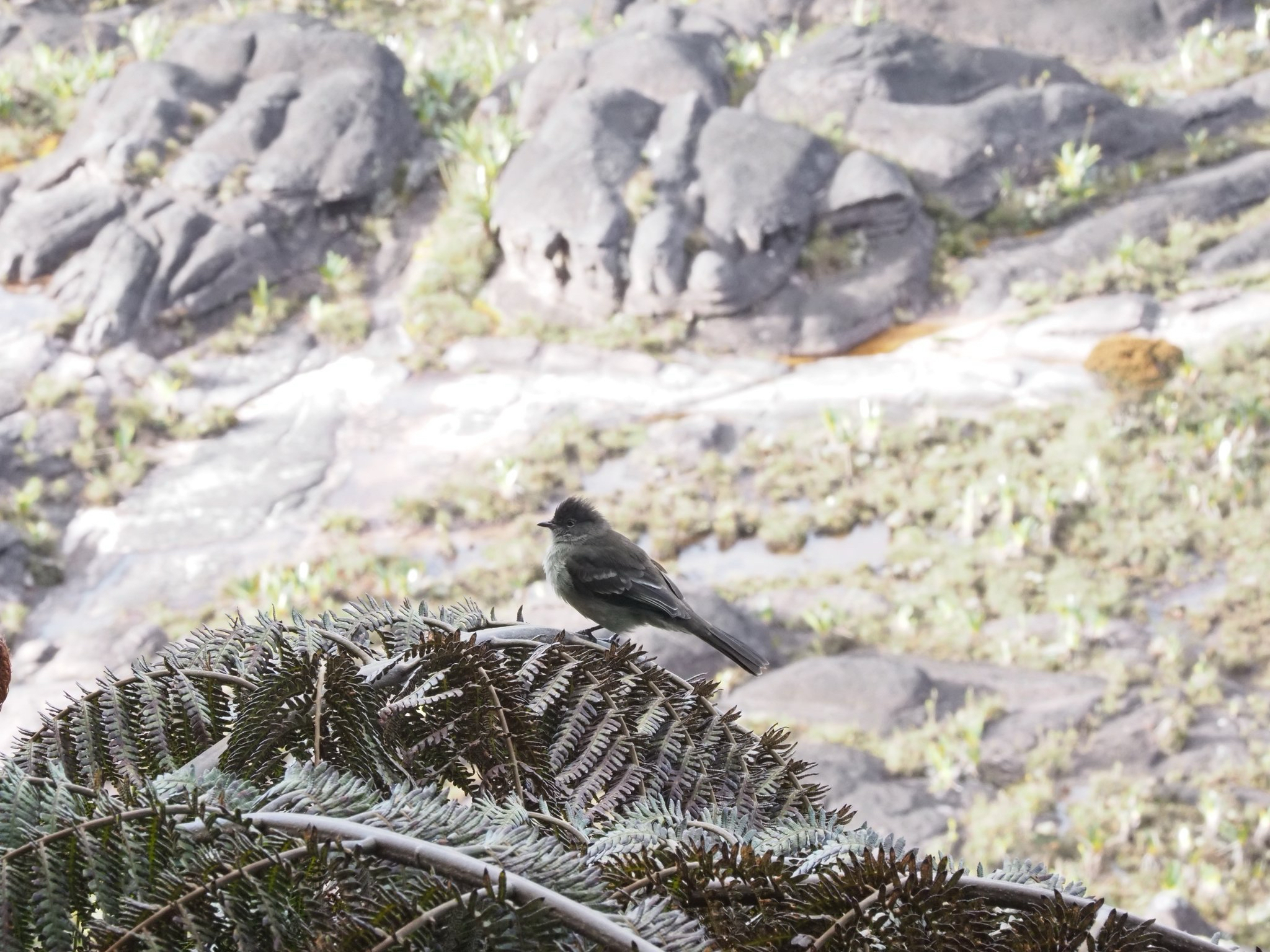
Great Elaenia is the largest elaenia and an endemic of the tepuis, the table mountains of the Guiana Shield. It lives in scrub and stunted forest on the summits and upper slopes, where it is one of the most conspicuous songbirds. Different tepuis hold separate subspecies.
Voice
Loud, hoarse calls such as wheeyoo and a dry, scratchy series; often from a protruding shrub or treetop.
Recording: JAYRSON ARAUJO DE OLIVEIRA — CC BY-NC-SA 4.0 · xeno-canto
Identification
19–20 cm. Large and heavily built, with a long tail. Upperparts dark brownish olive, head slightly darker, without a distinct crest or white crown patch, with a broken pale eye-ring. Wings blackish with two whitish wing-bars and pale edges to the tertials. Underparts greyish olive, becoming dull yellow on the belly. Bill fairly short, dark. Sexes alike; juveniles browner, with buffy wing-bars. The subspecies differ slightly in tone.
Confusion species
Tepui Elaenia Elaenia olivina occurs on the same tepuis, but is much smaller, greener, with a white crown patch, and lives mainly in forest and along forest edges on the slopes. Other tyrant flycatchers of the tepuis, such as Roraiman Flycatcher Myiophobus roraimae, are smaller and differently built.
Habitat
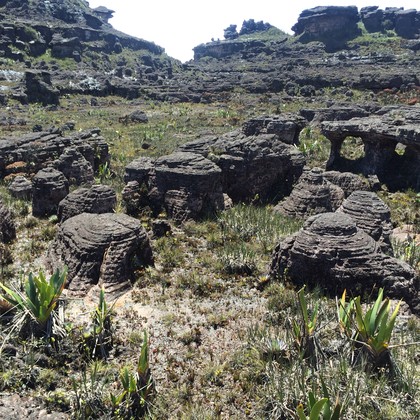
Low scrub, stunted forest and edges of mossy montane forest on the summits and upper slopes of the tepuis, mainly above about 1800 m, locally also lower in scrub of the Gran Sabana. It eats many fruits and berries as well as insects. Little is known about the nest.
Where the bird is most at home, classified by the vegetation units of Amazonia and the Guianas.

Range and movements
Venezuela: on the tepuis of Bolívar and Amazonas, including Auyán-tepui, Jaua, Duida, Marahuaca, Parú and Roraima. Brazil: on the Brazilian side of Roraima in the state of Roraima. Guyana: possibly on the Guyanese side of Roraima; no confirmed records. Absent from Suriname and French Guiana. It does not occur outside the guide area.
- Resident
- dark = core range, pale = thinly spread
How and when to look
Most birders see it on the summit of Roraima, which can be reached on foot from the Gran Sabana. Search the scrub between the rocks for a large, dark elaenia perching on shrub tops.
Conservation status
Least Concern. The tepui summits are largely undisturbed and remote. Because each subspecies lives on one or a few table mountains, fires, tourism and climate change may have local effects.
Scientific name
Elaenia dayi | Chapman, 1929
Chapman described the species in 1929 and placed it straight away in the genus where it still stands. The genus Elaenia was introduced in 1836 by Sundevall. Elaenia comes from Greek elaineos 'oily, olive-coloured', after the olive-green plumage. dayi honours the American financier and explorer Lee Garnett Day (1890–1966), sponsor of expeditions to tropical America. The specimen the first description was based on came from summit of Roraima (c. 2,600 m), Venezuela.