All species › Passerines › Tyrant flycatchers and allies › Noronha Elaenia
Noronha Elaenia | Elaenia ridleyana
Noronha-elenia | Fiofío de Noronha | Cocoruta
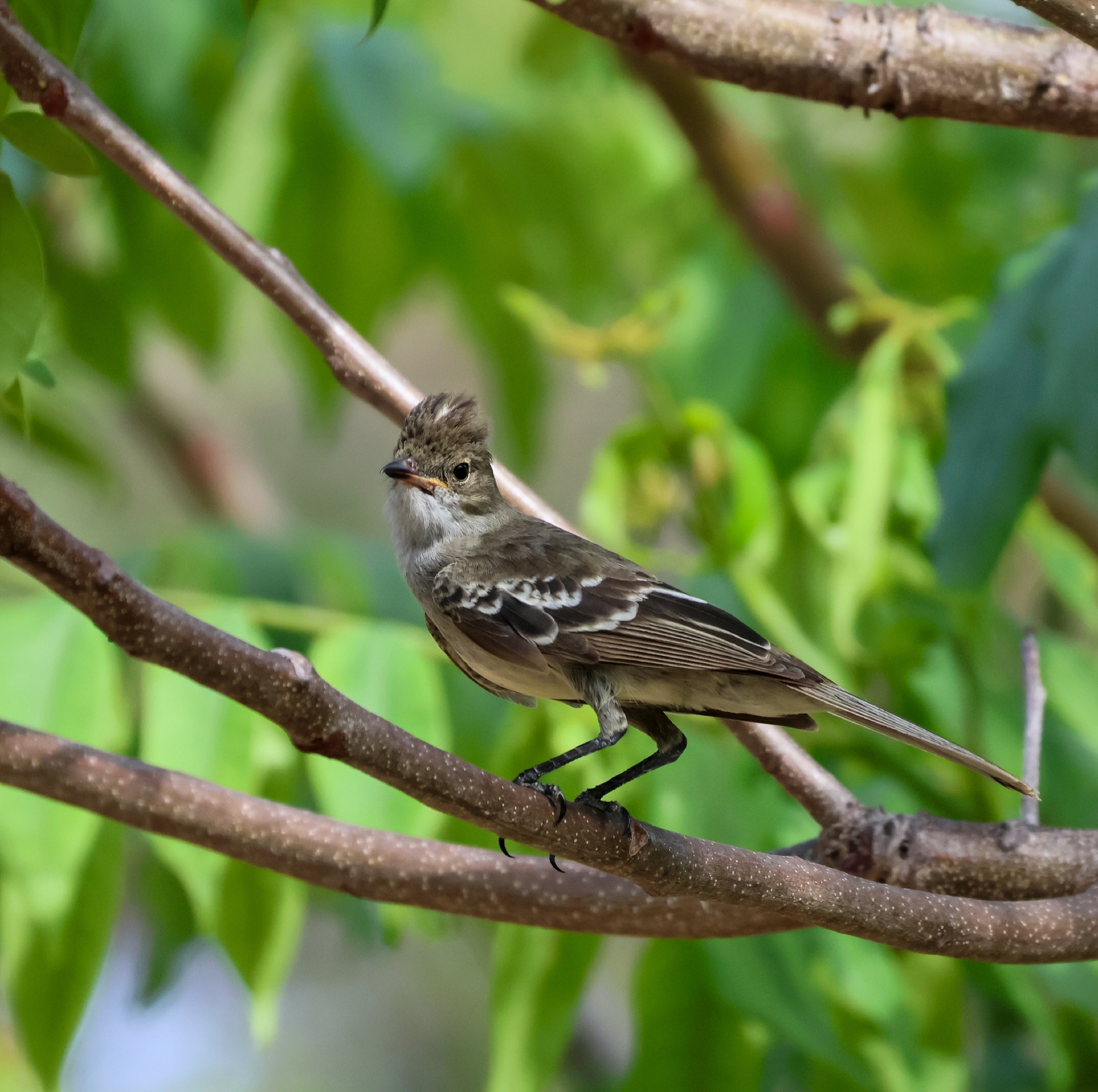
Noronha Elaenia occurs only on the Fernando de Noronha archipelago, more than 350 km off the coast of north-eastern Brazil. It is one of the two endemic passerines of the islands, along with Noronha Vireo. It is larger and heavier than most mainland elaenias and lives in almost all vegetated parts of the main island, including gardens and around the village.
Voice
Hoarse, somewhat rolling calls such as trrree and a short, whistled chee-oo. The song consists of repeated hoarse whistles and is heard mainly at dawn. The voice has been little described in detail.
Recording: JAYRSON ARAUJO DE OLIVEIRA — CC BY-NC-SA 4.0 · xeno-canto
Identification
17 cm, a large, sturdy elaenia. Upperparts grey-olive, head slightly greyer with a short crest and a white crown patch that is often visible. Narrow pale eye-ring. Wings dark with two whitish wing-bars and pale edges to the secondaries. Throat and breast pale grey, belly whitish with a faint yellow wash. Bill fairly strong, dark with a pale base to the lower mandible. Sexes alike; juveniles browner, without crown patch and with buffy wing-bars.
Confusion species
On Fernando de Noronha this is the only elaenia, so confusion there is very unlikely. Noronha Vireo Vireo gracilirostris is smaller, greener above and yellower below, without wing-bars or crest, and forages more slowly among the leaves. On the mainland Large Elaenia Elaenia spectabilis is similar, but it does not occur on the islands.
Habitat
All vegetated parts of the main island: low, seasonally dry forest and scrub on the hills, coastal thickets, gardens, yards and trees in and around the village; also on some of the smaller islets of the archipelago. From sea level to the highest summits of the island (just over 300 m). It eats insects and many fruits and berries, including those of introduced plants. The nest is an open cup in a tree or shrub; breeding takes place mainly in the rainy season.
Where the bird is most at home, classified by the vegetation units of Amazonia and the Guianas.


Range and movements
Brazil: only the Fernando de Noronha archipelago (Pernambuco) in the Atlantic Ocean, on the main island and some satellite islets. It does not occur on the mainland, in Venezuela or in the Guianas. Records elsewhere are due to confusion with other elaenias.
- Resident
- dark = core range, pale = thinly spread
How and when to look
On Fernando de Noronha it can be found all year round, around Vila dos Remédios, in the gardens of pousadas and along the trails to the bays. Birds call and sing from the tops of shrubs and trees mainly early in the morning. There are flights from Recife and Natal; an environmental fee is charged for the island.
Conservation status
Vulnerable. The entire range covers a few tens of square kilometres. Threats are introduced predators such as rats, cats and the tegu lizard Salvator merianae, the replacement of native vegetation by introduced plants such as leucaena, and tourism-related building. Most of the archipelago is protected as a national marine park.
Scientific name
Elaenia ridleyana | Sharpe, 1888
Sharpe described the species in 1888 and placed it straight away in the genus where it still stands. The genus Elaenia was introduced in 1836 by Sundevall. Elaenia comes from Greek elaineos 'oily, olive-coloured', after the olive-green plumage. ridleyana honours the British botanist Henry Nicholas Ridley (1855–1956), who collected on Fernando de Noronha in 1887. The specimen the first description was based on came from Fernando de Noronha, Brazil.