All species › Swifts › Swifts › Sooty Swift
Sooty Swift | Cypseloides fumigatus
Kleine roetgierzwaluw | Vencejo negruzco | Taperuçu-preto
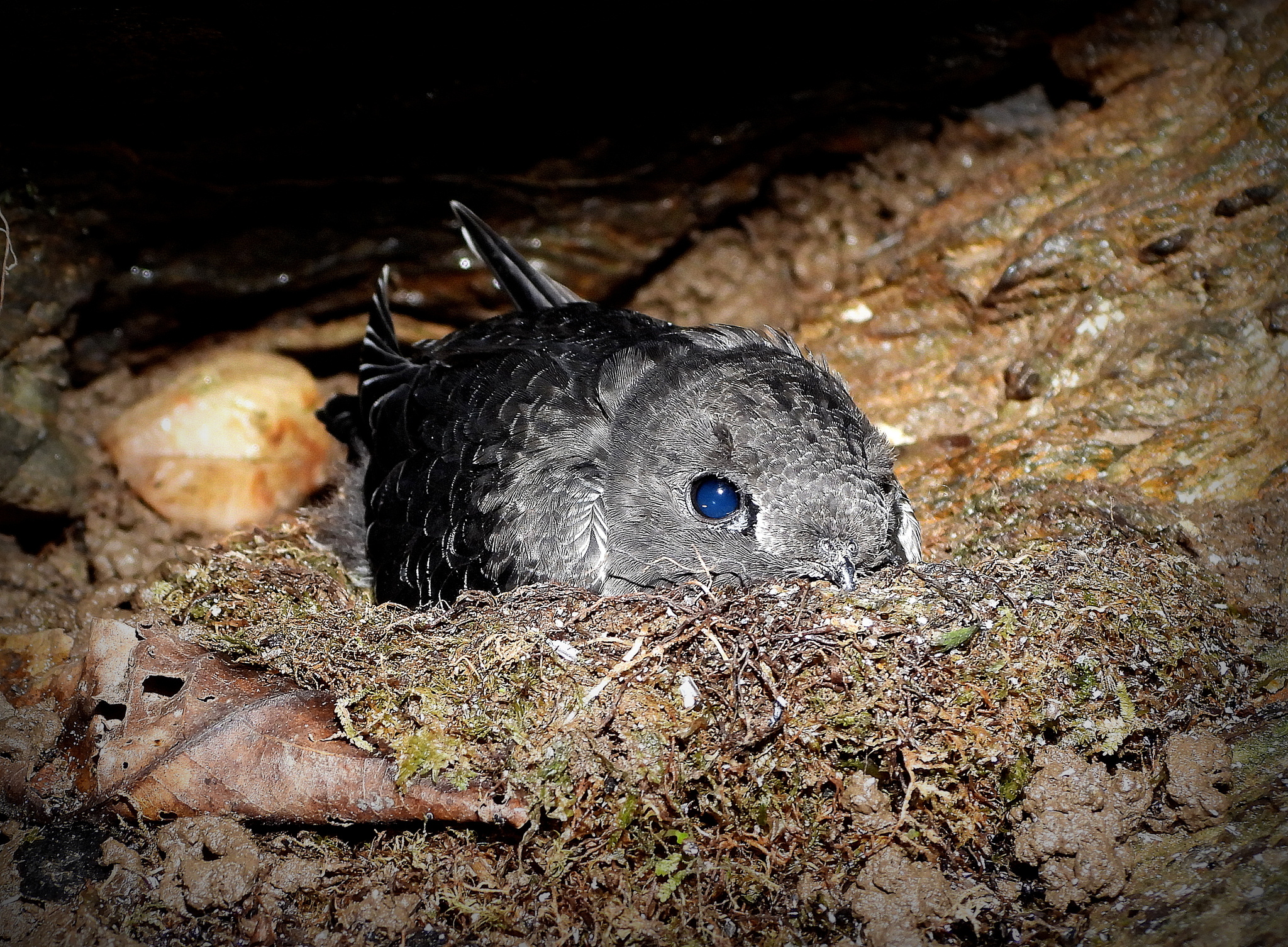
The Sooty Swift is a medium-sized, uniformly dark swift of the Atlantic Forest in south-eastern and southern Brazil and adjacent countries. It breeds on wet rock faces behind and beside waterfalls, as at Iguaçu. Little is known about where the birds stay outside the breeding season.
Voice
Soft, high, twittering calls, mainly at the breeding sites; less loud than those of the large Streptoprocne swifts.
Recording: GABRIEL LEITE — CC BY-NC-SA 4.0 · xeno-canto
Identification
14–16 cm, with long, sickle-shaped wings and a fairly short, square tail. The plumage is uniformly sooty black to blackish brown, the head sometimes slightly greyer, without white or pale patches. The sexes are alike. Juveniles have pale fringes to the feathers of the belly and undertail coverts.
Confusion species
Great Dusky Swift Cypseloides senex is much larger and browner, with a pale, greyish head. Biscutate Swift Streptoprocne biscutata and White-collared Swift Streptoprocne zonaris are much larger and have white on the throat and neck. Swifts of the genus Chaetura are smaller, with a shorter, spiny tail and often a paler rump or throat.
Habitat
Airspace over humid montane and lowland forest and wooded ravines, especially near waterfalls and fast-flowing rivers, from the lowlands to about 1500 m. It hunts flying insects high up, often with other swifts. It breeds in the austral summer, about November–February, on wet, shaded rock faces behind or beside waterfalls; the nest is a cup of moss and ferns.
Where the bird is most at home, classified by the vegetation units of Amazonia and the Guianas.




Range and movements
In the guide area only in Brazil: in the Atlantic Forest from southern Bahia and Minas Gerais through Espírito Santo, Rio de Janeiro, São Paulo and Paraná to Santa Catarina and Rio Grande do Sul, with scattered reports inland, such as in the Chapada Diamantina, Goiás and Mato Grosso. Most often recorded in the breeding season, about November–February. Not known from Venezuela, Guyana, Suriname or French Guiana. Outside the guide area in eastern Paraguay and north-eastern Argentina.
- Resident
- dark = core range, pale = thinly spread
How and when to look
The Iguaçu Falls and waterfalls in the Serra do Mar are good places; in the breeding season, watch towards dusk, when the birds fly to their nest sites behind the falling water.
Conservation status
Least Concern. Breeding sites at waterfalls can be disturbed by tourism and hydroelectric schemes, and the species depends on wooded terrain around the falls.
Scientific name
Cypseloides fumigatus | (Streubel, 1848)
Streubel described the species in 1848 as Hemiprocne fumigata; because it was later moved to another genus, the author and year stand in brackets. The genus Cypseloides was introduced in 1848 by Streubel. Cypseloides combines Cypselus, an old genus name for swifts (Greek kupselos), with Greek -oidēs 'resembling': 'swift-like'. fumigatus is Latin for 'smoked', after the uniformly sooty-brown plumage. The specimen the first description was based on came from Brazil (not specified).