All species › Passerines › Wrens › Tepui Wren
Tepui Wren | Troglodytes rufulus
Tepuiwinterkoning | Cucarachero de Pantepui | Corruíra-do-tepui
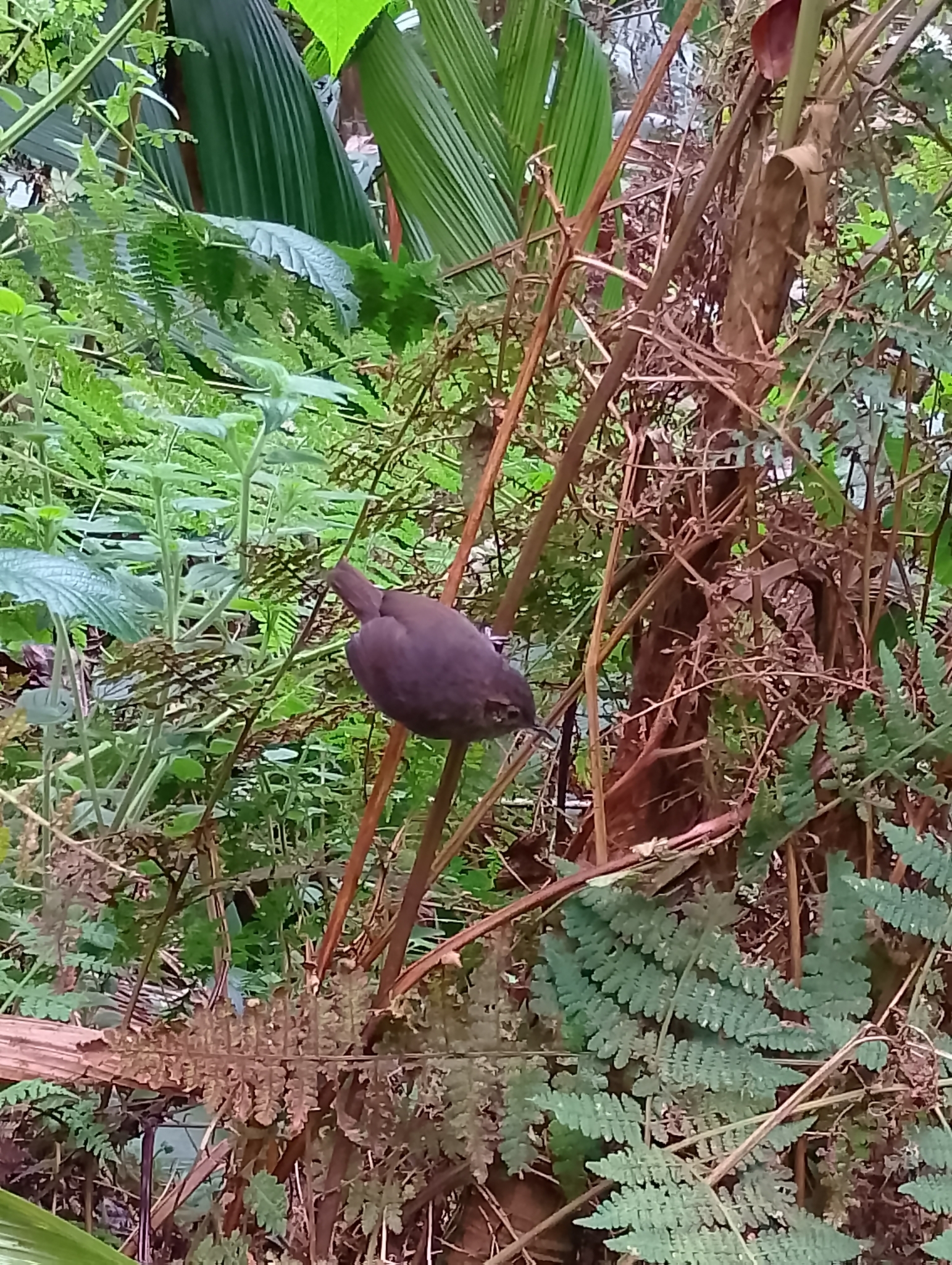
The Tepui Wren is a small, rufous-brown wren with a pale supercilium that occurs only on the tepuis of the Guiana Shield. It lives in elfin forest, scrub and mossy undergrowth on the summits and upper slopes. Different tepuis hold forms that differ in the colour of the underparts.
Voice
The song is a fast series of high, clear whistled notes, trills and chattering notes. The call is a dry, rasping rattle.
Recording: JAYRSON ARAUJO DE OLIVEIRA — CC BY-NC-SA 4.0 · xeno-canto
Identification
11–12 cm. Stocky, with a fairly long, thin bill and a short, often cocked tail. Upperparts chestnut to rufous-brown, wings and tail finely barred dark. Pale, buff to whitish supercilium. Underparts differ by form: in some forms largely rufous, in others greyish white with rufous flanks; flanks and undertail coverts often barred dark. Male and female alike. Young birds are duller.
Confusion species
Flutist Wren Microcerculus ustulatus is almost tailless, has no supercilium and walks on the forest floor on lower slopes. Southern House Wren Troglodytes musculus is greyer brown, has a weaker supercilium and a longer tail and lives lower, in open country and around settlements.
Habitat
Elfin forest, scrub, mossy undergrowth and rocky places with bromeliads on the summits and upper slopes of tepuis, roughly from 1200 to 2800 m; also at the edges of montane forest. It forages low in the vegetation and on the ground for insects and spiders. The nest is in a cavity or in a ball of moss low in the vegetation.
Where the bird is most at home, classified by the vegetation units of Amazonia and the Guianas.


Range and movements
Venezuela: on the tepuis of Bolívar and Amazonas, from Roraima and Chimantá to Duida and other mountains in the south, with different subspecies. Guyana: on Roraima and adjacent mountains in the west. Brazil: only in the far north, on Monte Roraima and locally on tepuis along the border with Venezuela. Not in Suriname or French Guiana. The species occurs nowhere outside these uplands.
- Resident
- dark = core range, pale = thinly spread
How and when to look
Found on the summit of Roraima, which you can reach on foot from the Gran Sabana. The bird forages among rocks, shrubs and bromeliads and often comes close out of curiosity; listen for the song in the early morning.
Conservation status
Least Concern (IUCN). The habitat on the tepuis is small but largely intact and lies partly in protected areas such as Canaima National Park. Climate change may affect the isolated summits in the long term.
Scientific name
Troglodytes rufulus | Cabanis, 1849
Cabanis described the species in 1849 and placed it straight away in the genus where it still stands. The genus Troglodytes was introduced in 1809 by Vieillot. Troglodytes is Greek, from troglē 'hole, crevice' and dyein 'to creep into': 'cave-dweller', after the habit of disappearing into crevices and holes while foraging. rufulus is Latin for 'reddish', a diminutive of rufus 'rufous', after the warm rufous-brown plumage. The specimen the first description was based on came from Cerro Roraima, Bolívar, Venezuela.