All species › Passerines › Antbirds › Bar-crested Antshrike
Bar-crested Antshrike | Thamnophilus multistriatus
Streepkuifmierklauwier | Batará carcajada | Choca-de-crista-barrada
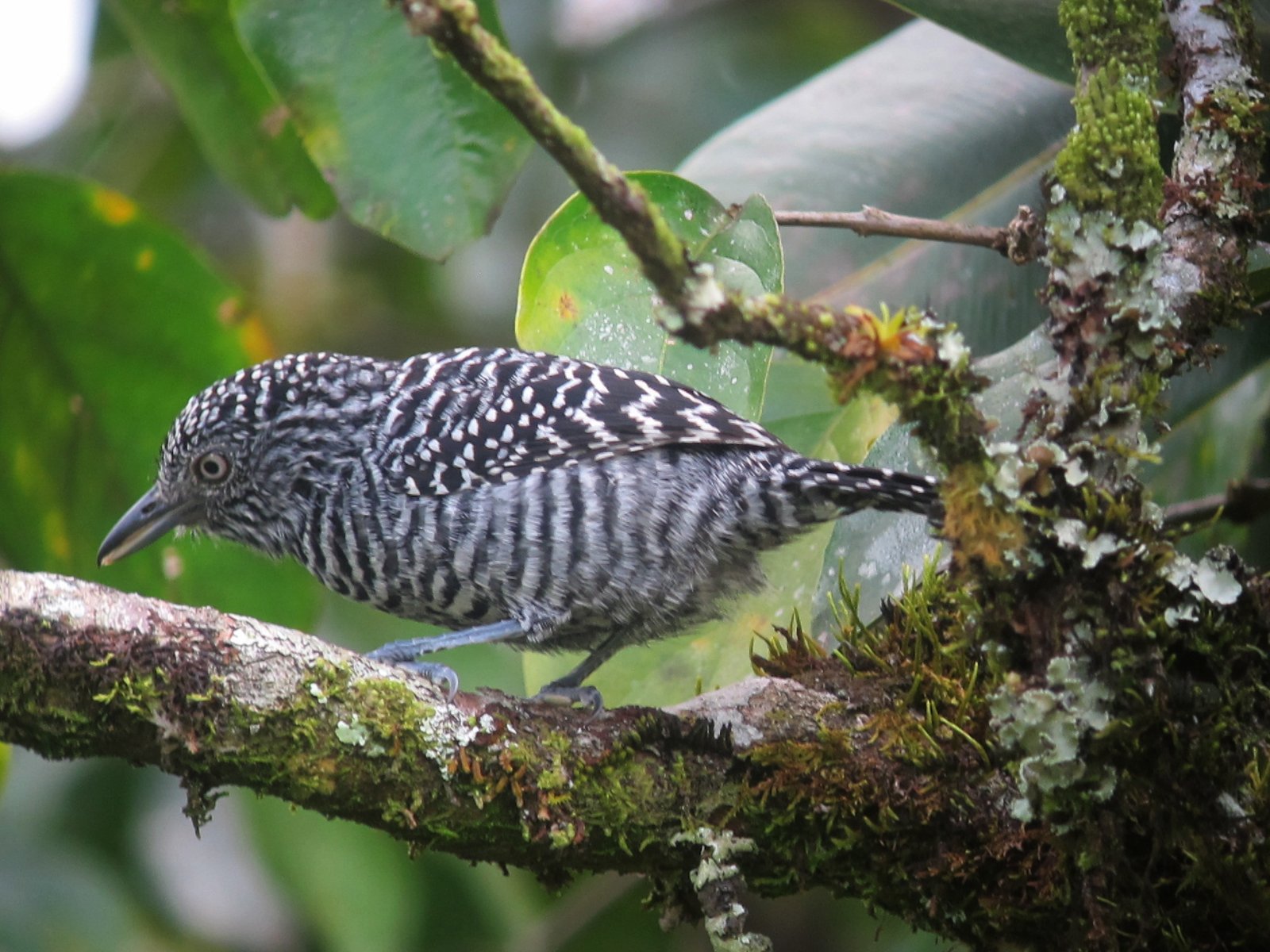
The Bar-crested Antshrike is a barred antshrike of the Andes of Colombia and adjacent western Venezuela. In the male even the crest is barred black and white; the female has a rufous crown and back. It lives at middle elevations in scrub, forest edges and coffee plantations.
Voice
The song is an accelerating series of nasal notes with an emphatic ending, similar to that of the Barred Antshrike. Also growling calls.
Recording: GABRIEL LEITE — CC BY-NC-SA 4.0 · xeno-canto
Identification
16 cm, with a crest and a fairly heavy, hooked bill. The male is finely barred black and white throughout, including the crown and crest. The female has a rufous crown, back, wings and tail, a black-and-white streaked face and black-and-white barred underparts.
Confusion species
The male Barred Antshrike Thamnophilus doliatus has a black, unbarred crest; the female is plain buff below, without barring. Barred Antshrike usually lives lower, although the two overlap locally in the valleys. The female Black-crested Antshrike Sakesphorus canadensis has unbarred buff underparts.
Habitat
Scrub, forest edges, secondary forest, hedgerows, coffee plantations and gardens on the slopes of the Andes and in the valleys between the cordilleras, roughly between 900 and 2700 m. It searches low to mid-level in dense growth for insects, usually in pairs. The nest is a small cup in a fork.
Where the bird is most at home, classified by the vegetation units of the Andes and the west coast.


Range and movements
Colombia: on the slopes of the Andes and in the Cauca and Magdalena valleys, north to the Serranía de Perijá. Absent from Ecuador, Peru, Bolivia and the Galápagos. Outside the guide area only in western Venezuela.
- Resident
- dark = core range, pale = thinly spread
How and when to look
Listen in coffee plantations, hedgerows and forest edges at middle elevations for the accelerating series; pairs move low through cover.
Conservation status
Least Concern. Tolerates the mixed farmland of the Colombian Andes.
Scientific name
Thamnophilus multistriatus | de Lafresnaye, 1844
De Lafresnaye described the species in 1844 and placed it straight away in the genus where it still stands. The genus Thamnophilus was introduced in 1816 by Vieillot. The genus name comes from Greek thamnos, 'bush', and philos, 'loving': bush-lover. The species name comes from Latin multus, 'many', and striatus, 'striped'. The specimen the first description was based on came from Bogotá, Colombia.