All species › Tinamous › Tinamous › Berlepsch's Tinamou
Berlepsch's Tinamou | Crypturellus berlepschi
Berlepsch' tinamoe | Tinamú de Berlepsch | Inhambu-de-berlepsch
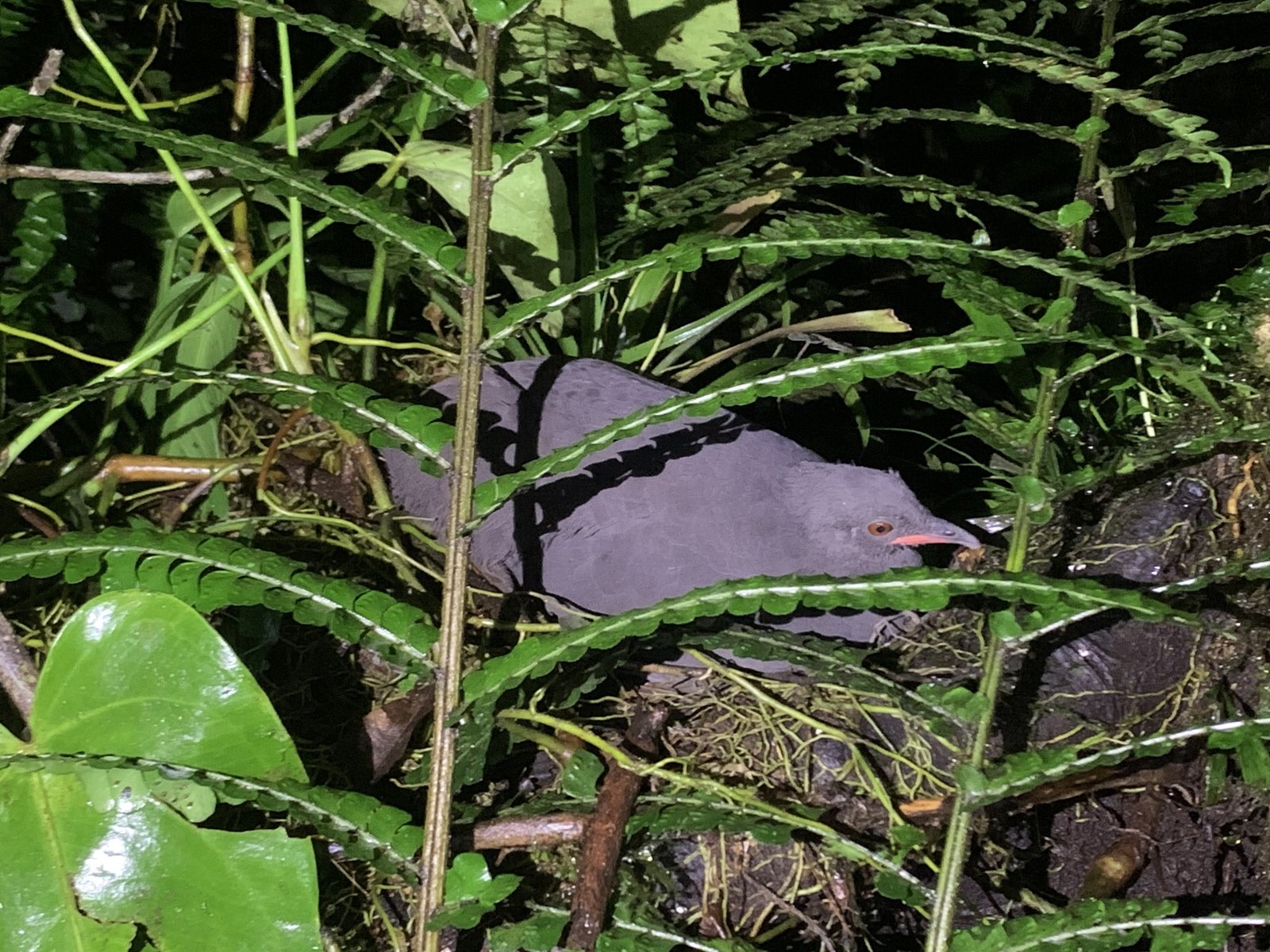
Berlepsch's Tinamou is a dark, medium-sized Crypturellus of Chocó rainforest on the Pacific side of Colombia and Ecuador. It is the western counterpart of Cinereous Tinamou and was formerly sometimes treated as a form of it. Its entire range lies within the guide area.
Voice
A long, pure whistle, repeated at intervals, similar to the call of Cinereous Tinamou; heard mainly in the early morning and at dusk.
Recording: Juan Freile — CC BY-NC-SA 4.0 · xeno-canto
Identification
29–31 cm, with a small head and a rounded, almost tailless body. The plumage is uniform very dark, sooty blackish brown, with a slightly blacker head and a tinge of rufous-brown on the underparts; barring and spots are absent. The throat is barely paler. The legs are dark grey. The sexes are alike.
Confusion species
Little Tinamou Crypturellus soui is much smaller and paler, with a grey head and warm brown underparts. Great Tinamou Tinamus major is much larger, olive-brown with fine black barring and a whitish throat. Choco Tinamou Crypturellus kerriae is smaller, with red legs and finely barred upperparts, and lives in hill country in the far north-west of Colombia. Cinereous Tinamou Crypturellus cinereus is greyer and lives only east of the Andes.
Habitat
The floor of humid lowland rainforest, older secondary forest and forest edge, also dense growth along streams and in neglected plantations; mostly below 500 m, locally up to about 900 m. It walks over the forest floor searching for fruit, seeds and small invertebrates. The nest is on the ground in dense vegetation.
Where the bird is most at home, classified by the vegetation units of the Andes and the west coast.


Range and movements
In Colombia in the Pacific lowlands, from Chocó and north-western Antioquia south to Nariño. In Ecuador in the north-western lowlands, mainly in Esmeraldas and adjacent Pichincha and Imbabura. Absent from Peru, Bolivia and the Galápagos. Does not occur outside the guide area.
- Resident
- dark = core range, pale = thinly spread
How and when to look
Listen in the early morning along forest trails in the lowlands of Esmeraldas or in the Pacific lowlands of Colombia, for example around Playa de Oro and in the lowlands near Tumaco. Birds stay in dense undergrowth and walk off as soon as they hear something.
Conservation status
Least Concern, but Chocó lowland forest is being cleared rapidly for agriculture, oil palm and mining, and the species is hunted locally.
Scientific name
Crypturellus berlepschi | (Rothschild, 1897)
Rothschild described the species in 1897 as Crypturus berlepschi; because it was later moved to another genus, the author and year stand in brackets. The genus Crypturellus was introduced in 1914 by Brabourne, WWK-H & Chubb. The genus name comes from Greek kruptos, 'hidden', and oura, 'tail', with the Latin diminutive -ellus: 'little hidden tail'. The species name honours Hans von Berlepsch (1850–1915), German ornithologist and collector of Neotropical birds. The specimen the first description was based on came from Cachabí, Esmeraldas, Ecuador.