All species › Tinamous › Tinamous › Little Tinamou
Little Tinamou | Crypturellus soui
Kleine tinamoe | Tinamú menor | Tururim
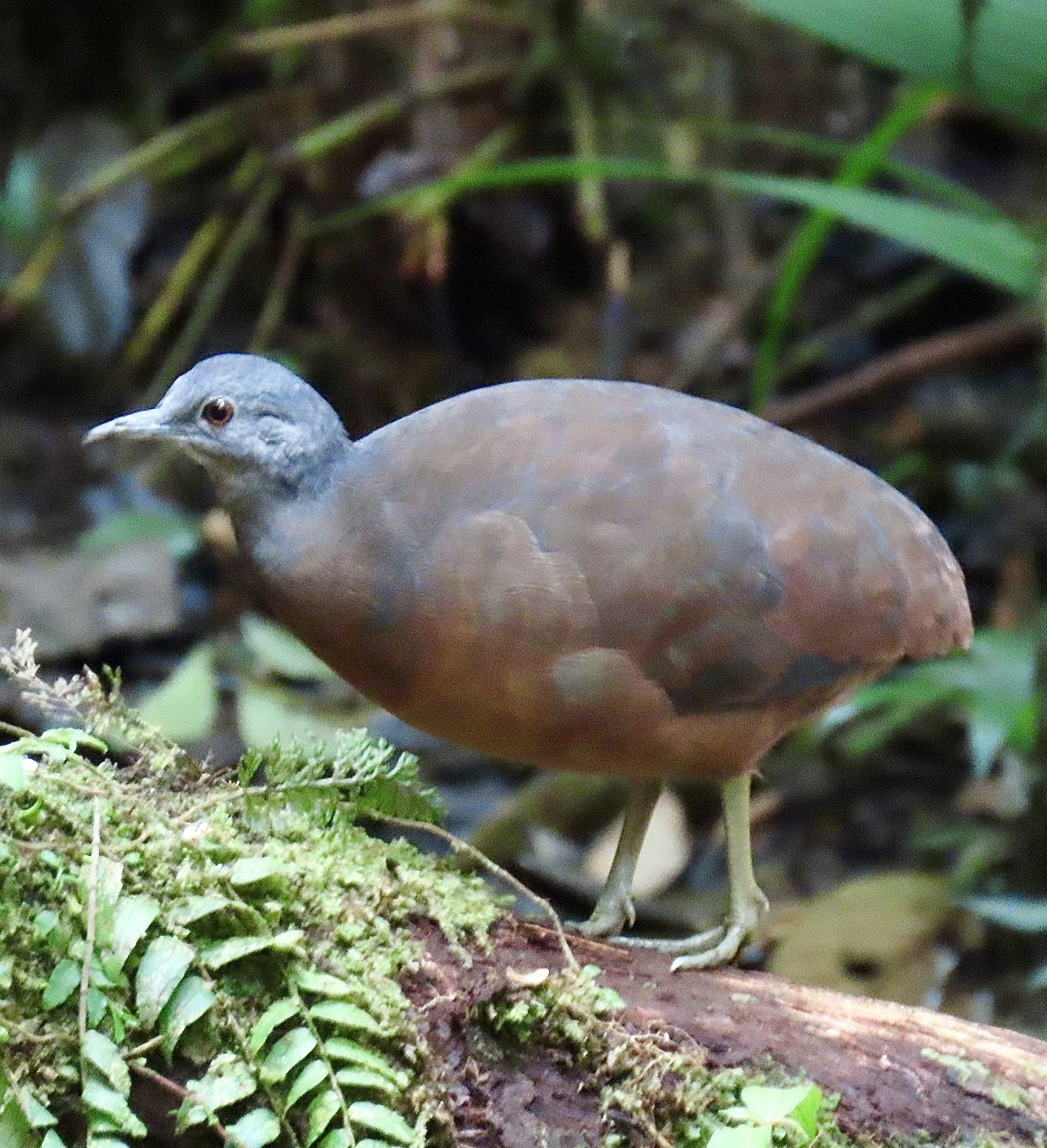
The Little Tinamou is the smallest and most widespread tinamou of the humid lowlands and foothills, on both sides of the Andes. Unlike most tinamous it favours forest edge, scrub and young secondary forest. Its tremulous, rising whistles are heard over much of the guide area.
Voice
A series of tremulous whistles that gradually rise in pitch and speed up; also a series that falls instead. It often sings at dusk and sometimes at night.
Recording: Daan van der Hoeven — CC BY-NC-SA 4.0 · xeno-canto
Identification
21–24 cm, small and rounded, with an almost invisible tail. The upperparts are uniform dark brown, without barring. The head is greyish, with a darker crown and a whitish throat. The underparts are warm cinnamon to ochre-brown, slightly darker on the flanks. The female is warmer rufous-brown than the male. The bill is dark with a paler lower mandible, and the legs are olive-green to yellowish.
Confusion species
Cinereous Tinamou Crypturellus cinereus is larger and uniform dark grey-brown, with a single level whistle. Bartlett's Tinamou Crypturellus bartletti is slightly larger, with black-barred upperparts, and lives in the interior of Amazonian forest. Pale-browed Tinamou Crypturellus transfasciatus has a pale eyebrow and barred upperparts and lives in the dry forest of south-western Ecuador and north-western Peru. Tataupa Tinamou Crypturellus tataupa is greyer, with a red bill, and lives in drier woodland in Peru and Bolivia.
Habitat
Forest edge, secondary forest, dense scrub, neglected plantations and dense undergrowth in humid lowland and foothill forest; also occurs in smaller forest remnants and in coffee and cacao plantations. From sea level to about 1500 m, locally to 2000 m. It searches the ground for seeds, fruit and insects. The nest is on the ground, hidden in dense vegetation.
Where the bird is most at home, classified by the vegetation units of the Andes and the west coast.


Range and movements
In Colombia widespread in the lowlands and foothills: on the Pacific side, in the Caribbean north, in the Magdalena and Cauca valleys and in the eastern lowlands. In Ecuador in the western lowlands and foothills and in the Amazonian lowlands. In Peru in the Amazonian lowlands and on the eastern foothills. In Bolivia in the northern and central lowlands and in the lower Yungas. Absent from the Galápagos. Outside the guide area from southern Mexico through Central America, and in Venezuela, Trinidad, the Guianas and Brazil.
- Resident
- dark = core range, pale = thinly spread
How and when to look
Listen at dusk along forest edges and scrub for the rising, tremulous series. Birds sometimes walk along quiet trails and forest tracks, especially just after dawn, but run into dense cover at the slightest movement.
Conservation status
Least Concern. It tolerates fragmented forest and secondary growth better than most tinamous, although it is hunted.
Scientific name
Crypturellus soui | (Hermann, 1783)
Hermann described the species in 1783 as Tinamus Soui; because it was later moved to another genus, the author and year stand in brackets. The genus Crypturellus was introduced in 1914 by Brabourne, WWK-H & Chubb. The genus name comes from Greek kruptos, 'hidden', and oura, 'tail', with the Latin diminutive -ellus: 'little hidden tail'. The species name is an onomatopoeic local name for this tinamou in French Guiana. The specimen the first description was based on came from Cayenne, French Guiana.