All species › Tinamous › Tinamous › Brown Tinamou
Brown Tinamou | Crypturellus obsoletus
Bruine tinamoe | Tinamú pardo | Inhambuguaçu
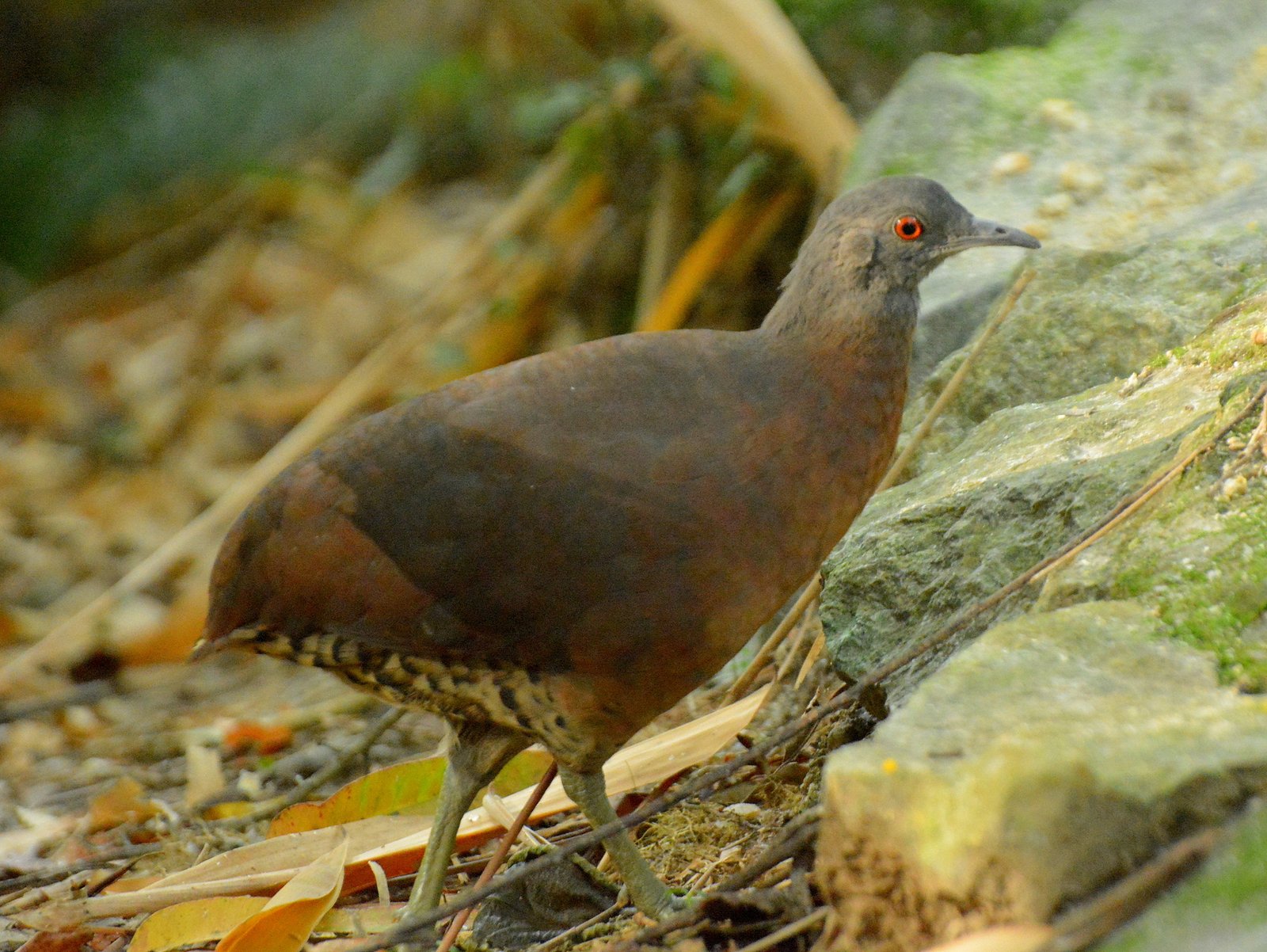
The Brown Tinamou is a medium-sized, warm brown Crypturellus of montane forest on the eastern slope of the Andes. It is one of the few Crypturellus species that live high in the mountains. The forms in the guide area differ in colour and song and are treated by some authors as separate species.
Voice
A loud series of high, tremulous whistles that accelerates and rises in pitch; pairs often sing together. The song differs between forms; heard mainly at dawn and at dusk.
Recording: Marllus Rafael — CC BY-NC-SA 4.0 · xeno-canto
Identification
25–30 cm, with a small head and a rounded, almost tailless body. The head and neck are grey, and the rest of the plumage is dark chestnut-brown; the upperparts are plain, without barring. The breast is warm rufous-brown and the belly paler ochre-brown. The flanks and undertail coverts are buff with blackish scaling. The iris is reddish brown, and the legs are grey to olive-grey. The sexes are nearly alike.
Confusion species
Little Tinamou Crypturellus soui is smaller, with a whitish throat and no scaling on the flanks, and lives lower, mainly at forest edges. Cinereous Tinamou Crypturellus cinereus is greyer and lives in the Amazonian lowlands. Tawny-breasted Tinamou Nothocercus julius is larger, with a rufous head and a tawny breast, and lives higher in cloud forest. Hooded Tinamou Nothocercus nigrocapillus is larger, with a blackish head and finely barred upperparts. Black-capped Tinamou Crypturellus atrocapillus has a black crown and red legs and lives lower, in the lowlands and foothills of south-eastern Peru and Bolivia.
Habitat
The floor of humid montane forest, cloud forest and their edges on the eastern slope of the Andes, also older secondary forest; roughly between 1000 and 2900 m, most often between 1300 and 2500 m. It searches the ground for seeds, fallen fruit and invertebrates. The nest is on the ground, hidden among roots or under dense vegetation.
Where the bird is most at home, classified by the vegetation units of the Andes and the west coast.


Range and movements
In Colombia local on the eastern slope of the Andes. In Ecuador on the eastern slope of the Andes along the whole length of the country. In Peru on the eastern slope of the Andes from the north to the south-east, with different forms in the north, the centre and the south-east (including the Marcapata valley in Cusco). In Bolivia in the Yungas. Absent west of the Andes and from the Galápagos. Outside the guide area in northern Venezuela and, separately, in the lowlands of Brazil, Paraguay and north-eastern Argentina.
- Resident
- dark = core range, pale = thinly spread
How and when to look
Listen at dawn in montane forest on the eastern slope for the rising, tremulous series, for example along the Manu road in Peru or in the montane forests of the Ecuadorian eastern slope. Birds sometimes walk along quiet trails and roadsides early in the morning.
Conservation status
Least Concern. Locally threatened by clearance of montane forest and by hunting.
Scientific name
Crypturellus obsoletus | (Temminck, 1815)
Temminck described the species in 1815 as Tinamus obsoletus; because it was later moved to another genus, the author and year stand in brackets. The genus Crypturellus was introduced in 1914 by Brabourne, WWK-H & Chubb. The genus name comes from Greek kruptos, 'hidden', and oura, 'tail', with the Latin diminutive -ellus: 'little hidden tail'. The species name comes from Latin obsoletus, 'worn, indistinct', for the plain plumage. The specimen the first description was based on came from Villarrica, Paraguay.