All species › Passerines › Antpittas › Chestnut Antpitta
Chestnut Antpitta | Grallaria blakei
Kastanjebruine mierpitta | Tororoí castaño | Tovacuçu-castanho
The Chestnut Antpitta was described in 1987 and is named after the American ornithologist Emmet Blake. It occurs only on the east slope of the Andes in northern and central Peru. It is a small, dark ground bird of humid montane forest, which was retained as a separate species in the 2020 split of Rufous Antpitta.
Voice
The song consists of short series of clear whistled notes; it differs from those of the species of the rufula group in pace and pitch. A recording of the song is the main aid to identification.
Recording: Ross Gallardy — CC BY-NC-SA 4.0 · xeno-canto
Identification
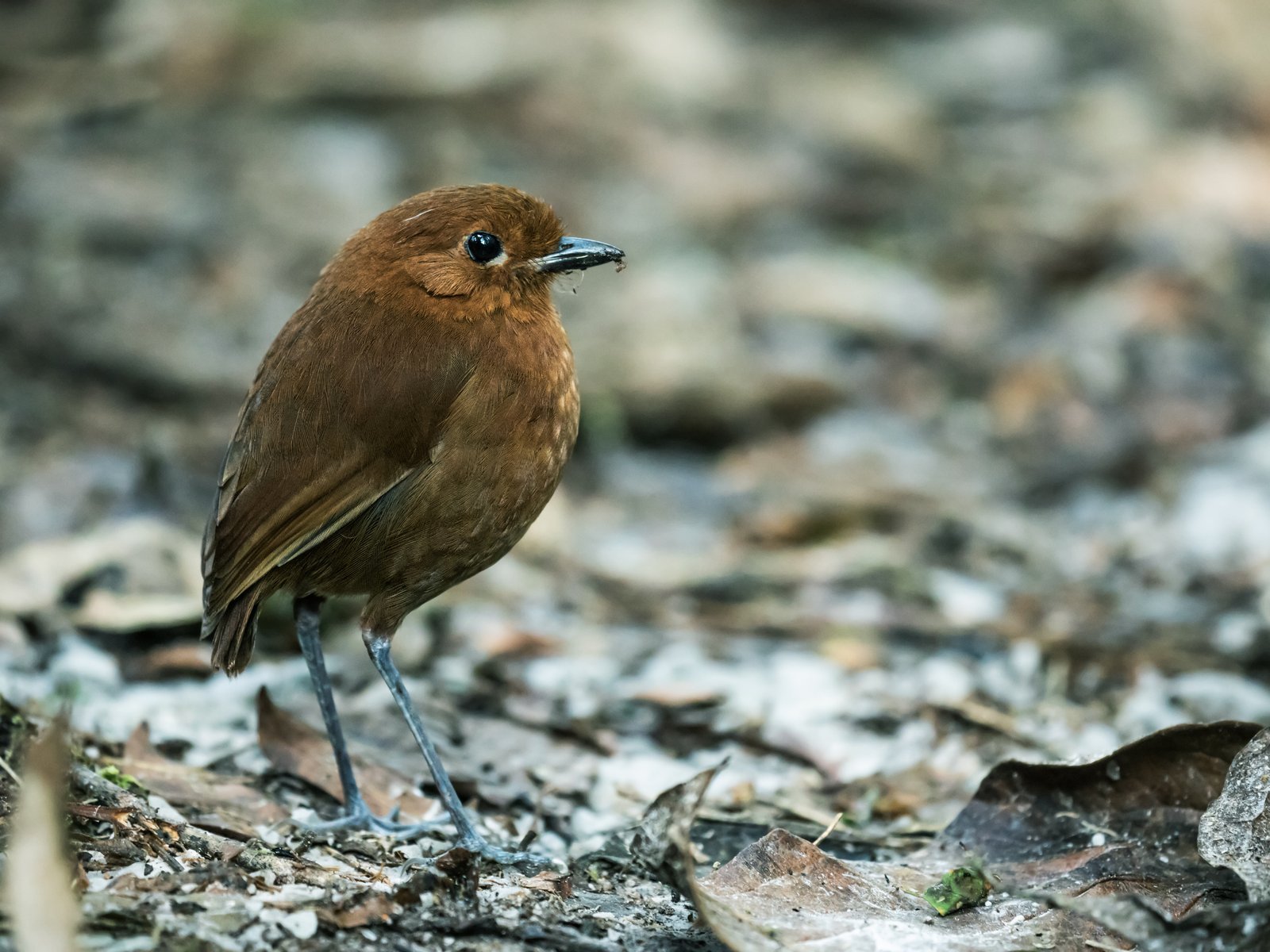
15 cm, small, round and almost tailless, on long dark legs, with a dark bill. The plumage is almost uniformly dark chestnut-brown, the underparts hardly paler; a pale eye-ring is absent or faint. The sexes are alike.
Confusion species
Chachapoyas Antpitta Grallaria gravesi usually lives higher and is paler rufous, with a more distinct pale eye-ring. Bay Antpitta Grallaria capitalis in Huánuco and Pasco is larger, with a dark chestnut head. Rusty-tinged Antpitta Grallaria przewalskii is larger, with a pale belly. Oxapampa Antpitta Grallaria centralis and Panao Antpitta Grallaria oneilli are very similar and are separated mainly by song and range.
Habitat
Dense undergrowth, bamboo and mossy undergrowth in humid montane forest and cloud forest, roughly between 2100 and 3100 m. It searches the ground for invertebrates. Little is known about breeding.
Where the bird is most at home, classified by the vegetation units of the Andes and the west coast.


Range and movements
Only in Peru, on the east slope of the Andes south and east of the Marañón, in Amazonas, San Martín and La Libertad, and south to Huánuco and northern Pasco. Absent from Colombia, Ecuador, Bolivia and the Galápagos. Does not occur outside the guide area.
- Resident
- dark = core range, pale = thinly spread
How and when to look
Listen at dawn in the cloud forest around Abra Patricia in Amazonas and San Martín for short series of whistled notes from dense undergrowth. The bird usually stays in cover and is mostly found by following the song.
Conservation status
Not evaluated in its current definition; in the older definition the species was listed as Near Threatened. The range is limited and montane forest on the east slope of northern Peru is cleared in many places for agriculture.
Scientific name
Grallaria blakei | Graves, 1987
Graves described the species in 1987 and placed it straight away in the genus where it still stands. The genus Grallaria was introduced in 1816 by Vieillot. The genus name comes from New Latin grallarius, 'stilt-walker', referring to the long legs. The species name honours Emmet Reid Blake (1908–1997), American ornithologist and collector. The specimen the first description was based on came from Cordillera de Carpish, Huánuco, Peru.