All species › Passerines › Antpittas › Chachapoyas Antpitta
Chachapoyas Antpitta | Grallaria gravesi
Chachapoyasmierpitta | Tororoí de Graves | Tovacuçu-de-chachapoyas
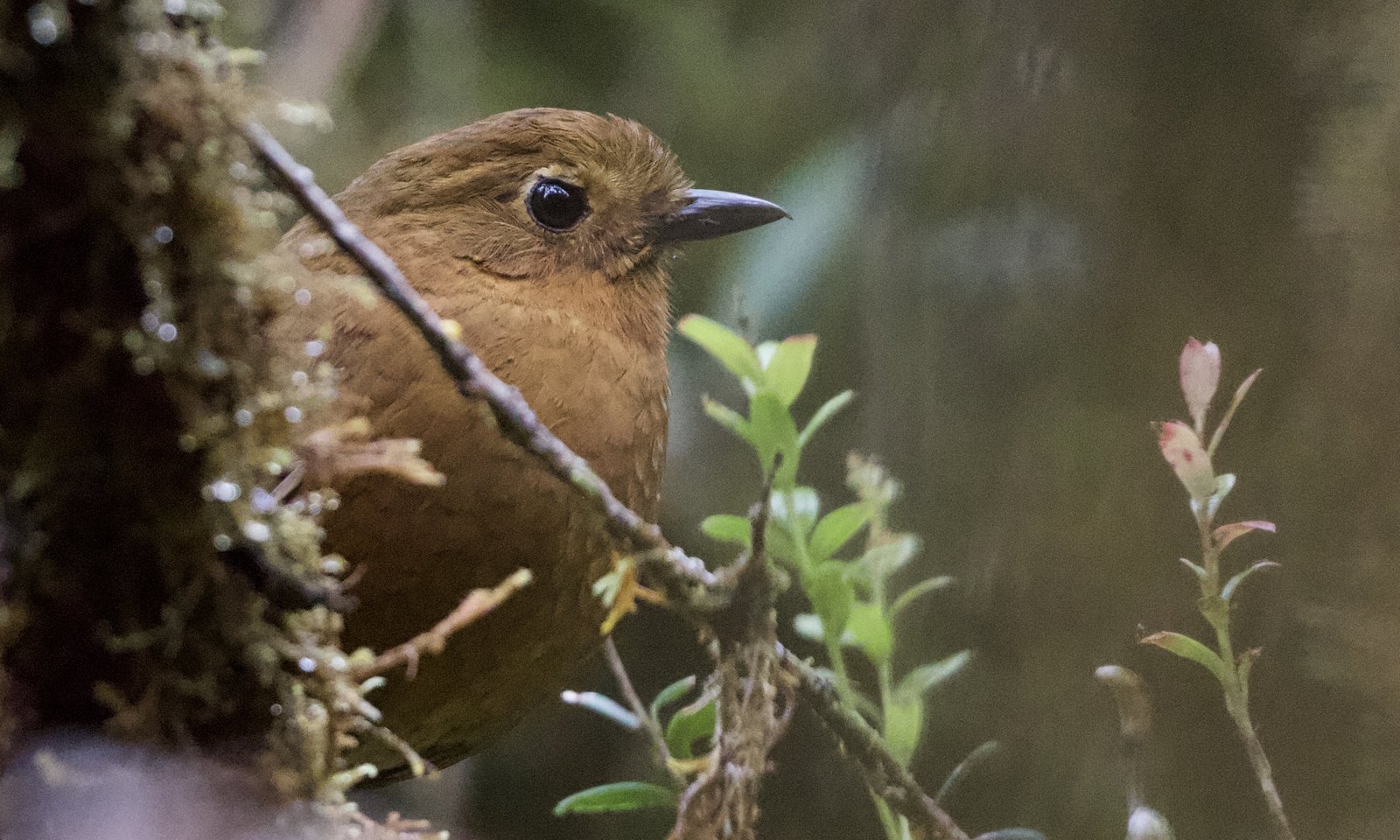
The Chachapoyas Antpitta was described as a new species in 2020 in the split of Rufous Antpitta. The name refers to Chachapoyas in the Amazonas region of northern Peru; the scientific name honours the American ornithologist Gary Graves. It is a small, rufous ground bird of high montane forest up to the treeline.
Voice
As in the other species of the rufula group, the song differs mainly in pace, number and pitch of the notes. It gives short series of clear whistled notes and single call notes; a recording of the song is the main aid to identification.
Recording: Jerome Fischer — CC BY-NC-SA 4.0 · xeno-canto
Identification
14–15 cm, small, round and almost tailless, on long dark legs, with a dark bill. The upperparts and underparts are uniform rufous-brown, the underparts slightly paler, palest on the centre of the belly. A narrow pale ring around the eye. The sexes are alike.
Confusion species
Chestnut Antpitta Grallaria blakei usually lives lower and is darker chestnut-brown, without a distinct eye-ring. Rusty-tinged Antpitta Grallaria przewalskii is larger, with a pale belly, and lives lower. Panao Antpitta Grallaria oneilli in Huánuco is separated mainly by song and range. Rufous-breasted Antpitta Grallaricula leymebambae is smaller, with a pale crescent in front of the eye and a pale belly.
Habitat
Dense undergrowth and bamboo in humid high montane forest and cloud forest up to the treeline, roughly between 2500 and 3500 m. It searches the ground for invertebrates. Almost nothing is known about breeding.
Where the bird is most at home, classified by the vegetation units of the Andes and the west coast.


Range and movements
Only in Peru, in the Andes south and east of the Marañón, in Amazonas, San Martín and La Libertad, and south to Huánuco. Absent from Colombia, Ecuador, Bolivia and the Galápagos. Does not occur outside the guide area.
- Resident
- dark = core range, pale = thinly spread
How and when to look
Listen at dawn in the high montane forest along the road from Leimebamba to Abra Barro Negro in Amazonas for short series of whistled notes from dense undergrowth. The bird sings from cover and sometimes comes briefly onto the road.
Conservation status
Not evaluated as a separate species; Rufous Antpitta in the broad sense is listed as Least Concern. High montane forest in northern Peru is locally cleared and burned for pasture.
Scientific name
Grallaria gravesi | Isler, Chesser, Robbins & Hosner, 2020
Isler, Chesser, Robbins & Hosner described the species in 2020 and placed it straight away in the genus where it still stands. The genus Grallaria was introduced in 1816 by Vieillot. The genus name comes from New Latin grallarius, 'stilt-walker', referring to the long legs. The species name honours Gary R. Graves, an ornithologist whose work helped lead to the discovery of this species. The specimen the first description was based on came from Puerto del Monte, San Martín, Peru.