All species › Swifts › Hummingbirds › Chestnut-bellied Hummingbird
Chestnut-bellied Hummingbird | Saucerottia castaneiventris
Bruinbuikamazilia | Amazilia ventricastaña | Beija-flor-de-barriga-castanha
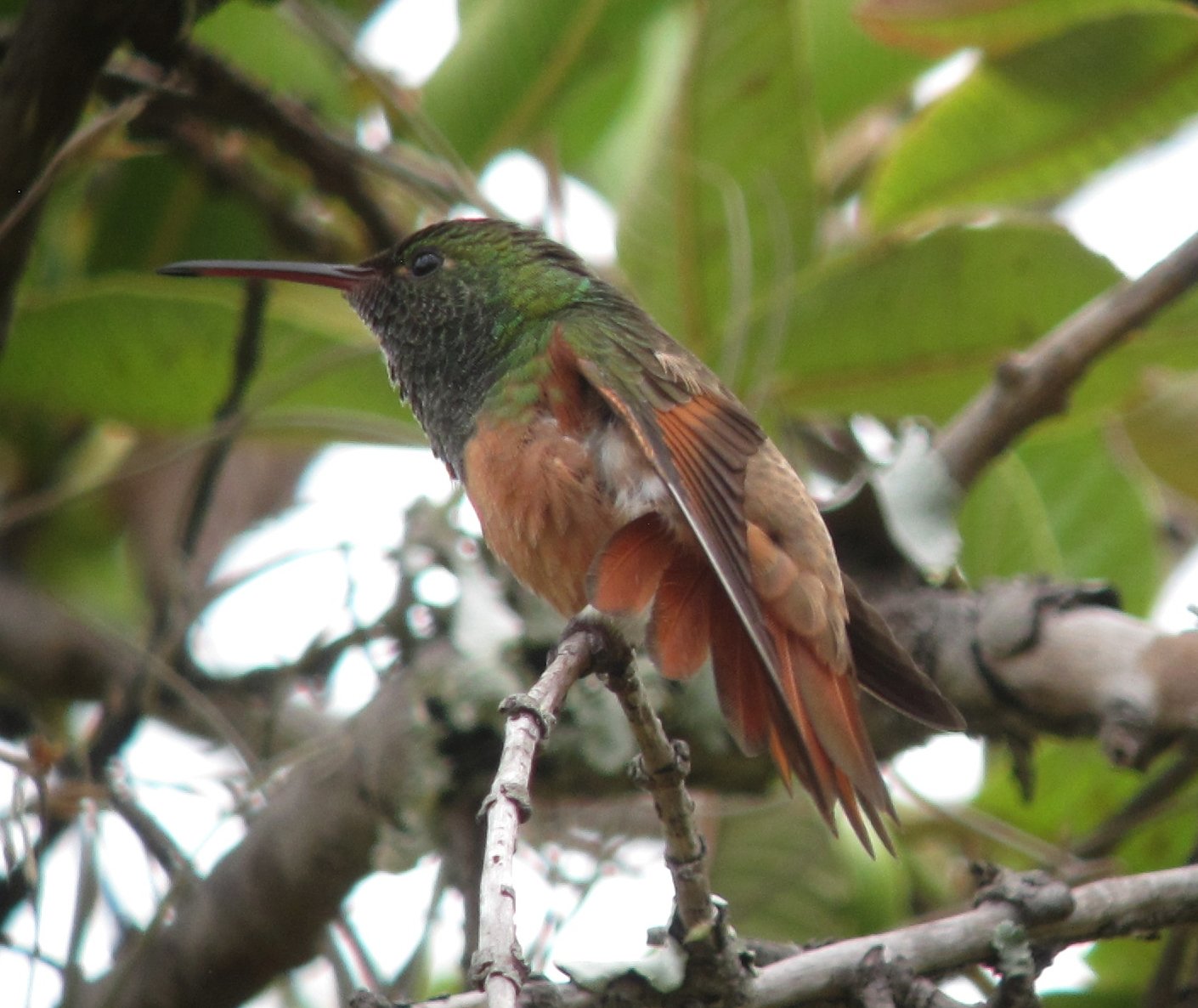
The Chestnut-bellied Hummingbird is a small hummingbird found only in Colombia, in the drier parts of the Magdalena valley. It has a glittering green throat and breast, a chestnut belly and a chestnut tail. It is known from a limited number of sites, with its core in the valleys of the Chicamocha, Suárez and Chucurí rivers.
Voice
High, dry calls such as tsit, and squeaky series during chases; the song is poorly described.
Recording: Sergio A. Collazos-González — CC BY-NC-SA 4.0 · xeno-canto
Identification
9 cm, with a straight, black bill with a red base to the lower mandible. The male is bronze-green above, with a glittering green throat and upper breast, a chestnut belly and a chestnut tail; the undertail coverts are chestnut with greenish edges. The female resembles the male, with a slightly paler belly and white bars on some throat feathers. Young birds resemble the female, with rufous edges to the feathers of the neck and rump.
Confusion species
Rufous-tailed Hummingbird Amazilia tzacatl is larger, with a grey belly and a mostly red bill. Indigo-capped Hummingbird Saucerottia cyanifrons has green underparts and a steel-blue tail, and the male an indigo-blue crown. Green-bellied Hummingbird Saucerottia viridigaster has green underparts and a blue to violet tail.
Habitat
Mainly dry, brushy canyons and slopes with dry forest and scrub, locally also the lower edges of humid montane forest, shade coffee and gardens. Most records between 500 and 1500 m, with extremes of about 340 to 2200 m; after breeding, birds probably move to lower elevations. It takes nectar from flowers of shrubs and trees and catches small insects.
Where the bird is most at home, classified by the vegetation units of the Andes and the west coast.


Range and movements
Endemic to Colombia, in the drier parts of the Magdalena valley, mainly in the Chicamocha valley (Santander) and the adjoining part of Boyacá; also in the Suárez and Chucurí valleys. At most known sites the species is not recorded regularly. Absent from Ecuador, Peru, Bolivia and the Galápagos.
- Resident
- dark = core range, pale = thinly spread
How and when to look
Search the Chicamocha canyon in Santander and the area around Soatá in Boyacá, where birds visit flowering shrubs and feeders.
Conservation status
Near Threatened. The population is estimated at 10,000 to 20,000 mature birds and is thought to be declining. Threats are forest clearance for sugar cane and coffee, mining and the growth of settlements in the dry valleys.
Scientific name
Saucerottia castaneiventris | (Gould, 1856)
Gould described the species in 1856 as Amazilius castaneiventris; because it was later moved to another genus, the author and year stand in brackets. The genus Saucerottia was introduced in 1850 by Bonaparte. The genus name is taken from the specific epithet saucerrottei of the Steely-vented Hummingbird, honouring the French physician and ornithologist Antoine Constant Saucerotte. The specific name comes from Latin castaneus, 'chestnut', and venter, 'belly'. The specimen the first description was based on came from Bogotá, Colombia.