All species › Passerines › Thrushes and allies › Common Blackbird
Common Blackbird | Turdus merula
Merel | Mirlo común | Melro-preto
The Common Blackbird is a thrush of Europe, North Africa and Asia, and has also been introduced by people to Australia and New Zealand. It is not an established species in the guide area; there are only a few unconfirmed records from Colombia and Bolivia, which may be based on confusion with native black thrushes or on escaped cage birds.
Voice
The song is a calm, melodious series of fluty phrases. Familiar calls are a sharp, repeated chink-chink and a rattling alarm call.
Recording: Astrid Cervantes — CC BY-NC-SA 4.0 · xeno-canto
Identification
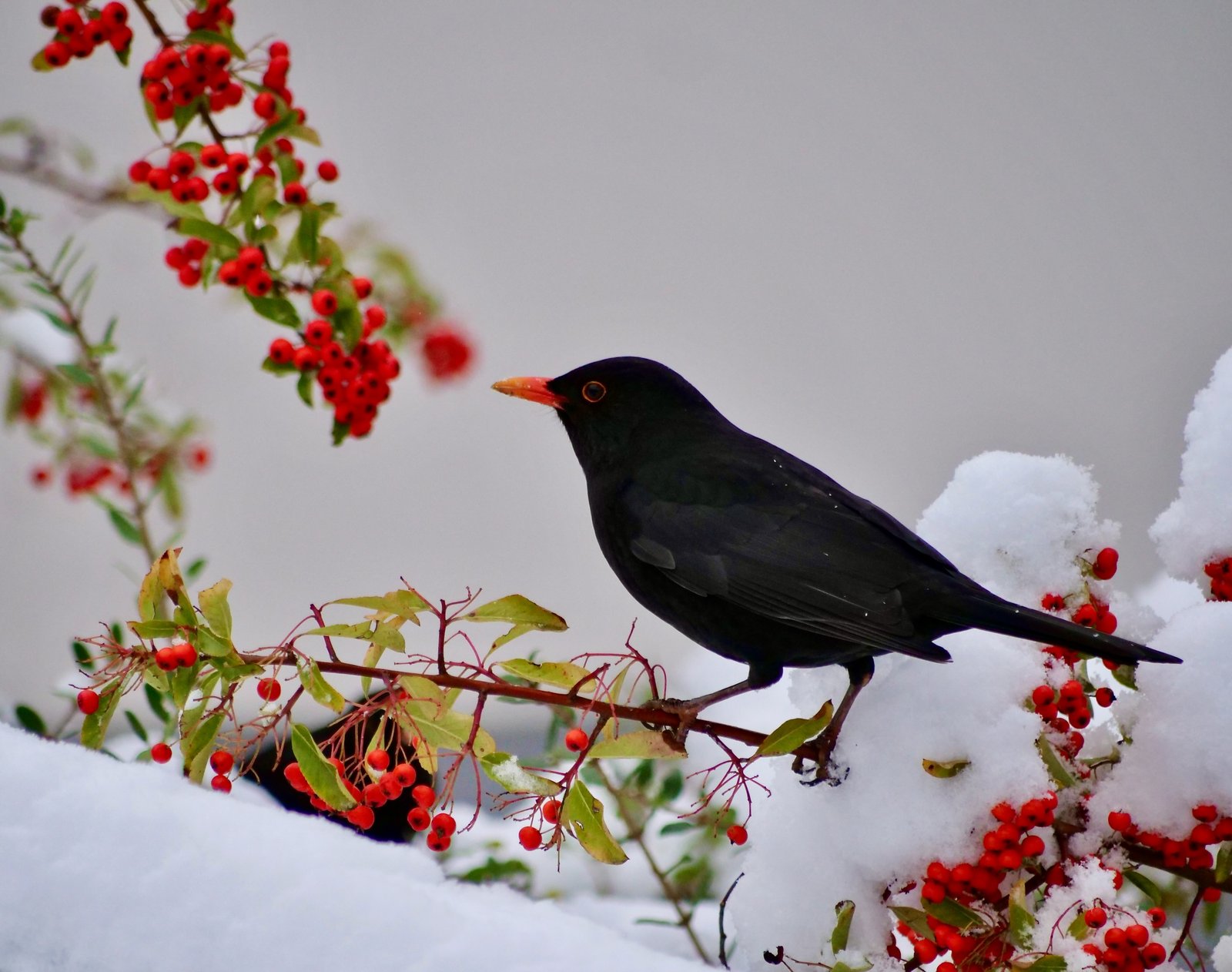
24–27 cm. The male is entirely black, with an orange-yellow bill and a narrow yellow eye-ring; the legs are dark brown. The female is dark brown, with a paler, faintly streaked throat, a somewhat mottled breast and a brownish to dull yellow bill. Young birds are brown, with pale spots on the upperparts and dark spots on the underparts.
Confusion species
Great Thrush Turdus fuscater is larger and dark sooty brown, with orange legs. The male Glossy-black Thrush Turdus serranus is glossy black and, unlike the Common Blackbird, has orange legs. The male Pale-eyed Thrush Turdus leucops is smaller and glossy black, with a pale iris and yellow legs. Dark legs on a black thrush with a yellow bill point to Common Blackbird.
Habitat
In its native range forest, parks, gardens and farmland with hedges. It searches the ground for earthworms and other invertebrates and also eats berries and fruit. It does not breed in the guide area.
Where the bird is most at home, classified by the vegetation units of the Andes and the west coast.


Range and movements
In the guide area only a few unconfirmed records from Colombia and Bolivia; there is no established population in Colombia, Ecuador, Peru, Bolivia or the Galápagos. Outside the guide area in Europe, North Africa and large parts of Asia; introduced to south-eastern Australia and New Zealand.
How and when to look
A black thrush with a yellow bill in the guide area is almost always a native species; check the colour of the legs and iris, and document a presumed Common Blackbird with photographs or sound recordings.
Conservation status
Least Concern. In the guide area only a vagrant or an escaped bird.
Scientific name
Turdus merula | Linnaeus, 1758
Linnaeus described the species in 1758 and placed it straight away in the genus where it still stands. He introduced the genus Turdus in that same work. The genus name comes from Latin turdus, 'thrush'. The species name comes from Latin merula, 'blackbird'. The specimen the first description was based on came from Sweden.